How To Fix Clicky Kick Drums With A Transient Designer
Nail The Mix Staff
You’re mixing a dense metal track, fighting to get the kick drum to cut through a wall of distorted guitars. You crank the high-end EQ, maybe boost a little around 4kHz or 8kHz to get that modern “smack.”
Suddenly, you’ve got cut, but you’ve also got a problem: the kick sounds like a typewriter. It’s too clicky, too plasticky, and it’s distracting from the groove.
Your first instinct might be to grab an EQ and notch out those harsh frequencies. Don’t do it.
Cutting the high end with a static EQ often makes the kick sound soft, weak, and distant. You lose the aggression that made you boost those frequencies in the first place, and your kick gets buried behind the rhythm guitars.
There is a better way to retain aggression without the annoying click: Multiband Transient Design.
Why Standard EQ Doesn’t Always Work
When you use a standard EQ to tame a clicky kick, you are turning down that frequency range for the entire duration of the hit. You aren’t just reducing the initial “tick” of the beater; you’re reducing the air and presence of the shell resonance that follows.
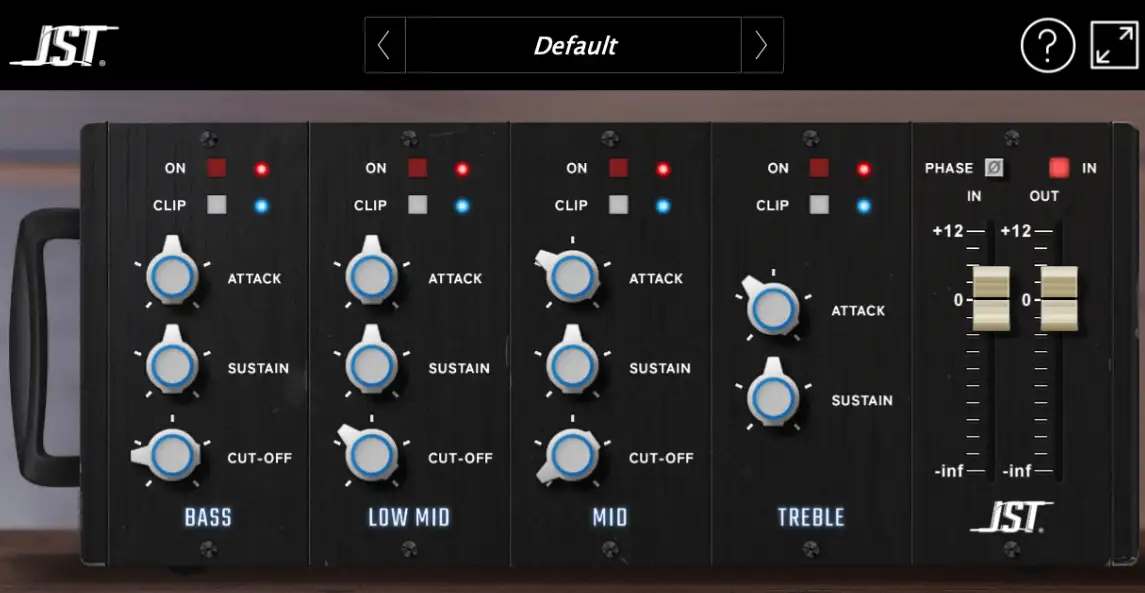
This is where a multiband transient designer changes the game. Unlike a compressor or an EQ, a transient designer processes the envelope of the sound—specifically the Attack and Sustain—independent of the input volume.
By using a multiband version, like the JST Transify plugin, you can split the frequency spectrum. This allows you to keep the thunderous impact of your low end (40Hz – 100Hz) completely untouched while surgically altering only the attack characteristics of the high mids and treble.
The Fix: Taming the Beater with A Transient Designer
If you’re looking to smooth out a harsh top end while keeping the low-end punch intact, here is a workflow you can apply immediately. We’ll use JST Transify as the example, as its four-band layout makes this incredibly intuitive.
1. Isolate the Problem Frequencies
First, you need to determine where the “annoying” click lives. On a standard metal kick, the “click” or “smack” usually sits anywhere from 1kHz to 5kHz, while the “air” might be higher up.
On your multiband transient designer, look at your crossover controls (labeled CUT-OFF on Transify). You’ll likely want to focus on the Mid and Treble bands.
2. The “Search and Destroy” Method
To ensure you are targeting the right area, use this simple trick:
- Boost the Attack knob all the way up on your High Mid or Treble band.
- Sweep the Cut-off frequency until the click becomes absolutely unbearable.
- Once you’ve identified the exact range where the click is most offensive, stop. You have found your target.
3. Cut the Attack to Taste
Now that you’re locked onto the problem frequencies, simply reverse your move. Turn the Attack knob down.
Start with a subtle reduction and listen in context with the full mix. You’ll notice that the “point” of the kick remains audible (because you haven’t EQ’d the frequency out), but the sharpness of the transient is softened. The kick retains its aggression and presence, but it sits deeper in the pocket rather than poking you in the eye with every hit.
4. Don’t Touch the Lows
The beauty of this multiband approach is that your Bass and Low Mid bands remain at unity (or boosted, if you want more thud). You aren’t sacrificing the chest-thumping fundamental of the drum just to fix a high-end issue.
The Bottom Line
Modern metal mixing is a game of millimeters. Using a static EQ to fix a dynamic problem like transient click is a blunt instrument. By switching to a multiband transient designer, you get the best of both worlds: a kick that cuts through the densest mix without sounding like a sample of a plastic cup. For an even more integrated approach, you can also tighten muddy kick drums using Slate Trigger 2’s built-in envelope shaping—letting you clean up the decay before the signal even hits your mix bus.
If you want to dive deeper into advanced mixing techniques and watch world-class producers build mixes from scratch, check out Nail The Mix. You’ll get access to real multi-tracks, live mixing sessions, and a community of audio pros ready to help you level up.