Dialing in Humanity’s Last Breath’s Brutal Guitar Tone
Nail The Mix Staff
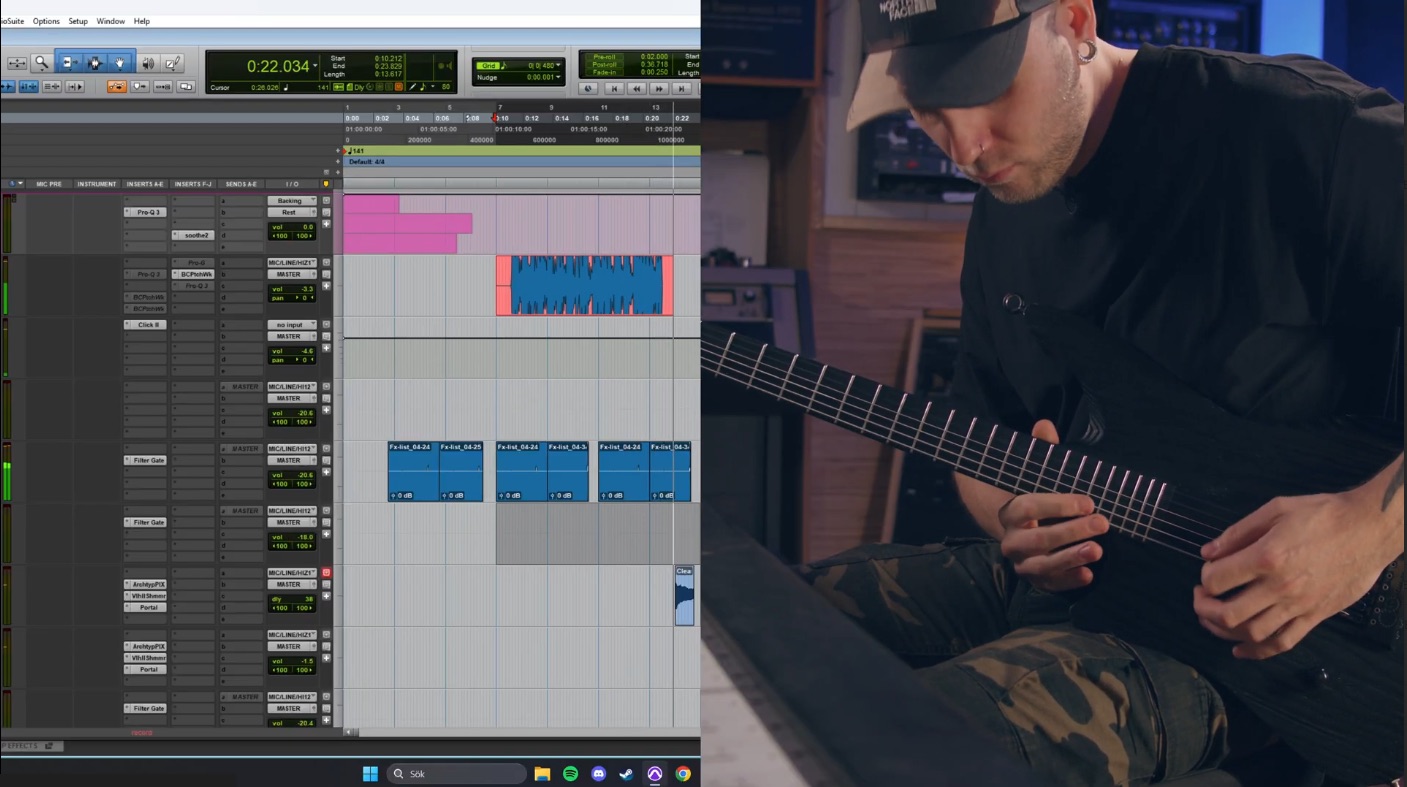
The guitar tone of Humanity’s Last Breath is a force of nature. It’s not just heavy; it’s a visceral, disgustingly low, and punishing sound that has become a hallmark of their music. How do you even begin to craft a tone that dense and destructive? We got an inside look as producer/guitarist Buster Odeholm built one of his signature tones from scratch, revealing the unconventional plugin chains and meticulous EQ shaping required for this level of brutality.
Forget simply loading up a single amp sim preset. Buster’s approach is a masterclass in modular tone-building, using specific plugins for specific jobs and, most importantly, shaping the signal before it ever hits the amp. Let’s break down his method.
The Foundation: A Killer DI Is Non-Negotiable
Before a single plugin is loaded, the process starts with the source. Buster makes it clear that the quality of the raw DI (Direct Input) signal is paramount. A clean, strong, and well-played DI track is the canvas. With a great DI, you have the flexibility to create a monstrous tone with a variety of tools; with a poor one, you’re fighting an uphill battle from the start.
Building the Amp Chain: A Hybrid, Modular Approach
Buster doesn’t rely on one all-in-one plugin. Instead, he pulls specific elements from different plugins to create a custom-tailored signal chain.
The Amp: Neural DSP Nameless (With a Twist)
For the core amp sound, he reaches for the Neural DSP Fortin Nameless Suite. But here’s the key: he only uses the amp block. The built-in noise gate, boost pedal, and cabinet sections are all bypassed. This allows him to treat the amp as a standalone component, giving him total control over what comes before and after it.
The Cab Sim: TSE Audio for That Subby Weight
For the cabinet and speaker impulse response (IR), he bypasses the Neural DSP offering and instead loads up TSE Audio’s TSE X50 v2.0 plugin. His go-to IRs for this sound are from the Ryan “Harv” Harvey collection, which he notes are incredibly “subby” and were the same ones he used on the Humanity’s Last Breath album. This choice is critical for achieving that signature earth-shattering low-end foundation.
The Secret Sauce: Advanced Signal Shaping
This is where the tone goes from good to genuinely brutal. Buster’s most impactful moves happen outside the traditional amp and cab combo, focusing on precise control over the signal’s texture and dynamics.
Parallel Boost for Precise Control
A boost pedal hitting the front of a high-gain amp is standard practice, but having it on at 100% can often add too much saturation or unwanted noise. Buster’s solution is brilliant: he runs the boost in parallel.
To do this, he uses Blue Cat’s PatchWork to host just the boost pedal section from the TSE X50 plugin. By loading the boost inside PatchWork, he gains access to a a wet/dry mix knob. This allows him to blend in the perfect amount of the boosted signal, tightening the low-end and adding aggression without completely overwhelming the core amp tone. He can dial it in to taste, finding the sweet spot between raw amp saturation and a focused, boosted attack.
Don’t Neglect the DI: Pre-Amp EQ is Crucial
This is arguably the most important technique in Buster’s playbook. Many producers focus on EQ after the amp, but he stresses the importance of EQing the DI signal before it ever hits the amp sim. The amp reacts differently to different frequencies, so shaping the input gives you immense control over the final character of the distortion.
Using FabFilter Pro-Q 3, he makes several surgical moves on the DI:
- Taming Harshness: He identifies a “scratchy” quality in the upper-midrange that he doesn’t like. Instead of trying to fix it after the fact, he carves it out of the DI signal with a sharp EQ cut. This results in a smoother, more pleasing distortion character from the amp.
- Enhancing “Djent” Attack: To emphasize the percussive, high-mid attack often associated with the “djent” sound, he adds a slight boost in that range.
- Controlling the Low-End “Bloom”: Low-tuned guitars can have specific notes that “bloom” or resonate too much, creating a muddy mess. Buster uses a dynamic EQ band on the low end. This acts like a frequency-specific compressor, turning down the low frequencies only when they exceed a certain threshold, keeping the chugs tight and consistent.
Getting a handle on pre-amp EQ strategies is a complete game-changer for digital guitar tones.
Polishing the Tone: Post-Amp Processing
With the core tone established, the final steps involve adding polish and ensuring the sound is controlled and powerful.
Taming Dynamics with Compression
Because the guitar parts involve a lot of pitch-shifted notes, the volume can become uneven and jumpy. To solve this, Buster adds a simple compressor after the amp and cab chain. The goal isn’t to squash the life out of the performance, but to gently even out the dynamics for a more consistent and professional sound. Smart metal compression is about control, not destruction.
Adding Vibe and Mids with Saturation
Finally, to bring everything together and add some harmonic complexity, he uses FabFilter Saturn 2. After analyzing the tone, he notices a slight dip in the midrange. He uses Saturn to add character and strategically fill in that frequency gap, which he says just “makes everything better.” This helps the guitar sit perfectly in a dense mix without sounding thin or scooped.
Bring It Home
Building a truly unique and heavy guitar tone in the box is about more than presets. It’s about being a sonic architect. By breaking down the signal chain into modular components and making intelligent, surgical moves with EQ and parallel processing, Buster Odeholm creates a sound that is entirely his own—a skill he applies whether crafting tones with advanced suites or classic tools for bands like Vildhjarta.
These are the kinds of advanced, real-world techniques that separate good mixes from great ones. Trying these methods on your own tracks can radically improve your guitar tones. But imagine watching Buster take this exact tone and make it work with bone-crushing drums, a seismic bass, and his uniquely processed vocals in a full production.
Humanity's Last Breath on Nail The Mix
Buster Odeholm mixes "Labyrinthian"
Get the Session
With Nail The Mix, you can. Every month, we give you the raw multi-tracks from a massive metal song and you get to watch the original producer mix it from scratch, explaining every plugin, every fader move, and every decision. If you’re ready to move beyond presets and learn how your favorite records are actually made, it’s time to see how the pros craft a professional mix from start to finish. Learn directly from producers like Buster Odeholm and unlock your sound. Stop guessing and start getting the tones you’ve been chasing. Join us for the full Humanity’s Last Breath mixing session.
And if you want to know EVERYTHING, check out Buster’s course “How It’s Done.”