
Mixing Karnivool’s Massive Bass Tone with Forrester Savell
Nail The Mix Staff
Getting a bass tone that’s both massive and articulate is one of the toughest challenges in a modern rock mix. You need it to be fat and powerful, but also clear enough to cut through dense layers of guitars and drums. And when you’re talking about a band like Karnivool, the bass isn’t just a foundation—it’s a lead instrument, full of character and complexity.
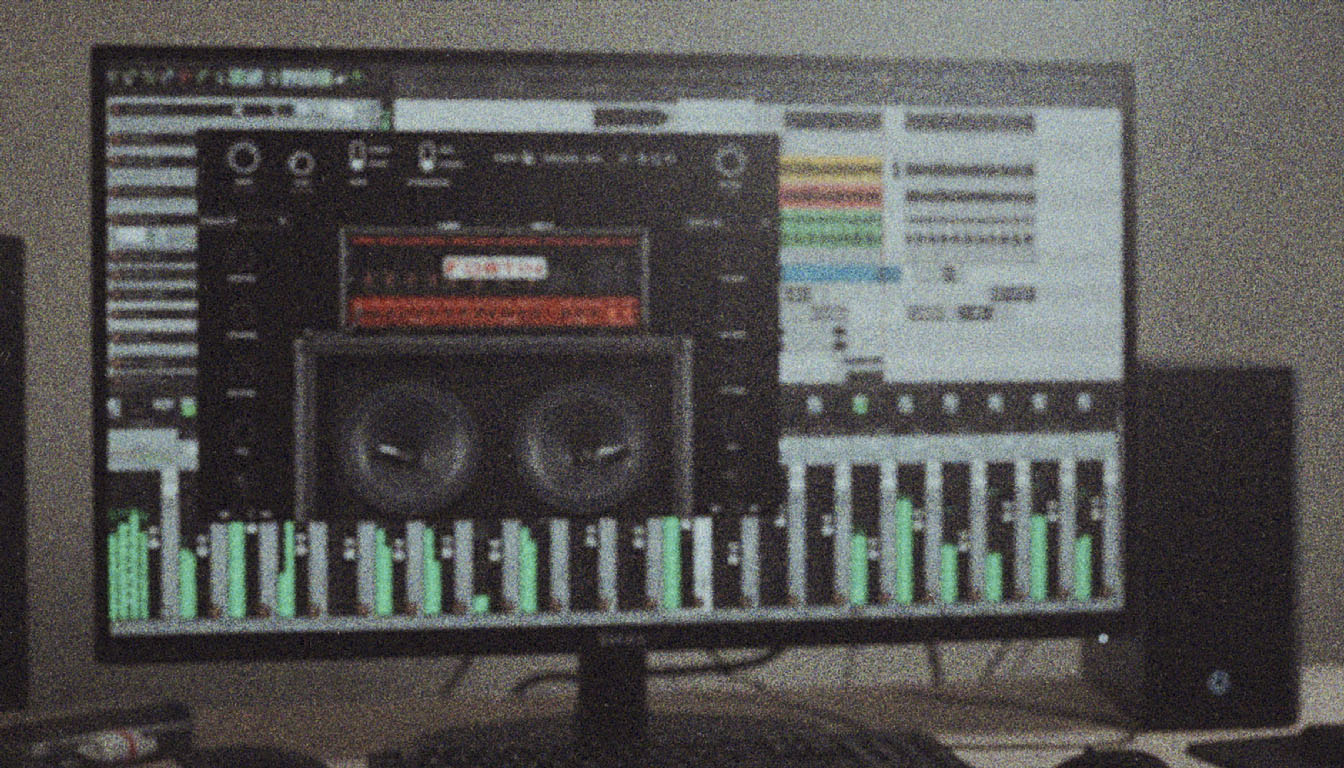
So how does legendary producer Forrester Savell get that iconic Karnivool bass sound? We got a look inside his Pro Tools session for a deep dive into his bass chain, revealing how he uses a blend of DI, amps, and top-tier outboard gear to shape the perfect tone. Let’s break down his approach.
Building the Foundation: More Than Just a DI
Right off the bat, Forrester makes it clear that a plain DI signal just won’t cut it for this style of music. While he does use a DI track, it’s just one piece of a much bigger puzzle.
His core bass sound, a pro-level multi-signal approach, is actually a combination of three distinct channels, all bussed together to be processed as a single, cohesive instrument:
- The DI Signal: This provides the clean, fundamental low-end.
- The Amp Sim: To add grit, character, and that “cooler” sound that a raw DI lacks, he adds an amp sim into the mix.
- The Mic’d Cab: Here’s a killer trick—Forrester also blends in one of the microphone signals that was captured during the original drum takes. This adds a sense of space and captures the natural interaction of the bass amp in the room, gluing it to the drum sound from the very start.
By blending these three sources, he gets the best of all worlds: the clean sub of the DI, the midrange aggression of the amp, and the organic feel of a real mic’d cab.
The Outboard Gear Chain: Analog Warmth and Control
With the foundational tone blended, Forrester sends the bass bus out of his DAW and into a chain of classic analog hardware. This is where the real-time shaping and mojo happens.
Pultec EQ for Broad Strokes and Bottom End
First in the chain is a classic Pultec-style EQ. This isn’t for surgical problem-solving; it’s for broad, musical enhancement. He uses it to add weight and presence to the overall sound.
His approach is simple but effective:
- Boost the Low End: To add foundational power and fatness.
- Boost the Top End: A little boost around 5kHz adds definition and helps the bass cut through on smaller speakers.
He also employs the famous “Pultec trick,” where you boost and attenuate the same low-frequency band simultaneously. Because the boost and cut curves are shaped differently, this creates a unique EQ shape that can tighten up the low end while still adding weight—a must-try technique you can replicate with any good Pultec plugin. For more on this, check out our deep dive on EQ strategies for mixing modern metal.
Taming the Clack with an Empirical Labs Distressor
Next up is the legendary Empirical Labs Distressor, but Forrester doesn’t use it to just slam the bass into submission. His goal is very specific: to control the spiky, high-mid “clack” of the pick attack without killing the dynamics of the low frequencies.
Here’s how he sets it up:
- Detector High-Pass: This is the key. By engaging the high-pass filter on the detector circuit, the compressor ignores a lot of the powerful low-frequency information. Instead, it reacts primarily to the midrange and top end, clamping down on harsh pick attack and clanky transients.
- Settings: He uses a slow attack and a fast release, with a low ratio of around 2:1 or 3:1. The Distressor’s lower ratios have a soft knee, meaning the compression engages more gently and musically.
- Distortion 2 Mode: He also engages the “Dist 2” mode, which adds some subtle tube-like harmonic saturation for extra warmth and character.
This is a masterclass in using compression to solve a specific problem rather than just for general leveling.
Surgical Tweaks with the GML 8200 EQ
The final piece of hardware in the chain is a GML 8200 EQ, known for its transparent, surgical precision. After the broad strokes of the Pultec and the dynamic control of the Distressor, he uses the GML for fine-tuning. He makes a few gentle cuts to the low-mids to remove any “wooly” or “swampy” frequencies, ensuring the bass remains big and fat but doesn’t cloud the mix. The goal is clarity without sacrificing warmth.
In-the-Box Tricks for Finesse
Even with a killer analog chain, the work isn’t done. Forrester uses a few smart in-the-box techniques to add the final polish.
Automating Pre-Compressor Gain
This is a brilliant pro move. Forrester places a Trim plugin before the hardware insert on his bass bus. He then automates this Trim plugin to push the signal level up during quieter sections of the song, like the intro. This ensures that even the lower-dynamic parts are hitting the outboard compressors hard enough to get the same sonic character as the louder sections, resulting in a more consistent and even-sounding bass performance throughout the track.
Bus EQ Automation and Volume Riding
After the signal returns to Pro Tools, he still does a bit more cleanup with a digital EQ, automating it to notch out a “shrill” frequency around 3.3kHz and some “wooliness” around 150Hz. This automation ensures the cuts are only happening when they need to. You can find more of his specific in-the-box mixing tricks in our other breakdowns.
Of course, no amount of compression replaces good old-fashioned fader riding. Forrester emphasizes that the bass gets a lot of volume automation to make sure it sits perfectly in every single section of the song, pushing it forward for big moments and tucking it back when it needs to make space.
Bringing It All Together
Forrester Savell’s approach shows that a world-class bass tone is a sum of many parts. It starts with blending multiple sources, gets its character from a well-dialed analog chain, and is locked into place with clever automation.
Karnivool on Nail The Mix
Forrester Savell mixes "Deadman"
Get the Session
Learning these techniques is one thing, but seeing them applied in real-time is a whole other level of education. On Nail The Mix, we have dozens of in-depth courses where you can watch Forrester mix this entire Karnivool track from scratch, explaining every single move he makes.
If you’re ready to see exactly how he glues this bass into the final mix, works his magic on the drums, guitars, and vocals, and get the actual multitracks to practice on yourself, you have to check out the full Karnivool mixing session. It’s an unparalleled look into how a master producer crafts a powerful, modern metal mix. Stop guessing and start exploring all our mixing sessions and learn the techniques that will unlock your own sound. Grab the multitracks today and see what you can create