The best IR loaders for metal guitar tone.
Nail The Mix Staff
If you’ve ever tried to record massive metal guitars at home, you know the struggle. You’ve got the amp head dialed in, but then comes the cab, the mics, the room, the noise complaints from your neighbors… It’s a whole thing. But what if you could bypass most of that hassle and still get a tone that could rip a hole in the fabric of spacetime? That’s where the IR loader comes in, and it’s one of the biggest game-changers for modern metal production.
An IR loader, whether it’s a plugin or a piece of hardware, is your secret weapon for getting consistent, world-class cab sounds without ever touching a microphone. It’s the tool that lets you access an endless library of an iconic speaker and mic combinations right from your chair.
So, What Exactly Is an IR Loader?
To get it, you first have to understand what an IR is.
Impulse Responses (IRs): The Foundation
An Impulse Response, or IR, is a sonic snapshot. Think of it as a digital clone of a specific audio environment. For guitar players, it’s a hyper-accurate capture of a speaker cabinet, a microphone (or multiple mics), the mic’s position, and even the preamp it was run through.
Producers create these by blasting a full-range frequency sweep (a sine wave that goes from low to high) through a real guitar cab and recording the result through a specific mic. The resulting audio file (.wav) contains all the unique filtering and resonance characteristics of that exact setup. It’s not an emulation; it’s a direct capture of how that cab and mic combo reacts to a signal. It’s a static profile of one perfect position.
The “Loader” Part
An IR loader is the device or plugin that “plays” these IR files. You feed it a raw, direct signal from your amp (either a real amp head or an amp sim plugin), and the IR loader applies the sonic characteristics of the IR to that signal.
Voila. Your fizzing, direct amp tone is suddenly transformed into the sound of a cranked Mesa/Boogie 4×12 being hit with an SM57 and a Royer R121 in a perfectly treated room.
The Two Paths: Hardware vs. Software IR Loaders
You have two main ways to integrate an IR loader into your workflow, and both are killer for metal producers.
The All-in-the-Box Workflow (Software)
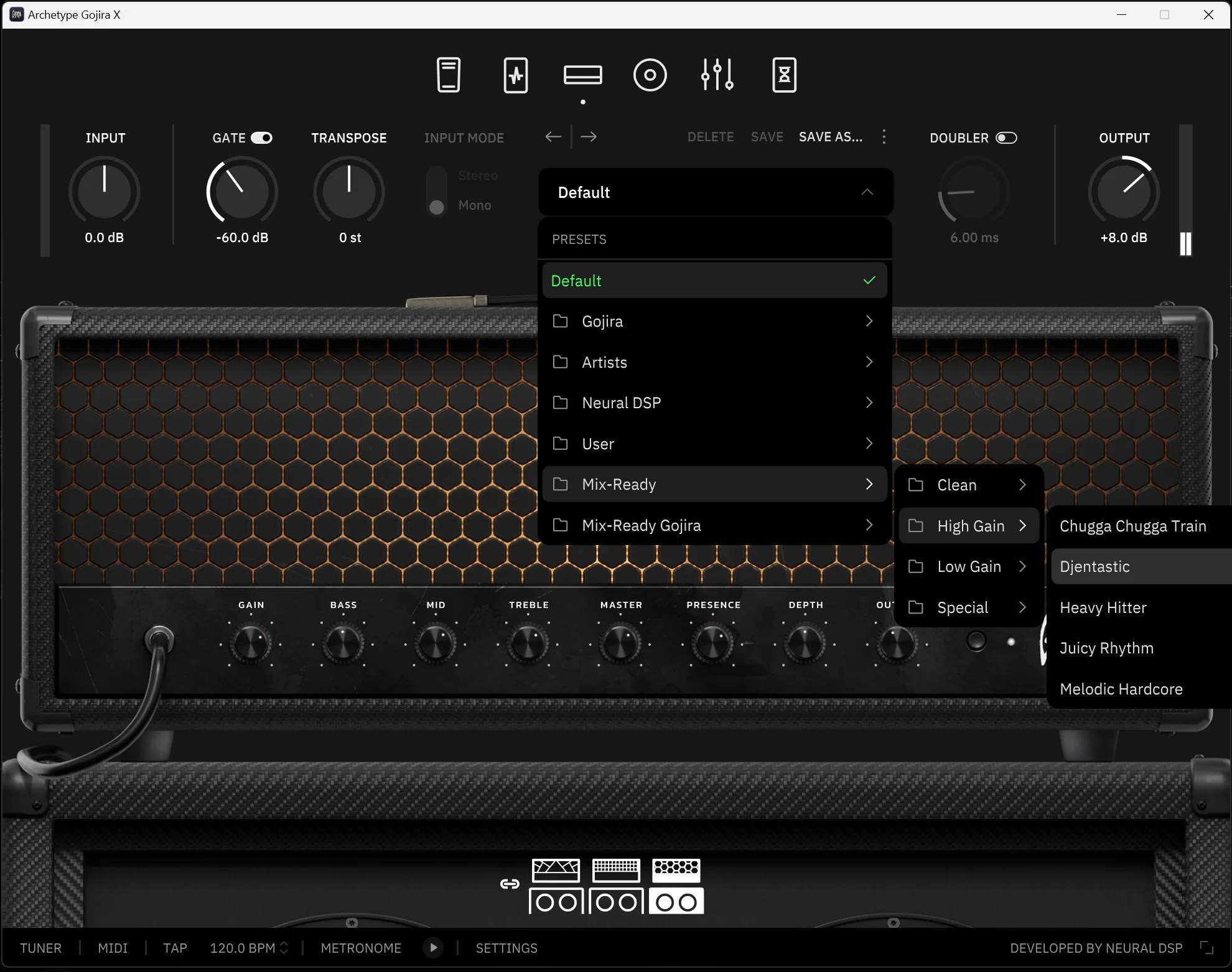
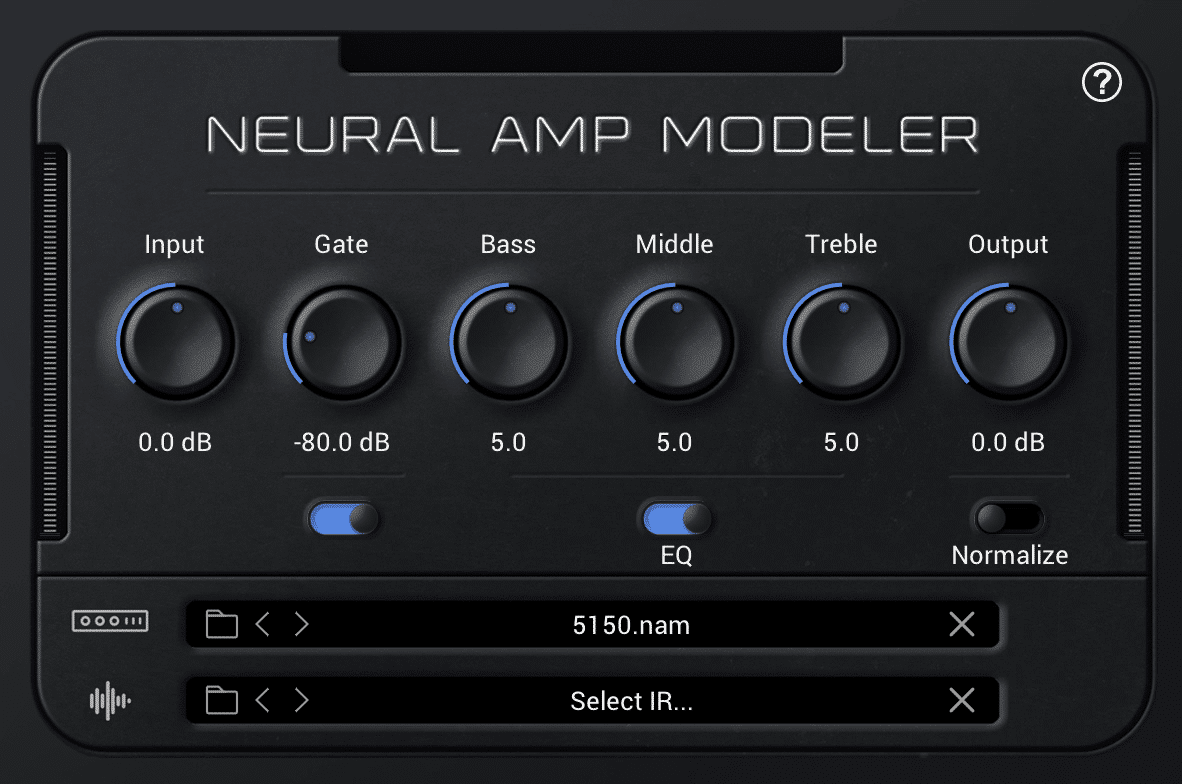
This is the most common setup for home studio producers. You run your DI guitar track through an amp simulator plugin (like a Neural DSP Archetype, a Soldano SLO-100 from Plugin Alliance, or IK Multimedia’s AmpliTube). Immediately after the amp sim, you insert a software IR loader plugin.
Many amp sims have great IR loaders built-in, but dedicated loaders offer more flexibility. Popular options include:
- STL Tones Libra
- Two Notes Wall of Sound
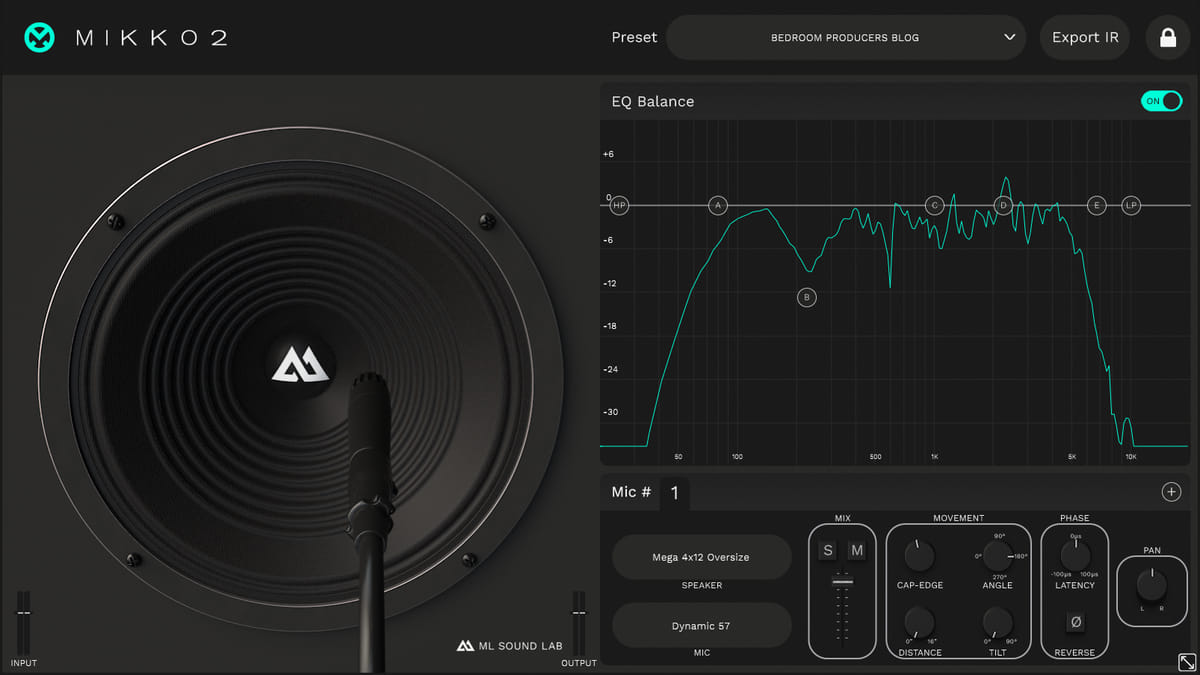
- ML Sound Lab MIKKO 2
- GGD Contenders
This setup lets you mix and match any amp sim with any IR you can find, giving you limitless tonal flexibility entirely within your DAW.
The Hybrid Workflow (Hardware)
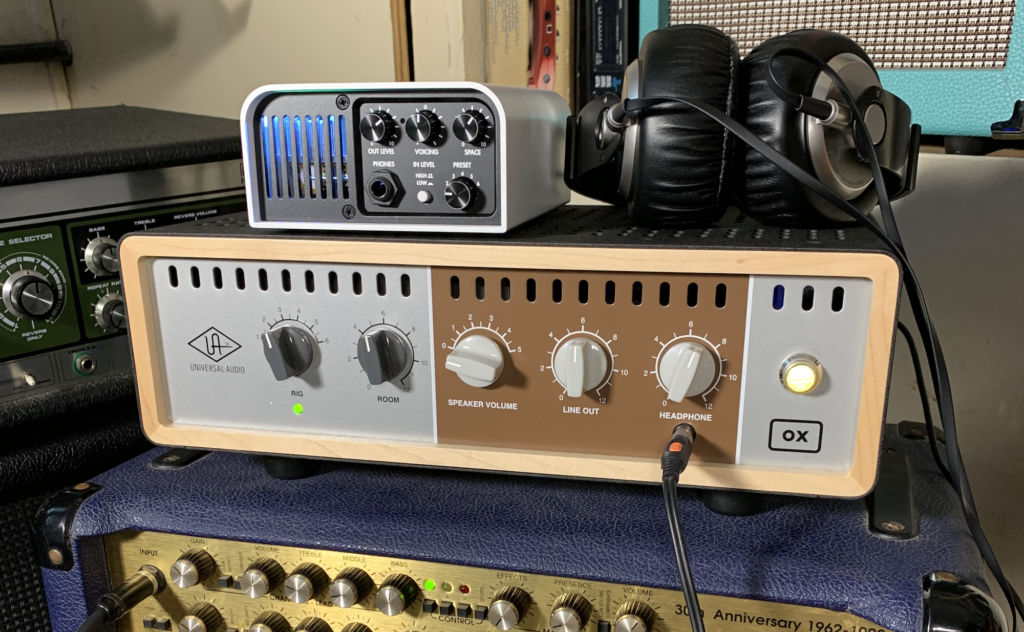
Ready to use your real tube amp without making a sound? This is where hardware IR loaders come in. These units, like the Two Notes Torpedo Captor X or the classic Torpedo Studio, are also “load boxes.”
Here’s the signal chain:
Guitar Amp Head (Speaker Out) -> Hardware IR Loader -> Audio Interface
The load box safely absorbs the massive electrical load from your amp’s power section, so you don’t need a real cabinet connected (and you don’t blow up your amp). The unit then lets you apply any IR to your real amp tone and sends the finished signal right into your interface.
This gives you the authentic feel and dynamic response of your physical tube amp, combined with the silence, consistency, and flexibility of IRs. It’s the perfect solution for late-night reamping sessions in an apartment.
Why This Changes The Game for Metal Producers
Okay, so the tech is cool. But how does this actually help you get better metal tones?
Speed and Efficiency: Dial Tones in Seconds
Forget the old routine: set up the mic, hit record, run to the control room, listen, hate it, run back, move the mic a centimeter, repeat for an hour.
With an IR loader, your workflow is instant. Don’t like the V30 cab? Click. Now you’re hearing an Orange PPC412 with G12K-100s. Want to swap that SM57 for the darker chunk of a Sennheiser MD421? Click. You can audition dozens of legendary cab/mic combinations in the time it takes to brew a cup of coffee, all while listening in the context of your mix.
Consistency Is King
When you’re double-tracking heavy rhythm guitars, consistency is non-negotiable. With a real mic, even a slight change in position between the left and right passes can create weird phasing issues and an unbalanced stereo image.
An IR is a perfect, static capture. It will sound exactly the same every single time you use it. This makes it incredibly easy to get perfectly matched, wide, and powerful stereo guitars that sound massive.
Build Your “Impossible” Mic and Cab Collection
Want the sound of a rare, vintage 1970s Marshall cab? Or a boutique Diezel? How about micing it with a $1,200 ribbon mic you could never afford? With IRs, you can. Companies like OwnHammer, York Audio, and Bogren Digital have painstakingly captured some of the most sought-after gear on the planet. For a few bucks, you can have a virtual collection of gear that would cost hundreds of thousands of dollars in real life.

A Practical Workflow for Nailing Your Tone
Let’s put it all together.
- Start with a Great DI: Garbage in, garbage out. Make sure your DI performance is tight and well-recorded.
- Pick Your Amp: Fire up your favorite amp head or amp sim plugin. Get the gain and amp EQ in the ballpark.
- Load the IRs: Open your IR loader and start with a classic. A Mesa/Boogie or Orange V30 cab IR paired with an SM57 IR is the benchmark for modern metal. Place the 57 IR that’s slightly off-center for less fizz.
- Blend for Girth: The real magic is in blending. Add a second IR—maybe a Royer R121 for low-end warmth or an MD421 for midrange punch. Most IR loaders let you blend two or more IRs and pan them slightly to create a huge sound.
- Post-EQ is Your Friend: An IR is a raw mic capture, and raw mics often need some love. Don’t be afraid to use another EQ after the loader. You’ll probably still want to do some surgical cuts to tame fizz around 8-10kHz or carve out boxy low-mids. For a deep dive, check out our guide to EQing modern metal guitars.
- Don’t Forget Dynamics: Your tone might still need some taming. A little bit of compression can help glue everything together and control the pick attack.
See How the Pros Do It
Theory is one thing, but watching a master at work is another. The reality is that many of the world-class producers we work with use IR loaders in their day-to-day sessions to get album-ready tones fast.
On Nail The Mix, you can watch legendary producers like Will Putney, Jens Bogren, and Nolly Getgood build guitar tones from the ground up using these exact techniques. You get the raw, unedited multitracks from bands like Gojira, Architects, and Periphery and a front-row seat as the original producer mixes the song from scratch, explaining every plugin, IR choice, and mixing decision.
If you’re ready to go beyond the basics, check out the full catalog of Nail The Mix sessions. To access over 1,500 more advanced tutorials on everything from IR blending to final mastering, explore everything available in URM Enhanced. Stop guessing and start learning the workflows that create the best-sounding records in modern metal.