Neural Amp Modeler vs Neural DSP: which amp sim sounds better for metal?
Nail The Mix Staff
In the world of metal production, the amp sim debate has never been more intense. For years, Neural DSP has been the undisputed champion, with their artist-series Archetype plugins (Nolly, Gojira, Petrucci, Misha Mansoor) setting the standard for “mix-ready” tones in a box.
Then, Neural Amp Modeler (NAM) arrived.
NAM is a free, open-source, and disruptive technology that uses deep learning to “capture” real amps with a level of accuracy that is turning the entire industry on its head.
This has created the central conflict for the modern metal producer: Do you stick with the polished, all-in-one product, or do you embrace the raw, sonically superior component?
This is a battle of Workflow vs. Realism. Let’s break it down.
The Case for Neural DSP Archetypes: The Polished Product
The value of an Archetype plugin is undeniable, and it boils down to one word: workflow.
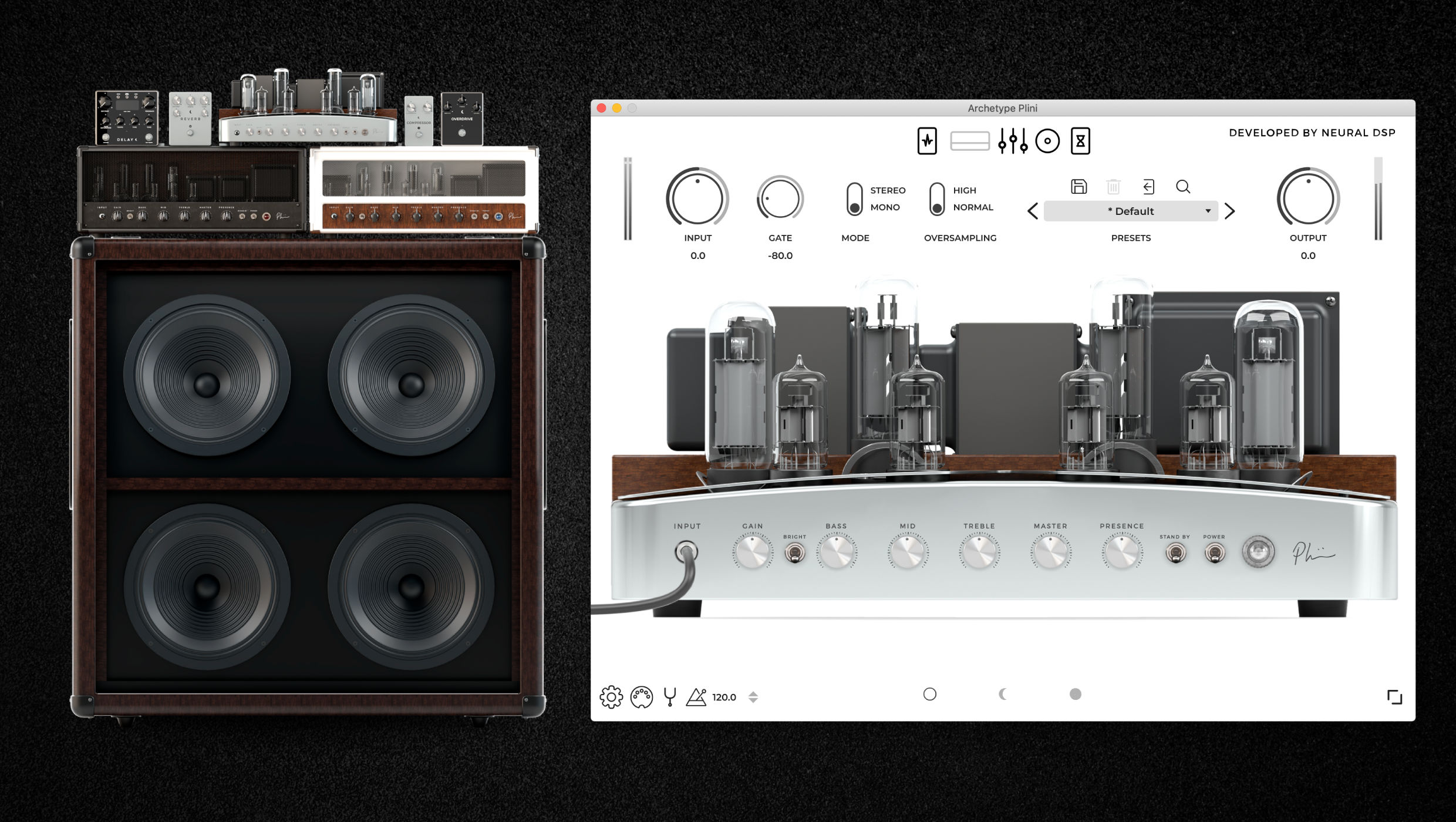
When you buy Archetype: Nolly, you’re not just buying an amp model. You’re buying Adam ‘Nolly’ Getgood’s entire, curated signal chain in a single, beautiful interface.
- All-in-One Solution: You get the pre-effects (multiple boosts, compressors), the perfectly modeled amps, a world-class cab/IR section, and all the post-effects (delay, reverb) in one window. You don’t need to chain together three or four other plugins to get a usable sound.
- “Mix-Ready” Tones: These plugins are designed by A-list metal producers to be “mix-ready” right out of the box. The EQs are pre-sculpted, the gain stages are perfected, and the tones are designed to sit in a dense, professional mix with minimal effort.
- Full Tweakability: As a “modeler,” you have full control over every knob. You can adjust the Bass, Mids, Treble, and Gain just like on a real amp, allowing you to dial the tone to your specific guitar and mix.
- CPU Efficiency: Archetype plugins are famously well-optimized, allowing you to run multiple instances across a large mix without bringing your session to a grinding halt.
The Bottom Line: An Archetype plugin is a complete, professional, and reliable product. It delivers “A-minus” to “A-plus” tones with unparalleled speed and convenience.
The Case for Neural Amp Modeler (NAM): The Raw Ingredient
NAM is not a product; it’s a technology. It doesn’t try to “model” an amp’s circuit; it uses a neural network to learn what a real, mic’d-up amp sounds like and replicates it with state-of-the-art accuracy.
The case for Neural Amp Modeler is simple: sonic realism.
In direct, blind A/B tests, the metal community’s verdict is often shocking:
- NAM Sounds More Realistic: When testing a 5150 NAM capture against the 5150-style amp in Archetype: Plini, users consistently reported the “NAM capture sounded a bit more realistic”.
- It Solves the “Fizz” Problem: A common critique of all amp sims, including Neural DSP’s, is an “annoying fizziness” or “tinny-artificialness” in the high-end. High-quality NAM captures simply don’t have this. They sound “raw” and “open,” lacking the digital artifacts that producers’ ears are so sensitive to.
- It “Feels” Better: Users who have switched from Neural DSP to NAM report that NAM is “insanely close to a real amp” and “just that 10 or 20% closer to the real deal”. One user even stated that after trying NAM, their NDSP plugins “sounded like a toy in comparison”.
- It’s Measurably More Accurate: Even the “Neural Capture” feature in Neural DSP’s own $1800+ Quad Cortex hardware has been shown to be 3x less accurate than NAM when capturing the core 100Hz-10kHz guitar range. High-gain players who own both units corroborate this, stating their high-gain captures are “very noticeable” and significantly more faithful using NAM.
The Bottom Line: Neural Amp Modeler is a free, superior-sounding component. It is arguably the most realistic-sounding amp-engine on the planet.
The Big Trade-Off: Where NAM Stumbles
If NAM sounds so much better, why isn’t everyone using it? Because its “raw component” nature comes with massive, deal-breaking workflow challenges for a producer on a deadline.
- It’s NOT an All-in-One Suite: The free NAM plugin is just a loader. It’s only the amp. To get a usable metal tone, you must build a clunky chain of separate plugins: a boost before it, and an IR loader after it, plus your own delays and reverbs.
- The “Static Snapshot”: This is NAM’s biggest limitation. A NAM file is a “snapshot” of an amp with its knobs in one specific position. You cannot turn the virtual “Bass,” “Mid,” or “Treble” knobs on the amp itself. If you want a different gain setting, you have to load a completely different capture (e.g., “5150_Gain_5.nam”).
- It’s a “CPU Hog”: That high-fidelity sound comes at a cost. “Standard” architecture Neural Amp Modeler captures are notoriously CPU-intensive, which can be a major problem for large mixes with 10-20 quad-tracked guitar tracks.
- The “Wild West” Library: The free TONE3000 library is massive, but quality control is non-existent. You have to sift through dozens of “so-so” captures made on mediocre gear to find the few “god-tier” captures.
Final Verdict: The “Product” vs. The “Component”
So, which is better for you?
You should use NEURAL DSP ARCHETYPES if:
- You prioritize speed and workflow above all else.
- You need a “mix-ready” tone immediately with minimal fuss.
- You value the convenience of an all-in-one suite (boost, amp, cab, FX).
- You need to run many plugin instances on a CPU-limited system.
- You are a “tweaker” who needs to be able to turn every knob on the amp.
You should use NEURAL AMP MODELER (NAM) if:
- You prioritize raw, uncompromising sonic realism over workflow.
- Your ears are sensitive to the “artificial fizz” of other sims and you want the most “raw” and “open” sound.
- You are a “tone chaser” willing to hunt for the perfect capture.
- You are willing to build your own complex plugin chains (Boost + NAM + IR Loader + FX) to achieve the perfect tone.
Why Not Get the Best of Both Worlds?
The good news? You don’t have to choose. The Neural Amp Modeler community has already fixed its biggest weakness.
Free, third-party plugins like Wavemind’s NAM Universal exist to solve the workflow problem.
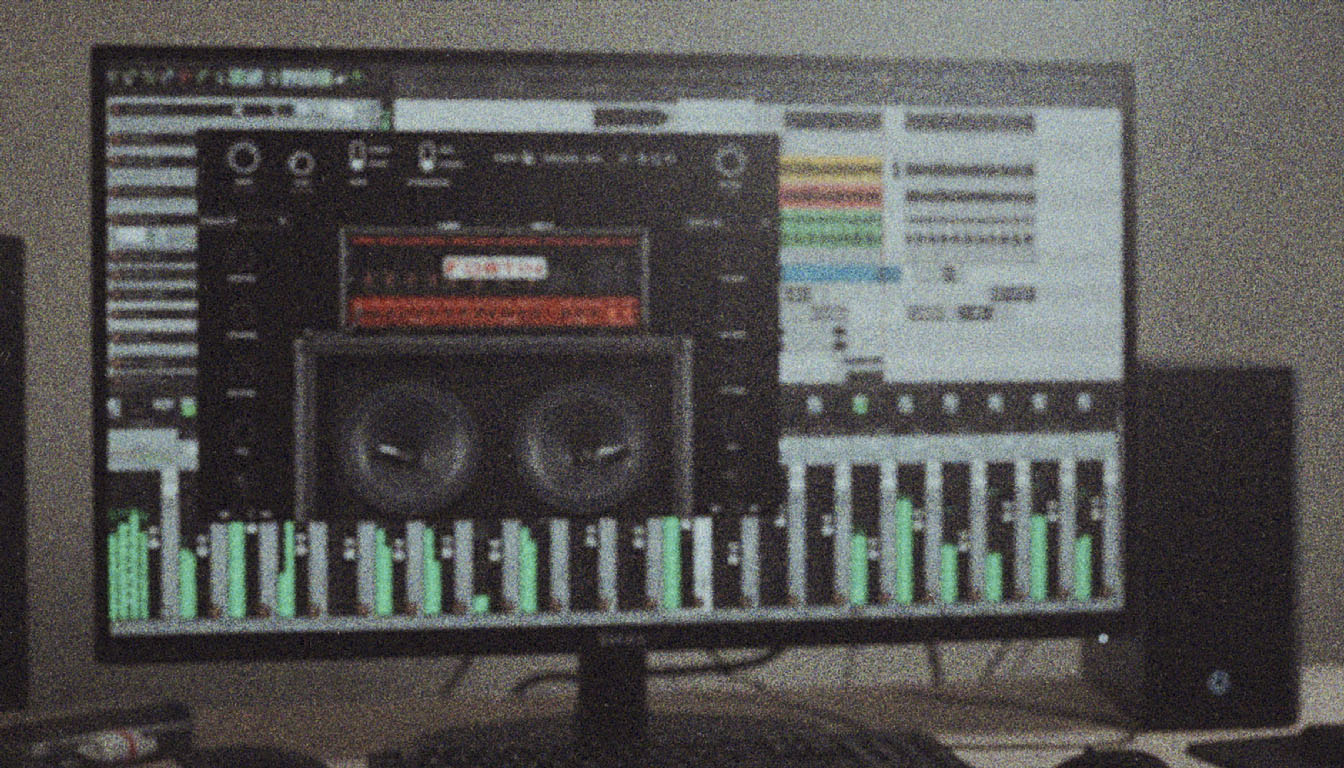
These “shell” plugins host NAM’s superior-sounding engine but place it inside a polished, Neural DSP “Archetype-style” interface. They give you a dual-loader (for a pedal capture and an amp capture), a built-in professional IR loader, and post-processing tools like “Tight” and “Smooth” to tame your tone.
For the modern metal producer, this is the ultimate solution: the world-class sonic realism of Neural Amp Modeler combined with the professional workflow you’ve come to expect.
The Zenith Passage on Nail The Mix
Dave Otero mixes "Algorithmic Salvation" Get the SessionMore on Neural Amp Modeler: