How to Dial In a Killer Metal Tone with Pod Farm
Nail The Mix Staff
Line 6 Pod Farm. If you’ve been producing music for more than a few years, you know the name. It’s one of the OG amp simulators, a direct descendant of the legendary red bean-shaped Pod and the later XT/X3 hardware units. For some, it’s a nostalgic piece of software; for others, it’s a go-to secret weapon for crafting a killer modern metal guitar rig that slices through a mix.
A lot of producers still use Pod Farm, often blending it with real amps to get that super-processed, aggressive top-end you hear on massive records. But getting it to sound great isn’t always as simple as loading a preset. Pod Farm has its quirks, and learning its strange anomalies is the key to going from a “decent” sound to a “totally workable” tone that sits perfectly in a heavy mix.
Let’s dive into how to dial in a killer heavy tone, focusing on one of its most powerful amp models and the weird tricks you need to know.
The “Big Bottom” Hack: Your Secret Weapon
First things first, let’s talk about the “Big Bottom” amp model. If you’re familiar with Pod Farm, you know this one is a fan favorite for modern metal. It has the potential for a tight, aggressive sound, but you might run into a problem if you dial it in like a normal amp.
There’s a strange anomaly in how its EQ section works. Specifically, the treble knob can create a massive “tone suck” that kills the aggression you’re looking for. But there’s a workaround.
The Counterintuitive EQ Trick
Instead of using the knobs as labeled, try this specific setting to unlock the model’s true potential:
- Crank the Mids: Push the Middle knob up, nearly all the way. This might feel wrong, but trust the process.
- Kill the Treble: Turn the Treble knob all the way down. Yes, all the way to zero. This bypasses the weird tone suck.
- Presence is Your New Treble: Now, use the Presence knob to dial in your high-end. This will give you that aggressive cut and sizzle without the harshness the treble knob can introduce.
With the mids cranked, treble off, and presence controlling the top, you’ll find a much more aggressive and usable sound that has the bite to cut through drums and bass.
To Boost or Not to Boost? The Screamer Test
A standard move in metal production is to slam the front end of an amp sim with a Tube Screamer-style pedal. It tightens the low-end and adds a mid-range push. Pod Farm has its “Screamer” model for exactly this purpose.
But is it always the right move? Not necessarily.
After dialing in the Big Bottom tone, the next logical step would be to add the Screamer. However, in some cases, this can actually be a step backward. With the Big Bottom model, adding the Screamer can introduce a “honky” or nasal midrange character, specifically in the 700Hz to 1.2kHz range.
Sometimes, the amp model on its own has more than enough aggression and tightness. The takeaway here is to always A/B your chain. Don’t just add a boost pedal because it’s “what you’re supposed to do.” Trust your ears. If the tone is more aggressive and clear without it, go without it. And don’t forget a simple noise gate in your chain to keep things tight during the pauses.
Why Your “Fizz” Might Be Your Friend: The Importance of Context
One of the biggest complaints you’ll hear about older amp sims like Pod Farm is that they sound “fizzy” or “digital,” especially in the high frequencies. And if you listen to the guitar tone in isolation, that can seem true.
But great metal mixes aren’t built in isolation.
Listening in the Mix
That top-end “fizz” that sounds harsh on its own is often what makes the guitar audible and aggressive in a full-band context. Those high frequencies are what compete with roaring cymbals and a clanky bass tone. Without them, your guitars can get buried and lose their impact.
Instead of EQing out that top-end from the start, try this:
- Blend It: Layer your Pod Farm tone with other signals. Try running it alongside an Impulse Response (IR) loader with a classic cab sound, or even blend it with real amp mics. For example, a Pod Farm tone panned left can be balanced with a Fredman-miced cab (two SM57s) panned right.
- Level, Then EQ: See how far you can get with just leveling. A great tone from Pod Farm often needs very little follow-up processing. With no extra EQ, you can get a sound that sits surprisingly well in the mix. If you do need to make adjustments, you’ll be making them in context, which is key to shaping a powerful sound instead of just a “good” one. Perfecting this is a fundamental skill in EQing metal guitars for maximum impact.
Exploring Other Pod Farm Quirks: The J-800 Gain Anomaly
The Big Bottom model isn’t the only one with weird behavior. To get the most out of this software, you have to be willing to experiment and push the knobs to places you wouldn’t expect.
Take the “Brit J-800” model (based on the Marshall JCM800 2204). On this amp, the Gain knob has a strange a nomaly.
You’d think more gain equals more aggression, right? With this model, cranking the gain past a certain point actually makes the tone sound more compressed and smaller. The trick is to turn the gain down. Below about 9 o’clock, the tone suddenly “opens up,” sounding bigger and more dynamic.
Little quirks like this are all over the software. Spend time with a model, turn every knob from zero to ten, and listen to what actually happens to the sound, not what the label tells you should happen.
Bringing It All Together
Pod Farm is far from a one-trick pony or a dated plugin. It’s a deep and powerful tool if you’re willing to learn its eccentricities. By understanding its strange EQ behaviors, trusting your ears over dogma, and always making decisions in the context of a full mix, you can get a totally pro-level metal guitar sound.
These are the kinds of deep-dive production techniques that separate good mixes from great ones. If you want to see exactly how the pros find and exploit these quirks in real sessions, check out Nail The Mix. You can watch world-class producers like Will Putney, Dan Lancaster, and Adam “Nolly” Getgood mix real songs from bands like Gojira and Architects from scratch.
Architects on Nail The Mix
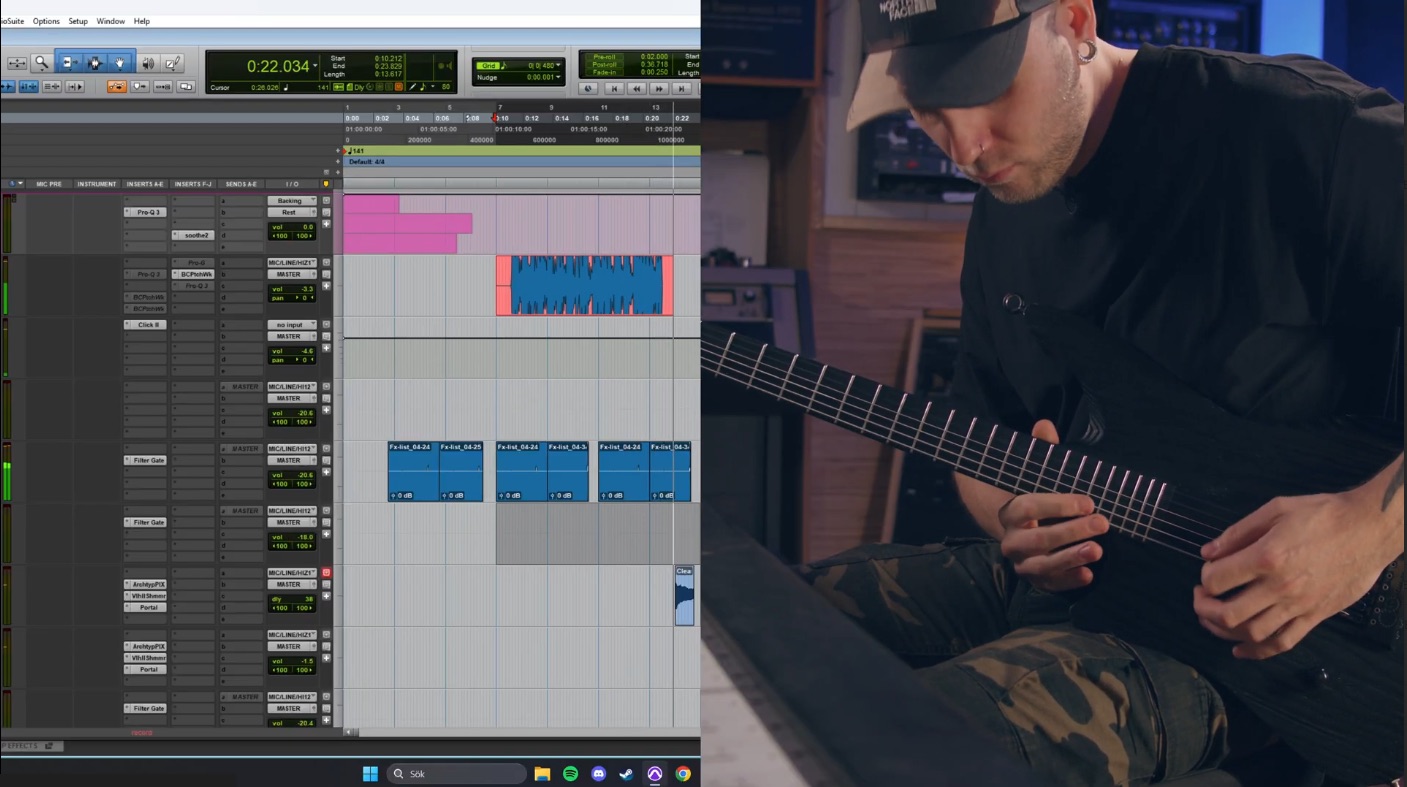
Henrik Udd mixes "Gone With The Wind"
Get the Session
See how the pros do it. Explore our complete catalog of Nail The Mix sessions and see the techniques behind your favorite records.