Mixing Erra in Dolby Atmos: A Practical Guide to Immersive Metal
Nail The Mix Staff
Dolby Atmos has quickly become one of the most exciting developments in audio, and it’s not just for blockbuster movies anymore. For metal producers and mixers, it opens up a whole new dimension of sonic possibility. But let’s be real—the idea of needing a massive, multi-speaker setup can feel pretty intimidating.
What if you could dive into the world of immersive audio with just your DAW and a good pair of headphones?
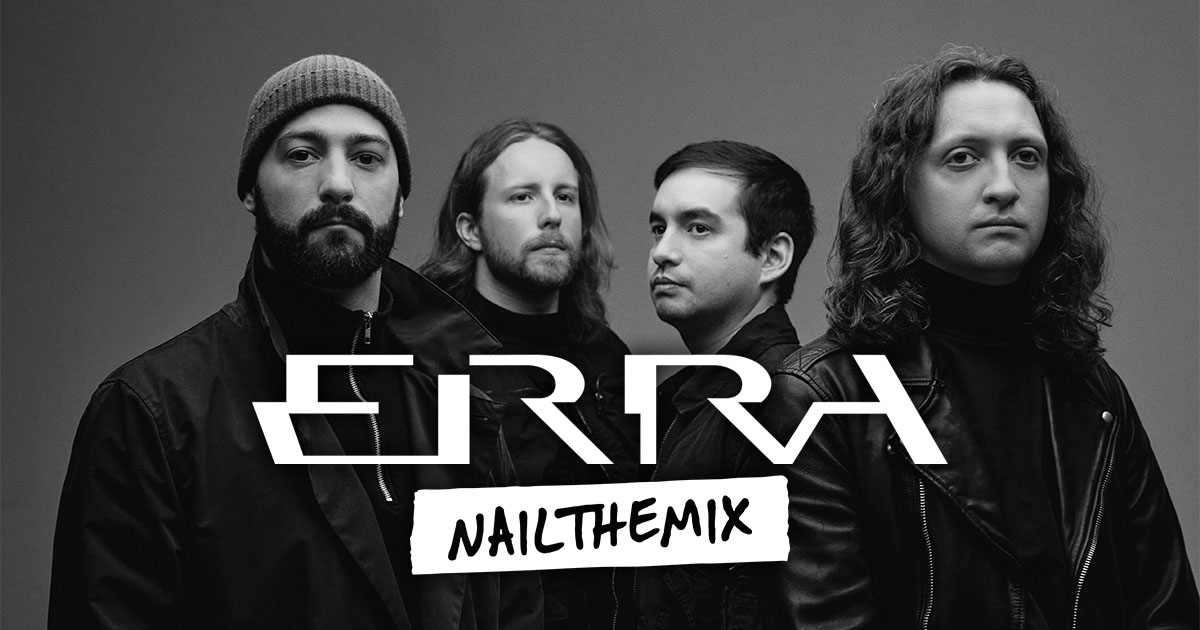
We got the full breakdown from producers Carson Slovak and Grant McFarland (Atrium Audio) as they mixed the powerhouse track from Erra. They showed that getting started with Atmos is more accessible than you think. Here’s a look at their practical approach to crafting a massive, immersive metal mix.
You Don’t Need a 12-Speaker Setup to Start with Atmos
This is the biggest hurdle for most of us, so let’s clear it up first. You don’t need to remortgage your house to build a 7.1.4 Atmos room just to learn the format.
Carson and Grant live by an 85/15 rule: you can do about 85% of an Atmos mix on a laptop with a solid pair of headphones. The workflow is a lot like tracking drums. You might not have the space for a full kit in your home studio, so you book time at a larger facility to track. But you show up prepared, with all your pre-production done.
It’s the same concept here. You can do the heavy lifting—placing elements, setting up basic automation, and getting the general feel of the immersive space—all within your current setup. Then, for that final 15%—the fine-tuning and final checks—you can book a few hours in a professional Atmos-equipped mix room to make sure your mix translates perfectly.
From Stereo to Immersive: Placing Your Instruments
Okay, so you’ve loaded up your DAW and you’re ready to go. You’ve got your stereo stems, but how do you get them to play nice in a 3D space? This is where the fun begins.
H3: Upmixing Your Drums
You likely have a stereo drum bus or stem. Instead of just leaving it in the front left and right speakers, you can use a tool to intelligently spread it across the immersive field. Carson uses a killer plugin for this: Newgen Audio Halo Upmix.
This plugin takes a stereo source and expands it to a larger format, like the 7.1.2 configuration they used for the Erra mix. After trying a few presets, they landed on the Music 3D setting.
The key here isn’t to make the drums sound like they’re coming from all over the room. If you look at the meters, the main drum sound—the punch and character—is still anchored in the front left and right speakers. The upmixer is just subtly “filling in the gaps” by sending ambient information and room character to the side and rear speakers, creating a sense of width and depth that you just can’t get in stereo.
H3: Controlling the Low End with the LFE
One of the most powerful features in Atmos is the LFE (Low Frequency Extension) channel. This isn’t just a regular subwoofer output. In a stereo mix, your sub is usually fed by a crossover that sends any audio below a certain frequency to it.
In Atmos, you have direct control. You can choose exactly what you want to send to the subwoofer. This allows for surgical low-end shaping and massive impact. For the Erra mix, Carson and Grant created sends to the LFE channel specifically from the bass guitar, the kick drum, and any 808s. This means only the foundational, earth-shaking elements are hitting the sub, keeping the low-end clean and powerful without muddying up the mix. It’s a level of control over your low-frequency information that goes way beyond basic EQ strategies.
H3: Widening Guitars Without Stereo Spreaders
In modern metal, we’re all used to slapping stereo spreader plugins on our rhythm guitars to get that “wall of sound.” In Atmos, you don’t need them. You have actual space to work with.
For Erra’s crushing rhythm guitars, instead of just panning them hard left and hard right, Carson moved them slightly outward. This positions them between the front and side speakers. The result is a “phantom center” for each guitar that’s located in the physical room, not just in a speaker. This makes the guitar wall feel legitimately huge and enveloping, creating a width that artificial spreaders can only imitate.
H4: Creating Separation with Lead Guitars
This is where Atmos really starts to flex its muscles. Erra’s songs often feature layered, intricate lead guitars that can fight for space in a dense stereo mix.
In their Atmos mix, Carson and Grant gave each lead its own distinct place. For the main lead, they might pan it slightly off-center. But for a higher octave harmony or a secondary lead during the chorus, they pushed it all the way up into the height channels—the speakers on the ceiling.
The effect is instant clarity. The two lead parts are completely separated from each other and from the core rhythm section below. You get headroom for days, and each melodic line can be heard with incredible detail, something that would require a ton of processing to even attempt in stereo.
The “Wild West” of Atmos and Why You Still Need Headphones
Right now, mixing in Atmos feels like the wild west. There are no hard-and-fast rules, which is what makes it so exciting. It’s a new frontier for creative expression.
But even with all this new tech, the fundamentals still apply. Just as you’d check a stereo mix in your car, on your laptop, and on your mains, you need to check your Atmos mix on multiple systems.
It’s crucial to toggle back and forth between your full speaker emulation and the binaural headphone output. At the end of the day, a huge portion of listeners will experience your Atmos mix through headphones on services like Apple Music. Ensuring your creative panning and placement decisions translate well to the binaural experience is just as important as getting it right on a 12-speaker rig.
Ready to Go Deeper?
These techniques from Carson Slovak and Grant McFarland offer a fantastic roadmap for getting your feet wet with immersive audio. Taking the core elements of a track like Erra’s and giving them space to breathe in a 3D environment can completely transform a mix.
Erra on Nail The Mix
Carson Slovak & Grant McFarland mixes "Snowblood"
Get the Session
Learning the theory is one thing, but seeing it applied in real-time is another. On Nail The Mix, you can watch world-class producers like Carson and Grant build these massive mixes from the ground up. You get the original multi-tracks to mix alongside them and see every plugin, every fader move, and every decision that goes into crafting a professional metal production. If you’re serious about elevating your mixes, it’s time to move beyond presets and learn from the best in the business.
Check out all the Nail The Mix sessions to see exactly how incredible mixes like this come together, step by step.