Modern Metal Drum EQ FAQs: How The Pros Get That Punch
Nail The Mix Staff
Making drums hit hard in a modern metal mix is a constant battle. You’re fighting against a wall of down-tuned 8-string guitars, a fuzzed-out bass, and dense layers of vocals and synths. Getting your kick, snare, and cymbals to not just be heard, but to actually punch and dominate? That comes down to surgical, aggressive EQ.
It’s not about just boosting the lows and highs. Modern metal production demands a level of precision that wasn't even on the radar 20 years ago. Your drums need to sound inhumanly perfect. So, let’s skip the basics and dive into the questions that actually matter when you’re staring down a crowded mix.
How do I make my kick drum cut through low-tuned guitars?
This is the million-dollar question in modern metal. When your guitars are hanging out in Drop G, the kick drum can easily turn into a muddy, undefined thud. The secret is to treat the kick as two separate instruments: the low-end “thump” and the beater “click.”
Nailing the “Thump” (Sub-bass)
This is the weight of the kick, the part you feel in your chest.
- Find the Fundamental: Use an EQ with a spectrum analyzer (like the FabFilter Pro-Q 3) and find the kick drum's core frequency. It’s usually somewhere between 50-80Hz.
- Surgical Boost: Give that fundamental a narrow bell-curve boost of 3-6dB. This focuses the energy right where it counts.
- High-Pass Everything Below: Get rid of any useless sub-rumble below 30-40Hz with a steep high-pass filter. It just eats up headroom and clouds the mix.
Carving out the “Click” (Attack)
This is what allows the kick to slice through the wall of guitars. Without it, your kick simply won't translate on most speakers.
- Hunt for the Beater: Sweep a narrow, high-gain EQ band somewhere between 4kHz and 8kHz. You're listening for the sharp, pokey sound of the beater hitting the drumhead.
- Boost with Confidence: Once you find that sweet spot, give it a healthy boost. This might feel harsh in solo, but in the context of the full mix, it’s what gives the kick its definition and lets it compete with the hi-gain guitars.
- Scoop the Boxiness: The space between the thump and the click is often where the mud lives. Carve out a wide section around 250-500Hz to get rid of that cardboard box sound. This move is critical because this is often where the body of the bass and the chug of the guitars live. Creating that space is just as important as the boosts. This is similar to the philosophy behind EQing modern metal guitars; it's all about making space for everything.
Should I even EQ my drum samples? They already sound processed.
Yes. A thousand times, yes. This is a huge mistake a lot of producers make.
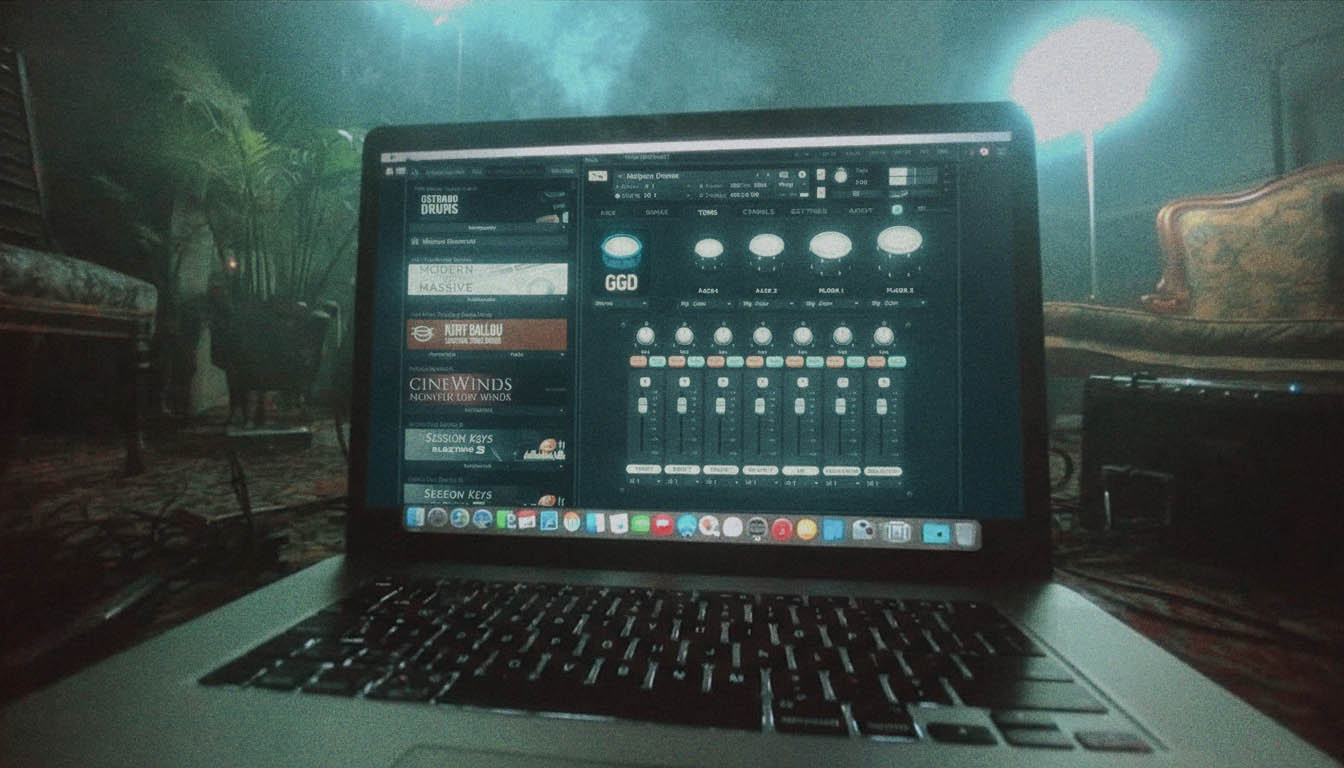
Your Get Good Drums or Superior Drummer 3 samples were processed to sound amazing in a vacuum. They weren't processed to fit your song, with your specific guitar tones and your unique arrangement.
Think of samples as perfectly recorded raw tracks, not a finished product. Your job is to make them sit in the mix.
- High-Pass Filters are Your Friend: Slate or GGD kick samples can have tons of sub-information. If you’re already getting your low-end from a different kick sample or a trigger, high-pass the other samples to avoid a cluttered, phasey mess in the low end.
- Carve, Don't Just Boost: If your live snare has a ton of body at 200Hz, maybe you should use a subtractive EQ to dip 200Hz out of your snare sample. This helps the two blend together and sound like one cohesive drum instead of two sounds stacked on top of each other.
- Tame Sample Harshness: Sometimes a cymbal sample or a snare top sample can have a nasty, fizzy resonance. A plugin like Soothe2 is amazing for this, but you can also hunt it down with a standard EQ and pull it out with a narrow cut.
What are the go-to EQ frequencies for a modern metal snare?
A modern metal snare needs to have a powerful “thwack,” a sharp “crack,” and a clean top-end “sizzle,” all without sounding muddy or thin.
- Body/Thwack (150-250Hz): This is the weight. A boost here can add power, but too much will compete with the guitars and bass. Be careful and make sure it's not adding boxiness.
- The Annoying “Gonk” (400Hz-800Hz): This is often where you'll find ugly, boxy, or ringing frequencies. A significant, wide cut here can instantly clean up a snare and make it sound more polished.
- Crack/Attack (3-5kHz): This is the money spot. The “crack” of the stick hitting the head lives here. Boosting this frequency is crucial for getting the snare to cut through the mix and snap your head back.
- Sizzle/Air (10-12kHz): A high-shelf boost here can add brightness and a professional sheen, helping the snare feel crisp and separate from the cymbals.
How do pro producers use EQ on the drum bus?
EQing the drum bus isn't about fixing individual problems—that should already be done. Drum bus EQ is for gluing everything together and adding a final layer of polish and attitude.
The moves are usually broad and subtle. Think of it as a master fader for just the drums.
- The “Smiley Face” Curve: The most common move. It involves a gentle, wide boost in the low end (around 60-100Hz) for extra punch, and another gentle, wide boost in the top end (a shelf above 10kHz) for air and sizzle. This often comes with a very broad, subtle dip in the low-mids to clean up overall muddiness.
- Tonal Shaping: Sometimes the whole kit might feel a little too aggressive in the upper mids. A very wide, 1-2dB cut around 2-4kHz on the entire bus can smooth things out without sacrificing the attack of the individual drums.
- EQ Before Compression: A popular trick is to place the EQ before your drum bus compressor. This way, you can shape the tone that the compressor is reacting to. For example, boosting the highs before the compressor can make it work a little harder on the cymbals, helping to control them and glue them to the kit. For more on how the pros use compression on drums, check out our metal compression secrets.
When should I use dynamic EQ instead of regular EQ on drums?
Use a dynamic EQ when a problem frequency only appears on certain hits or at certain volumes. A standard (static) EQ cut is always on, which can suck the life out of a drum when it's not needed.
- Taming Cymbal Wash: A crash cymbal might have a harsh, ringing frequency at 3kHz that’s painful when the drummer really lays into it, but is fine on softer hits. A dynamic EQ band can be set to dip 3kHz only when the volume crosses a certain threshold. The rest of the time, the EQ does nothing.
- Controlling Snare Ring: Some snare hits might have a specific tonal ring that pokes out, especially on ghost notes. You can use a dynamic EQ to find that ringing frequency and gently pull it down only on the loudest hits, leaving the ghost notes full and natural.
- De-essing Hi-Hats: If the hi-hats are too tizzy or sharp, a dynamic EQ in the 8-10kHz range can act as a targeted de-esser, taming the harshness without making the hats sound dark and dull throughout the whole song. The FabFilter Pro-Q 3 and Waves F6 are absolute beasts for this kind of surgical work.
Stop Guessing, Start Nailing It
These EQ guidelines are killer starting points, but every mix is different. The real secret is understanding why these moves work and learning to hear what a specific kit needs in the context of a specific song.
Imagine watching producers like Will Putney, Dan Lancaster, or Nolly Getgood EQ their drums on a real session, explaining every boost and cut. That’s what we do at Nail The Mix.
Every month, you get the full multitracks from a massive metal song and watch the original producer mix it from scratch. You get to see exactly how they tackle these drum EQ challenges and make them punch through some of the densest mixes on the planet.
Check out our full catalog of Nail The Mix sessions and see for yourself how the top instructors in the game are getting these sounds. It's time to take the guesswork out of your drum mixes.