Mixing Converge’s Raw Aggression: A Kurt Ballou Multi-Track Deep Dive
Nail The Mix Staff
Let’s face it, Kurt Ballou has a sound. As the guitarist for Converge and producer for countless legendary albums, he has mastered the art of making records that are raw, natural, and explosive, yet somehow also modern and massive. It’s a fine line to walk, and his work on Converge’s “I Can Tell You About Pain” is a masterclass in controlled chaos.
We got our hands on the raw multi-tracks from this session for an exclusive Nail The Mix deep dive, and the session files reveal exactly how that signature blend of live-band energy and crushing studio power is built. Let’s break down the key ingredients.
Building an Explosive Drum Mix
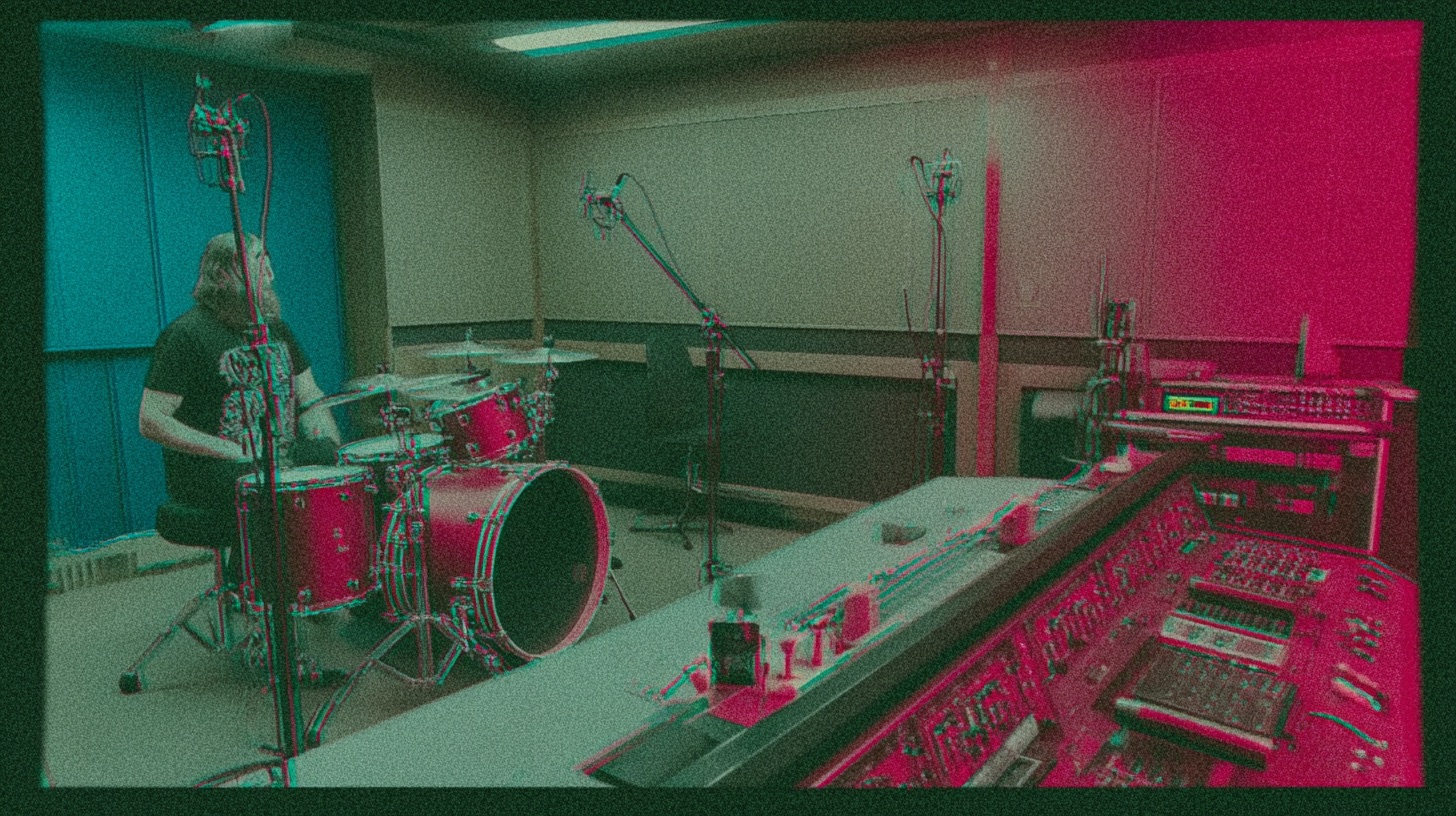
The drum sounds in this session are all about harnessing a real, hard-hitting performance. It’s not about sterile, over-processed samples; it’s about making a real kit sound larger than life.
The Snare: Why You Shouldn’t Just Replace It
Right away, you see four snare tracks: Snare Top, another Snare Top (likely a different mic like a Shure SM98 for a different character), Snare Bottom, and a Snare Trigger. The performance is incredibly dynamic, with tons of ghost notes and intricate fills.
Your first instinct might be to just slap a sample replacer on it and call it a day. That would be a huge mistake. You’d lose all the human detail and nuance that makes a track like this breathe. Parts with fast, detailed snare work would sound robotic and clunky.
Kurt did the heavy lifting for you by providing a meticulously blended trigger track. He already chose his preferred sample and took the time to match the dynamics to the original performance. When you blend it with the natural snare mics, you can’t even tell there’s a sample there—it just sounds more powerful.
The takeaway: Before you nuke a natural snare sound, try augmenting it. If the sample you choose doesn’t sound as real and dynamic as the one provided here, you’re moving in the wrong direction.
Taming the Rooms
Looking at the session, you’ll find four distinct room mic tracks: a Close Room, Big Room, Wide Room, and a “Trigger Room,” which is likely the snare sample being sent through a software or hardware reverb to create a synthetic room sound.
When faced with this many options, many mixers make the mistake of trying to force all of them into the mix. But here’s a pro tip: producers often create multiple options during tracking to experiment or to have different flavors for different sections of an album. You are not required to use all four.
Start by listening to your dry drums and ask what’s missing. Do you need more length? Try the Trigger Room. Do you need more space and air? Bring up the Big Room or Wide Room. Start with one or two that serve a purpose and build from there.
The Kurt Ballou Bass Tone: Grime, Guts, and Grit
This is one of the most exciting parts of the session—the bass tone is absolutely disgusting, in the best way possible. It’s mean, full of teeth, and cuts right through the dense guitars.
Highs and Lows: The Split DI Trick
Kurt provided multiple bass signals, but the gold is in the DI, which is split into separate low and high-frequency tracks. This is a common pro technique that gives you an incredible amount of control. You can keep the sub-bass tight, clean, and mono while dialing in as much clank and distortion as you want from the high-frequency track without making the low-end flubby.
That Signature Amp Growl
Alongside the DI, you get a track labeled “Nifty one 50,” almost certainly a roaring Peavey 5150 amp. This is where that trademark grind comes from. Between the split DI and the mic’d amp, you have all the ingredients for a legendary bass tone. Again, the work has been done for you—the sound is right here. Your job is to balance these elements to fit the mix.
Crafting Chaotic Guitars and Noise
The guitar approach further reinforces the philosophy of committing to a sound at the source. There are no DIs for the heavy guitars, meaning you have to work with the killer tones that were captured on the day.
The Wall of Sound: JMP and 6534 Amps
The main guitars were tracked through a JMP-style amp, while additional layers for heavier sections were done with a Peavey 6534+. Both are absolute monsters for heavy music. Each amp was captured with multiple close mics, giving you options to blend for the perfect tonal balance.
Like the drums, smart EQ strategies are key. It’s not just about scooping mids, but finding the right balance between the punch of each mic and carving out space so the bass and vocals can shine through.
The “Acoustic” Chaos-Maker
Here’s where things get really interesting. There’s a track labeled “Acoustic,” but it’s anything but. It’s a gnarly, distorted, chaos-maker—a noise guitar used to inject pure hate and texture into the track. When you combine this sound with that mega-distorted bass tone, you get the stuff of legends. It’s a reminder that sometimes the most memorable moments in a mix come from the most unconventional sources.
Vocals That Cut Through the Mayhem
The vocals, delivered with raw fury by Jacob Bannon, were also tracked with a clear vision from the start.
Committing to the Sound: Tracking with Compression & Distortion
The main vocal tracks already sound processed—you can hear the aggression from hardware compression and distortion printed right into the recording. Many pros prefer this method over using plugins because it forces a commitment to the sound and often adds a character that’s hard to replicate in the box. The aggression is baked in, so your job is to make it sit right, not create it from scratch. For extra texture, Kurt even provides a separate “Reamp Vocals” track, adding another layer of grit and space.
Learn from the Pros, Mix with the Pros
Breaking down these multi-tracks shows how a masterpiece of modern aggression like “I Can Tell You About Pain” is constructed. It’s about:
- Honoring the performance: Don’t erase the human element in the drums.
- Layering textures: Blend clean lows with distorted highs on the bass.
- Adding chaos intentionally: Use noise elements to elevate the intensity.
- Committing to sounds early: Track with the right amps and processing from the start.
Reading about these techniques is one thing. But what if you could watch Kurt Ballou himself mix these exact tracks, explaining every plugin, every fader move, and every decision he makes?
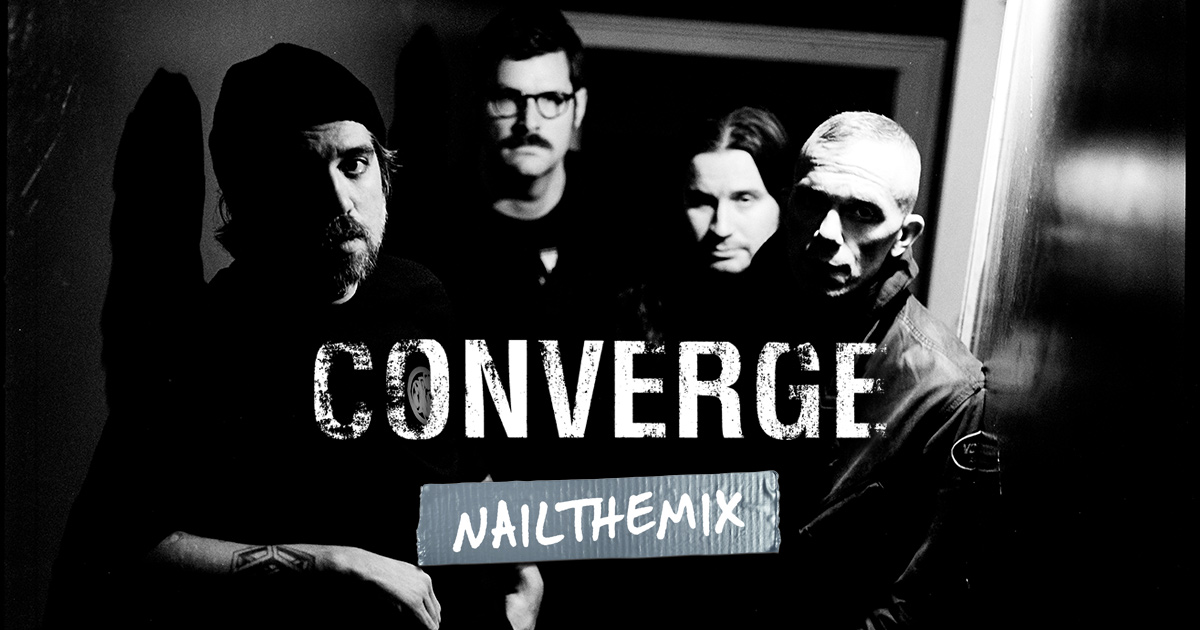
Converge on Nail The Mix
Kurt Ballou mixes "I Can Tell You About Pain"
Get the Session
With Nail The Mix, you can. Subscribers get access to the raw multi-tracks from iconic songs like this one every single month, plus an 8-hour livestream where the original producer mixes the song from scratch. It’s the ultimate access to learn how to mix modern metal.
If you’re ready to see how the chaos is truly controlled, check out the Converge session with Kurt Ballou now.