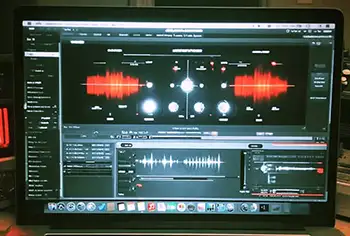
The Best Gate Expander Plugins for Brutal, Tight Metal Mixes
Nail The Mix Staff
Let’s talk about the space between the notes. In heavy music, that silence is just as important as the noise. It’s what makes a chugging riff feel like a machine gun. It’s what separates a clean, punchy tom fill from a messy wash of cymbal bleed. Getting that separation and tightness is where a good gate or expander becomes one of your most powerful weapons.
But with hundreds of plugins out there, people get hung up on which one is "the best." The reality? It’s less about the specific plugin and more about what you do with it. Your skill and your decisions are what make a mix crush. That said, some tools are just built better for certain jobs, and when it comes to surgically cleaning up metal tracks, having the right gate/expander in your arsenal makes a huge difference.
Forget "plugin acquisition syndrome." You don't need twenty different gates. You need one or two that you know inside and out, that fit your workflow, and that help you get the sound in your head out of the speakers, fast.
Here’s a breakdown of the best gate expander plugins for metal production, from modern workhorses to old-school classics, and why they kick ass.
The Best Gate Expander Plugins for Brutal, Tight Metal Mixes
FabFilter Pro-G
If you want surgical precision with an interface that actually helps you make better decisions, look no further than FabFilter Pro-G. This thing is the modern standard for a reason.
Why it’s great for metal:
- Insane Visual Feedback: You can literally see the signal hitting your threshold and how the gate is reacting. This is massive for setting the perfect attack and release times to avoid choked-off transients or ugly chatter.
- Advanced Sidechaining: Pro-G’s sidechain EQ is a game-changer. Gating toms? You can filter the sidechain input to only listen for the low-mid thump of the tom itself, ignoring the high-frequency cymbal bleed that would cause false triggers.
- Lookahead: This feature lets the plugin "see" the transient a few milliseconds before it happens, allowing for a super-fast, click-free opening. It’s perfect for preserving the initial crack of a snare or the pick attack of a guitar.
Actionable Tip: Use Pro-G on tom tracks. Engage the external sidechain and feed it a signal from your kick and snare. Now, invert the sidechain action. This tells the tom gate not to open when the kick or snare hits, giving you perfectly isolated toms that only trigger on actual tom hits.
SSL Channel Strip Gates (Waves, Plugin Alliance, UAD)
Sometimes you don’t need a scalpel; you need a hammer. The gates found on classic SSL console channel strips are simple, fast, and have a musical character all their own. You’ve heard them on thousands of records.
Why it’s great for metal:
- Speed and Simplicity: There are only a few knobs: Threshold, Release, Hold, and Range. It forces you to use your ears and make quick, effective decisions. It’s the opposite of overwhelming.
- The "Range" Knob: This is the secret sauce. Instead of slamming the gate completely shut, the Range control lets you decide how much you want to reduce the signal. Setting it to -20dB instead of -∞ can clean up drum bleed without making the kit sound unnaturally sterile. It just tucks the bleed down instead of erasing it.
- Musical Character: These gates just work. They’re punchy and effective for tightening up kick, snare, and even DI bass without overthinking it.
Where to get them: You can find killer emulations from Waves (SSL G-Channel), Plugin Alliance (Brainworx bx_console SSL 4000 E), or Universal Audio.
Slate Trigger 2 (As a Secret Weapon Gate)
Wait, a drum replacer? Absolutely. One of the biggest challenges with gating drums is getting the detector to accurately follow the performance. Well, what plugin is better at detecting drum transients than a world-class drum replacer?
Why it’s great for metal:
- World-Class Transient Detection: Trigger 2 is designed to pick out individual drum hits from a sea of bleed with incredible accuracy. You can use this powerful detection engine for gating.
- How it works: Load Trigger on a tom track. Instead of loading a sample, go to the "Gate" tab. Now you have access to Trigger’s powerful transient detection to control a gate. You can fine-tune the sensitivity and re-trigger rejection to create a near-perfect gate that’s almost impossible to fool with cymbal wash.
This is a pro-level trick that many top mixers use for the cleanest, most consistent drum gating possible, similar in principle to advanced techniques like using MIDI to trigger gates.
Sonnox Oxford Drum Gate
If you want a plugin built from the ground up for one specific, difficult task, this is it. The Sonnox Oxford Drum Gate is an "intelligent" gate made specifically for drums.
Why it’s great for metal:
- Intelligent Detection: It doesn’t just listen for volume. It analyzes transients to learn the difference between a tom hit and a stray snare hit. You can literally tell it to "accept" the toms and "reject" the snare and cymbals.
- Decay Shaping: This is huge. Instead of just setting a release time, you get a decay curve you can shape. Want a tight, punchy tom? Give it a fast decay. Want a big, resonant modern metal tom sound? Stretch out the decay to let the shell ring out perfectly every time. It gives you incredible consistency.
Your Stock DAW Gate
Seriously. Before you spend a dime, push your stock gate to its absolute limit. Whether it’s Logic Pro, Pro Tools, Reaper, or Cubase, the gate that came with your DAW is probably way more powerful than you think.
The truth is, all the fancy plugins in the world won’t help if you don’t understand the fundamental controls:
- Threshold: The volume level the signal has to cross to open the gate.
- Attack: How quickly the gate opens. Too slow, and you’ll cut off the initial transient (the "thwack" of the drum). Too fast, and you can get an unnatural "click."
- Hold: How long the gate stays open after the signal drops below the threshold. This can prevent the gate from "chattering" on a decaying signal like a cymbal or ringing snare.
- Release: How slowly the gate closes. This is key for a natural-sounding decay.
Actionable Tip – Tightening Guitars:
Put your stock gate on a heavy, palm-muted rhythm guitar track.
- Set the Attack to its fastest setting (e.g., 0-1ms) to let the pick attack through.
- Set the Release around 50-100ms as a starting point.
- Loop a chunky, staccato riff. Slowly bring the Threshold up until the gate starts cutting off the noise and hiss between the palm mutes.
- Fine-tune the Release time. Too fast, and the note endings will sound choppy. Too slow, and you’ll let too much noise through. Find the sweet spot where the riff feels tight and aggressive but still natural.
Beyond the Plugin: The Decisions That Matter
Having a great gate expander plugin is awesome. But knowing when to use it, how to set it, and why you're even reaching for it is the difference between an amateur and a pro mix. The best tool can't make up for a lack of foundational skills in EQ or compression.
A plugin is just a tool. The real magic is in the application, and the best way to learn that is by seeing how the best in the business do it.
Imagine watching producers like Jens Bogren, Will Putney, or Nolly Getgood tackle these exact problems in a real session with real multitracks. That’s what we do at Nail The Mix. You get to be a fly on the wall as world-class instructors mix legendary metal tracks from scratch, explaining every single move. You can see precisely when they reach for a gate, which one they choose for the job, and hear the "why" behind their settings.
If you’re ready to move past just collecting plugins and start mastering the techniques that create powerful, professional metal mixes, check out the full Nail The Mix session catalog.