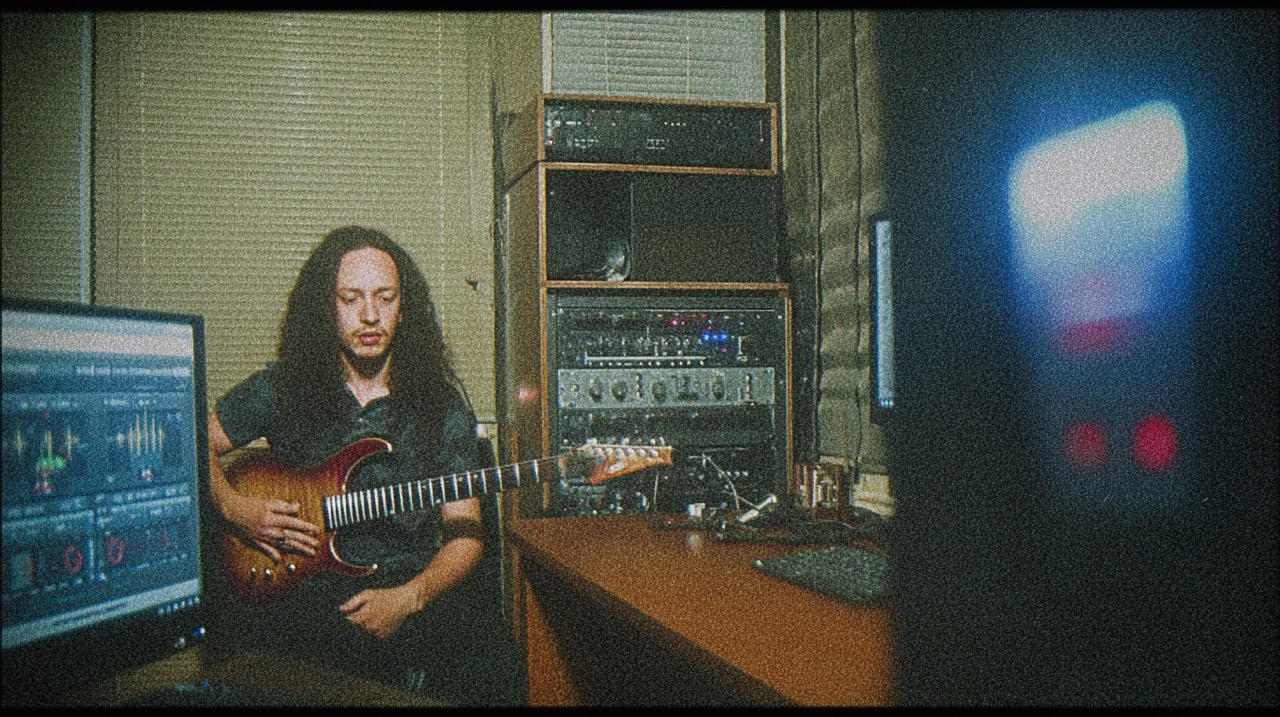
Amp Sim FAQs: Your Guide to Modern Metal Tones
Nail The Mix Staff
Amp sims are everywhere in modern metal production. From bedroom deathcore projects to chart-topping albums by bands like Periphery and Spiritbox, guitar plugins from Neural DSP, STL Tones, and countless others have become the go-to for crafting absolutely punishing guitar tones.
But let’s be honest, just loading up a plugin doesn’t guarantee a killer sound. We’ve all been there: you dial in what you think is a sick tone, but in the mix, it sounds thin, fizzy, or just plain digital. The reality is, with the bar for production quality higher than ever, you need to know how to wring every last drop of performance out of these powerful tools.
Let’s break down the most common questions and give you actionable answers to get your amp sim tones sounding massive.
What are amp sims and why is everyone using them?
An amplifier simulator (amp sim) is a piece of software or hardware that emulates the sound of a physical guitar or bass amplifier, cabinet, and microphone setup. Instead of micing up a cranked 4×12 cab, you plug your guitar directly into your audio interface and let the plugin do the heavy lifting inside your DAW.
In the world of modern metal, where production needs to be pristine and powerful, amp sims offer a few huge advantages:
- Consistency: The tone you dial in on day one is the exact same tone you’ll have on day 100. No worrying about mic placement shifting or tubes wearing out.
- Flexibility: Want to change from a Mesa/Boogie Dual Rectifier sound to a Peavey 5150 sound mid-song? It’s just a few clicks. You can audition dozens of amps and cabs in minutes.
- Cost & Space: Getting a pro-level collection of amps, cabs, and mics would cost tens of thousands of dollars and require a dedicated studio space. Amp sims put that arsenal right on your laptop for a fraction of the cost.
- Silent Recording: You can track album-quality metal tones with headphones at 3 AM without getting evicted.
This is why they’re essential for meeting today’s insane production standards. Bands and producers can achieve polished, mix-ready sounds from anywhere.
How do I get a killer DI tone for an amp sim?
Your amp sim is only as good as the signal you feed it. A weak, noisy, or clipped Direct Input (DI) signal is a guaranteed recipe for a bad tone. Garbage in, garbage out.
Nail Your Gain Staging
This is the most critical step. Your DI signal should be clean and healthy, but not so loud that it’s clipping the converters in your audio interface.
- The Sweet Spot: Aim for peaks hitting somewhere between -18dBFS and -12dBFS on your DAW’s channel meter.
- What to Use: A quality audio interface with a dedicated instrument input (Hi-Z) is your starting point. Interfaces from Focusrite (like the Scarlett series) or Universal Audio (Apollo series) are industry standards for a reason.
- Pro Tip: For an even cleaner and more robust signal, run your guitar into an external DI box like a Radial J48 or a Rupert Neve Designs RNDI first, and then run the output of the DI box into the microphone preamp on your interface.
Don’t Forget the Basics
- New Strings: Old, dead strings sound dull and won’t give you the attack and clarity needed for tight metal rhythms.
- Proper Setup: Make sure your guitar’s intonation is set and there’s no excessive fret buzz. These small issues get magnified by high-gain amp sims.
- Good Cables: A cheap, poorly shielded cable can introduce a ton of unwanted noise.
Why does my amp sim sound like a fizzy mess?
This is the #1 complaint we hear. You load up a high-gain preset and it sounds like a swarm of angry bees. Usually, it’s one of three culprits.
It’s Probably Your IRs (or Cab Sim)
The cabinet simulation is arguably more important than the amp head sim. An impulse response (IR) is a digital snapshot of a real speaker cabinet, microphone, and room. A bad IR will make even the best amp sim sound terrible. If your tone is all top-end fizz and has no body, the IR is the first place to look. Try cycling through different speaker and mic combinations within your plugin to find one that has the body and punch you’re after.
Tame Your Gain Staging (Inside the Plugin)
Cranking the gain knob to 10 is a rookie mistake. Modern metal tone isn’t about maximum distortion; it’s about clarity and tightness. Too much gain creates a compressed, fizzy sound that has no dynamic punch and gets lost in a dense mix.
Try backing the gain down to around 5 or 6, and instead, use a boost pedal simulation in front of the amp. A virtual Tube Screamer (often labeled “Screamer” or “Overdrive”) with the Drive at 0, Tone around 6, and Level at 10 is a classic trick. This tightens up the low-end and adds aggression without turning your tone into mush.
The Power of Post-EQ
Just like a real amp, an amp sim needs some EQ to sit properly in the mix. The fizz you’re hearing often lives in the super high frequencies.
- Low-Pass Filter (LPF): This is your best friend. Start by cutting everything above 10-12kHz. You’ll be shocked at how much harshness this removes without affecting the core tone.
- High-Pass Filter (HPF): Cut the unnecessary sub-bass mud, usually everything below 80-100Hz.
- Surgical Cuts: Use a parametric EQ with a narrow Q to find specific “whistling” or harsh frequencies (often between 2kHz and 5kHz) and pull them down a few dB.
For a deep dive into carving out the perfect space for your guitars, check out our complete guide on EQing modern metal guitars for max impact.
How do amp sims handle low-tuned, 8-string guitars?
They handle them incredibly well—in fact, they’re often the best tool for the job. The low-tuning trend, pioneered by bands like Meshuggah, is a defining feature of modern metal, but it presents a huge challenge: keeping the low-end tight and defined.
Many modern amp sims are designed with this in mind. Plugins like the Neural DSP Archetype: Gojira or Fortin Nameless Suite excel at handling drop-F# and lower. The key is in the pre-amp circuit modeling and the built-in tools. Use the integrated noise gate aggressively to clamp down between chugs, and absolutely use a boost pedal sim to tighten the low-end response before it even hits the “amp.” This prevents the lowest notes from turning into a flabby mess.
Should I use stock cabs or custom Impulse Responses (IRs)?
A few years ago, the answer was always “use custom Impulse Responses (IRs).” Today, it’s not so simple.
The stock cabinets included with premium plugins from companies like Neural DSP and STL Tones are fantastic. They’re often captured by top-tier producers like Jens Bogren or Will Putney and are more than capable of producing a finished, record-quality tone right out of the box.
However, third-party IR packs from companies like OwnHammer, York Audio, or Bogren Digital still offer a massive advantage: options. Having a deep library of IRs allows you to find the absolute perfect speaker/mic combination for your specific song and guitar. You can even blend multiple IRs together using a dedicated loader like ML Sound Lab’s MIKKO to create a unique hybrid tone.
Our advice: Start with the stock cabs. Learn them inside and out. If you feel like you aren’t quite getting the character you want, then explore the world of custom IRs.
How can I make amp sims feel more like a real amp?
That “in the room” feel is often what players miss. This comes down to two things: latency and subtle processing.
- Latency: This is the small delay between when you pick a note and when you hear it through your speakers. To minimize this, set a low buffer size in your DAW’s audio preferences (e.g., 128 or 64 samples) while tracking. This reduces the processing load and makes the response feel more immediate.
- Bus Processing: A raw amp sim can sound a bit dry and sterile. Sending your guitar tracks to a bus and adding subtle saturation or a touch of compression can help them feel more “finished” and glued together, mimicking the way a real amp interacts with a room and a console.
Watching how seasoned pros dial in their amp sims is the fastest way to learn these nuanced tricks. Many of the world-class Nail The Mix instructors rely on amp sims daily to get their signature sounds.
Can I get a pro metal tone with a free amp sim?
Absolutely. The barrier to entry for great tone is lower than ever. Plugins like the STL Tones Emissary (the free version), Ignite Amps Emissary, and the various LePou plugins are surprisingly powerful and can definitely get you a mix-ready sound, especially when paired with quality free IRs.
While paid plugins offer more features, slicker interfaces, and all-in-one convenience, the core technology is accessible to everyone. There’s nothing holding you back from producing a legitimately pro-quality mix in your bedroom.
The Next Step: From Good Tone to a Great Mix
Dialing in a great amp sim tone is a huge step, but it’s just one piece of the puzzle. The real magic happens when you learn how to make that tone work with crushing drums, a thick bass, and aggressive vocals.
On Nail The Mix, we give you the ultimate behind-the-scenes look. You get the raw multi-tracks from bands like Lamb of God, Gojira, and Trivium and get to watch the original producer mix the song from scratch, explaining every plugin, every EQ move, and every decision they make.
If you’re ready to see how the pros use these tools to create industry-leading metal mixes, check out our entire catalog of sessions and see what it’s all about.