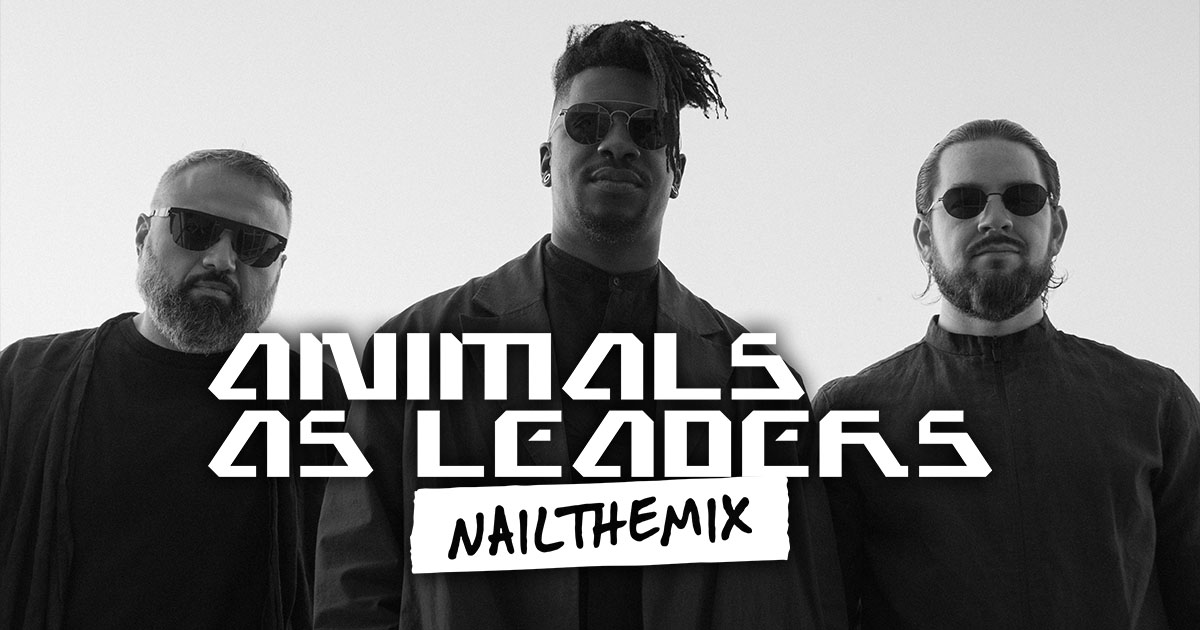
Download Animal As Leaders “Red Miso” raw multi-tracks
Nail The Mix Staff
Let’s be real, mixing an instrumental prog-metal powerhouse like Animals As Leaders is a whole different beast. You don’t have a lead vocal to build your mix around, which means every single instrument has to be articulate, powerful, and perfectly placed. With their track “Red Miso,” the challenges are cranked to eleven, from earth-shaking extended-range guitars to drum parts so intricate they feel like a workout just listening to them.
We got to tear open the raw multi-tracks for “Red Miso” from their dual-mixer session on Nail The Mix featuring Nolly Getgood and the band’s own Javier Reyes. What we found was a masterclass in modern production, full of unique hurdles and killer opportunities for any producer. Let’s break down some of the biggest challenges and how you can approach them in your own mixes.
Conquering the Sub-Region: Extended-Range Guitars
One of the first things that hits you in “Red Miso” is the sheer weight of the guitars. These aren’t your standard six-strings; the use of extended-range instruments injects a massive amount of energy deep into the sub-bass frequencies. This is awesome for that gut-punch feel, but it’s a nightmare for mix clarity if not handled correctly.
That low-end energy can easily turn into a muddy mess, fighting with the kick drum and the fundamental notes of the bass. Your typical high-pass filter is a starting point, but you risk thinning out the very thing that makes the tone so powerful. This is where more advanced EQ strategies become essential. Consider using a multi-band compressor to clamp down on just the unruly sub-frequencies (say, below 80Hz) only when they get too loud, preserving the thickness of the tone without letting it overwhelm the mix.
The Evolving Guitar Tone: More Than One Sound
In a lot of metal songs, you dial in one killer rhythm tone and you’re set. Not here. “Red Miso” is a journey of changing textures. The tones morph from section to section—from heavy and distorted to glassy and clean, and even some wild, whammy-pedal-infused sounds. The care that went into crafting these tones was immense; the band noted they spent as much time dialing in amps as they did on the final mix itself.
This means a “set it and forget it” mix approach is out the window. You have to treat each section almost like its own individual mix.
- Automation is Your Best Friend: Don’t be afraid to automate your EQ, compression, and effects sends for each guitar part. The EQ that makes the heavy rhythm chug will likely not work for the glassy, clean section.
- Embrace the Journey: The goal is to make these transitions feel seamless yet impactful. Each new tone needs to lock in perfectly with the drums and bass, creating a cohesive song that flows from one massive sound to the next.
Your Turn: The Power of Included DIs
One of the coolest things about these sessions is that you get the direct input (DI) tracks for the guitars. This is a golden opportunity. Creating compelling tones from a dry DI is a skill that separates the pros, and it’s something many producers struggle with. With these DIs, you can try to re-amp and build your own tones from scratch. Can you beat the originals? Can you create a version that serves your mix even better? There’s even a DI track with a gnarly whammy effect baked right in to play with. This is the kind of hands-on practice that truly elevates your skills.
Managing a Drumming Masterclass
Matt Garstka’s drumming is legendarily complex, and this track is no exception. The performance is packed with dynamic ghost notes, lightning-fast fills, and a huge array of accent cymbals, including small stacks and splashes.
The challenge? Making every one of those intricate details audible without turning the drum mix into a chaotic wash of cymbals and bleed.
Mic Options Galore
The way these drums were recorded gives you a ton of options to solve this puzzle.
- Audience Perspective Overheads: Instead of the typical drummer’s perspective, the overheads are set up from the audience’s point of view. This places the hi-hat more towards the center and the floor tom on the left side of the stereo image, offering a different and engaging listening experience.
- Crucial Spot Mics: With so many small, quick cymbal hits, the spot mics for the stacks and ride are your secret weapon. They allow you to bring those accents forward in the mix right when they happen, ensuring they don’t get lost under the wall of guitars.
- Rooms & Parallels: You’re given multiple room mic options, including some pre-processed parallel tracks. One of the parallel room tracks is wonderfully explosive. Blending these in allows you to control the level of aggression and ambience throughout the song. Crushing a parallel room mic with compression and mixing it in beneath the main drum bus is a classic trick for adding size and power.
Building the Foundation: Smart Bass and Synth Layering
Beneath the intricate guitars and drums lies a powerful and intelligently crafted low-end and atmospheric synth foundation.
Beyond a Single Bass Tone
Just like the guitars, the bass isn’t a one-sound-fits-all instrument here. The production features different tones for different sections.
- Clean vs. Grit: A cleaner, rounder bass tone is used in some parts to provide a solid, melodic foundation. When the track gets heavier, gritty, distorted layers are brought in to help the bass cut through the dense guitars and add aggression. The signal chain included mics like a Shure Beta 52, a Beta 56, and a Heil PR 20, each capturing a different facet of the tone.
- Layering for Impact: This technique of layering and automating bass tones is a pro move that helps define the dynamics of a song, making clean parts feel wider and heavy parts hit harder.
Finding Space for the Synths
“Red Miso” is laced with cool synth textures that primarily live in the mid-range. Normally, this would be a high-traffic area, creating a frequency war with the guitars. But since the guitars are tuned so low, it creates a unique mixing puzzle. The synths can own that mid-range space, providing harmonic and melodic content while the guitars dominate the low-mids and subs. The challenge is to get the synths to pop and feel present without clashing with the snappy attack of the snare or the glassy transients of the guitars.
Even better, the session includes the MIDI for the synths. You can load this into your DAW, see the exact chords and arrangements, and even try swapping in your own synth sounds. It’s an invaluable look into the compositional mind of the band.
Learn Directly From the Band and the Pros
Reading about these techniques is a great start. But what if you could grab the faders yourself and tackle these challenges with the full multi-tracks? What if you could watch Javier Reyes and Nolly Getgood mix this exact song from start to finish, explaining every plugin choice and every creative decision?
Animals as Leaders on Nail The Mix
Nick Morzov & Javier Reyes mixes "Red Miso"
Get the Session
That’s exactly what you get with the Animals As Leaders session on Nail The Mix. It’s your chance to go beyond presets and tutorials and learn the real-world strategies that top-tier artists and producers use to craft genre-defining sounds. If you’re serious about taking your production skills to the next level, see how the pros unlock their sound. Happy mixing.