
How To Use Toontrack Dark Industrial EZX For Modern Metal Drums
Nail The Mix Staff
We hear the same complaints all the time about modern metal drums. They sound fake, programmed, like plastic toys in a vacuum. Nowhere is this more obvious than in a blast beat programmed with a single one-shot snare sample, maxed-out velocity, and quantized to 100%. It’s just awful.
But we’ve also all heard programmed drums that feel real, sound massive, and kick you right in the chest. You can close your eyes and picture a real drummer annihilating the kit. The secret? Even those drums are swimming in samples and editing.
So, if both the terrible-sounding drums and the amazing-sounding drums are using the same core technology, what’s the difference? It’s not that you use samples and editing; it’s how you use them. The grid isn’t going to humanize your drums for you. That’s your job.
A powerful tool like the Toontrack Dark Industrial EZX can be your best friend or your worst enemy in this fight. Let’s break down how to use it to create drums that sound aggressive and polished, not like a robot falling down a flight of stairs.
What is the Toontrack Dark Industrial EZX?
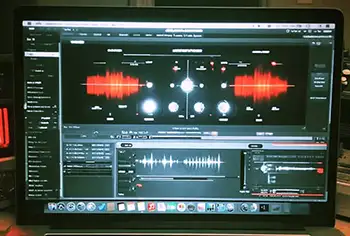
First off, let’s get acquainted. The Dark Industrial EZX isn’t just another metal drum library. Created by producer/engineer Forrester Savell (Karnivool, Twelve Foot Ninja, Make Them Suffer), this expansion for EZdrummer and Superior Drummer is all about texture, vibe, and modern aggression.
It’s a curated collection of kits, extra snares, and cymbals, but the real magic is in the source material and processing. You get:
- Two Full Kits: A Tama Starclassic Bubinga and a DW Collector's series kit. These are killer, organic starting points.
- Unique Percussion: The library is packed with extra sounds—electronic drums, foley, repurposed acoustic elements—that are perfect for layering.
- Forrester Savell’s Presets: The included mix-ready presets are not just EQ and compression. They are heavily processed, layered, and designed to capture that dark, gritty, industrial character right out of the box.
This EZX is perfect for producers who want drums that are both organic and heavily processed, bridging the gap between a live band and electronic-infused modern metal.
Putting It To Work: Beyond Just Loading a Preset
Loading up a killer-sounding preset is a great start, but the real art is in the performance. This is where you separate the pro-sounding tracks from the demos.
Step 1: Humanize Your MIDI (The Cure for Robotic Blasts)
The number one reason programmed drums sound fake is perfection. No human drummer hits the drum at the exact same velocity, in the exact same spot, at the exact same time, every single time. That slight variation is what our brains register as “human.”
- Vary Your Velocities: The Dark Industrial EZX is a multi-sampled library. This means a hit at a velocity of 115 isn't just a quieter version of a hit at 127—it’s a completely different sample. When programming a blast beat, instead of setting every snare hit to 127, try alternating between 118 and 125. Use slightly lower velocities for ghost notes and fills. Get into your DAW’s MIDI editor (the diamond-shaped velocity markers in Pro Tools or the vertical bars in Cubase and Logic) and manually create realistic dynamics.
- Quantize with Feel: Stop quantizing everything to 100%. If you snap every single hit perfectly to the grid, you strip all the human push and pull out of the performance. A great trick used by top-tier mixers like Dave Otero is to quantize to around 90-95%. This tightens up the performance significantly but still preserves some of the original human timing variations, making it feel powerful but not robotic.
Step 2: Reinforce Live Drums, Not Just Replace Them
Samples are most powerful when they reinforce great-sounding acoustic drums. Let’s say you’ve recorded a drummer whose blast beats are a little weak—it’s common, as drummers can’t hit as hard when playing that fast. The result is often less snare impact and more cymbal bleed.
Simply turning up the live snare mic only brings up that nasty bleed with it.
This is a perfect job for the Dark Industrial EZX. Instead of completely replacing the kit, use a plugin like Slate Trigger 2 to blend in a snare sample from the EZX underneath the live snare.
- Pick a sample with a lot of attack, like one of the heavily processed snares from Forrester’s presets.
- Dial it in so you get the punch and consistency of the sample, but you still hear the "air" and natural decay of the real snare and overheads.
- This approach gives you the best of both worlds: the power and reliability of a world-class sample with the feel and dimension of a human performance.
Step 3: Leveraging the "Industrial" in Dark Industrial EZX
The unique sounds in this library are where you can get really creative.
- Layering for Impact: Don't just stick to a traditional kick/snare/toms setup. Find one of the metallic, clanky foley sounds and layer it very subtly underneath your main snare on breakdown hits. Add one of the deep, electronic kicks under your acoustic kick during a sub-drop section. These textures can add massive size and a unique character to your drum mix without sounding like obvious effects.
- Build Your Own Kit: Mix and match components. Use the organic DW kick but pair it with one of the hyper-processed snares and the trashy, electronic hats. The flexibility to create your own custom hybrid kit is one of the biggest strengths of using a tool like this within Superior Drummer 3.
Shaping the Tone: EQ and Bus Processing
Once you have a great-sounding MIDI performance triggering killer samples, it’s time to make it sit perfectly in your mix. The presets in the Dark Industrial EZX are fantastic starting points, but you’ll likely need to tweak them to fit your specific song.
- Carve Out Space: Your drums need to coexist with everything else. This often means carving out space with EQ. Modern metal guitars have a lot of low-mid information that can clash with the kick and snare. Making smart EQ cuts in your guitars can open up a huge amount of space for your drums to punch through. Learn more about how to balance guitars to make room for your drums.
- Parallel Compression: For that extra "smack," send all your drum shells (kick, snare, toms) to a separate bus and absolutely smash them with a compressor. Try a FET-style compressor like a UAD 1176 or Softube FET Compressor with a fast attack and fast release. Blend just a little bit of this hyper-compressed signal back in with your main drum bus. This adds aggression and punch without destroying the dynamics of the main drums. This is just one of many ways the pros use dynamics; you can dive deeper into drum bus parallel compression techniques.
Learning from the Masters
These techniques for programming, layering, and processing are the fundamentals behind almost every modern metal record. Knowing the concepts is one thing, but seeing them applied in a real-world session is where the magic happens.
Imagine watching the actual producer who mixed a legendary album rebuild the drum sound from scratch, explaining every plugin choice, every subtle velocity edit, and every compression move. That’s what Nail The Mix is.
Every month, you get the real multi-tracks from a massive metal song and watch a world-class producer mix it live, showing you exactly how they achieve their signature sounds. Want to see how guys like Will Putney, Jens Bogren, or Nolly Getgood treat their drum samples and make them sit in a dense mix? You can.
Check out our catalog of some of the best Nail The Mix sessions and see for yourself how the best in the business build groundbreaking metal productions from the ground up.