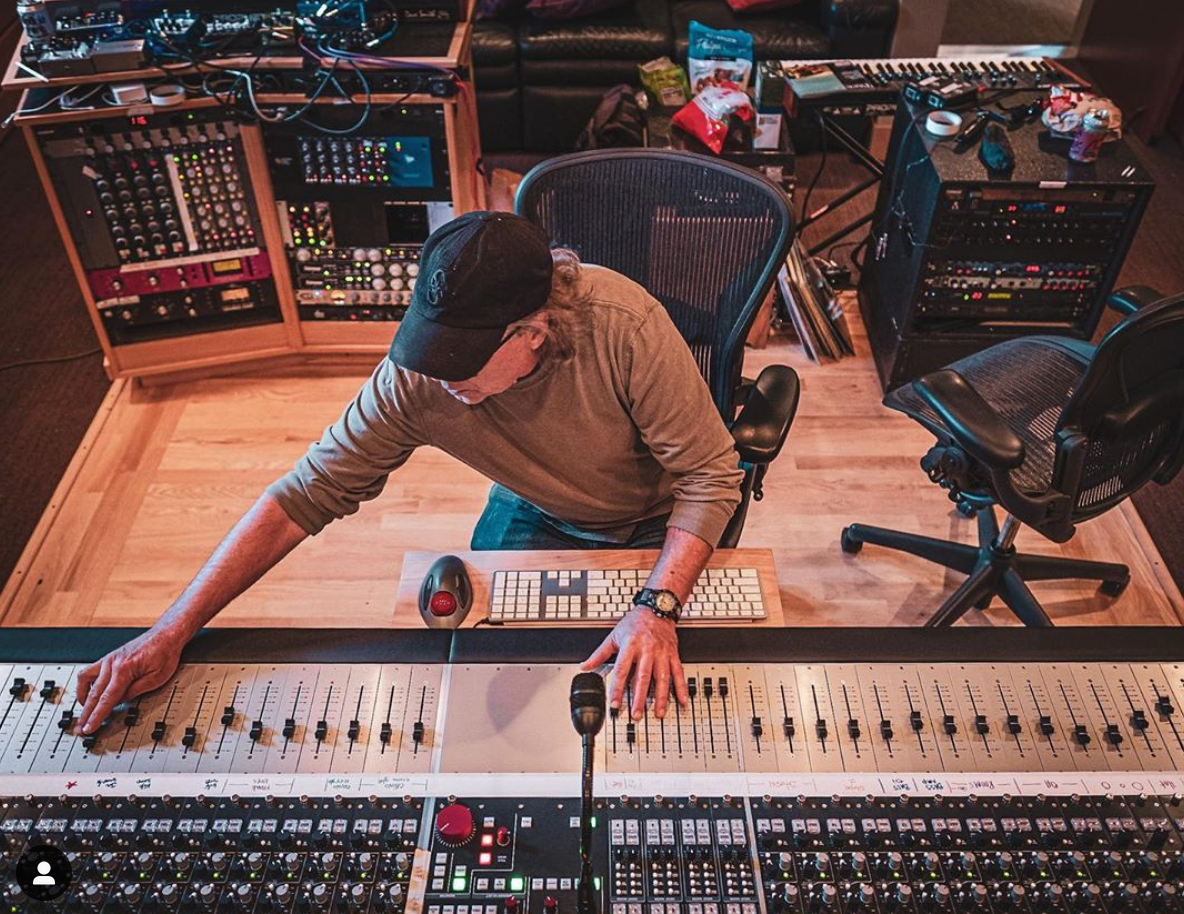
How Terry Date Redefined Metal Production
Nail The Mix Staff
When you hear the guillotine-like snare crack on Pantera’s “Walk” or the colossal, breathing groove of Deftones’ “My Own Summer (Shove It),” you’re hearing the work of a legend. Terry Date isn’t just a producer; he’s an architect of the sonic blueprint for modern heavy music. His ability to capture raw power while maintaining clarity and punch has influenced generations of producers.
Instead of just admiring his work, let's break down some of the core Terry Date production techniques you can apply in your own DAW right now.
Profile: The Architect of Modern Metal Sound
Before we get into the nitty-gritty, you have to understand the sheer impact Terry Date has had. We're talking about a discography that defines entire genres. He was behind the board for landmark albums like Pantera's Vulgar Display of Power and Far Beyond Driven, Soundgarden’s Badmotorfinger, and Deftones' Around the Fur and White Pony.
His signature isn't one specific trick, but a philosophy: make it sound massive, aggressive, and dynamic, but let every instrument have its own space to dominate. He had a deep understanding of how to balance guitars and bass in a mix. He bridged the gap between raw 80s thrash production and the polished, hard-hitting sound that would define metal and alternative rock in the 90s and beyond. His drum sounds, in particular, became the gold standard.
Deconstructing the Terry Date Drum Sound
The foundation of a Terry Date mix is almost always an absolutely monstrous drum sound. It’s not just loud; it’s articulate and explosive.
The Snare is King
Terry Date’s snare sound is iconic for a reason. It’s a perfect storm of crack, body, and a short, explosive ambience. It cuts through the densest wall of guitars without ever sounding thin or fake.
How to Get The Sound:
- The Gated Reverb: This is the big one. But it's not just slapping a reverb on the snare. The trick is how you control it. Send your snare track to an aux bus. On that bus, place a reverb plugin first—something like a Valhalla VintageVerb set to a bright plate or room with a very short decay (under 1 second). After the reverb, insert a gate like the FabFilter Pro-G. Set the gate’s threshold so it only opens on the main snare hit, and adjust the hold and release to create a sharp, explosive burst of ambience that cuts off cleanly. Dig into more advanced techniques on how to properly gate a snare for maximum impact.
- Sample Layering: Even back in the analog days, layering was key. Today, it’s easier than ever. Find a primary snare sample that has the "crack" you want (like a high-tuned metal shell snare). Then, blend in a second sample underneath it for body—think a lower-tuned, fatter snare. Mastering a few killer drum sample replacement techniques is essential for this sound. Pantera's snare often had a ton of 200-250Hz body to give it that thwack.
- EQ: Boost the fundamental for weight (180-250Hz) and the high-end for crackle (5-8kHz). Don't be afraid to make aggressive moves here.
Punchy Kicks and Toms
The kick drum in a Terry Date mix is all about pairing low-end weight with a clear, clicking attack that doesn't get lost against the bass guitar.
How to Get The Sound:
- EQ for Separation: On the kick, try a healthy boost around 60-80Hz for the "thump." Carve out a significant cut in the "boxy" zone, somewhere between 300Hz and 500Hz. Then, add a boost in the upper mids (3-5kHz) for that classic beater click. For more on this, check out some pro tips on how to EQ metal kick drums.
- Compression for Punch: Use a compressor with a fast attack and medium release to let the initial "click" of the beater pop through before clamping down to control the sustain. The dbx 160 or an SSL-style bus compressor on a single track can work wonders here. For more details on this, check out our deep dive on metal compression secrets.
The Guitar Tone: Clarity in Chaos
Terry Date’s guitar sounds are legendary for being incredibly heavy and saturated without turning into a fuzzy, indistinct mess. You can hear every note in Dimebag’s riffs and every bit of texture in Stephen Carpenter’s chugs, a testament to his ability to bring clarity to chaos even when dealing with low-tuned guitars.
Mic Placement and Blending
It starts at the source. The classic setup of one of the best high-gain amps for metal (like a Randall RG100, Mesa/Boogie Dual Rectifier, or Peavey 5150) pushing a cabinet is standard. The magic is in the mic'ing.
- The SM57 Workhorse: A Shure SM57 pointed at the sweet spot where the speaker cone's dust cap meets the paper is the undeniable starting point.
- The Blend: To get that Date-level size, the blend is key, and as any guitar mic showdown demonstrates, a classic pairing is a ribbon mic like a Royer R-121 placed next to the 57. The ribbon captures a darker, fuller low-midrange that, when blended with the 57's aggressive bite, creates a massive, three-dimensional tone. Another great option is a Sennheiser MD 421 for its pronounced midrange character. Phase-align the two mics to avoid a hollow, weak sound.
Strategic EQ for Guitars
This is where you carve out space and add definition. It's not just about a simple mid-scoop; it's about making surgical moves.
How to Get The Sound:
- High-Pass Everything: The first move on heavy guitars should almost always be a high-pass filter. Start around 80Hz and push it up until the guitars start to sound thin, then back it off slightly. This cleans up low-end mud and makes room for the kick and bass.
- The "Vocal" Cut: Find where the lead vocal sits (usually somewhere between 1-3kHz) and make a gentle, wide cut in that range on your rhythm guitars. This creates a natural pocket for the vocal to sit in without having to crank its volume.
- Tame the Fizz: That harsh, fizzy high-end (often 7kHz and above) can make guitars sound cheap and grating. Use a narrow EQ band to find the most offensive "fizz" frequency and pull it down. This preserves the "air" and "attack" while removing the harshness.
For a comprehensive guide on this, explore our hub on EQing modern metal guitars for max impact.
Bringing It All Together
Terry Date's philosophy is about enhancing the power that's already there. His techniques—the punchy, gated drums; the clear, heavy guitars; and the smart separation—are fundamental pillars of modern metal production.
Learning these concepts is one thing, but seeing them applied in real-time is a complete game-changer. Imagine watching the world’s best producers pull up the multi-tracks for a massive song and build a mix from scratch, explaining every EQ move, compression setting, and creative decision. That’s what happens every month at Nail The Mix.
You get the actual songs, from the actual bands, mixed live by producers who have shaped the sound of metal. If you want to go beyond the theory and see how producers like Jens Bogren, Will Putney, and Nolly Getgood apply these core principles, check out the full Nail The Mix sessions catalog. You can learn directly from a massive roster of Nail The Mix instructors who are carrying on the legacy of powerful production started by pioneers like Terry Date.