Dialing in Sylosis guitar tone w/ Josh Middleton
Nail The Mix Staff
Let’s be real—a lot of modern metal guitar tones can start to sound the same. They’re often incredibly tight and clear, but sometimes they lack that raw, gut-punching power that makes you want to run through a brick wall. They can sound a bit thin, fatiguing, or just… polite.
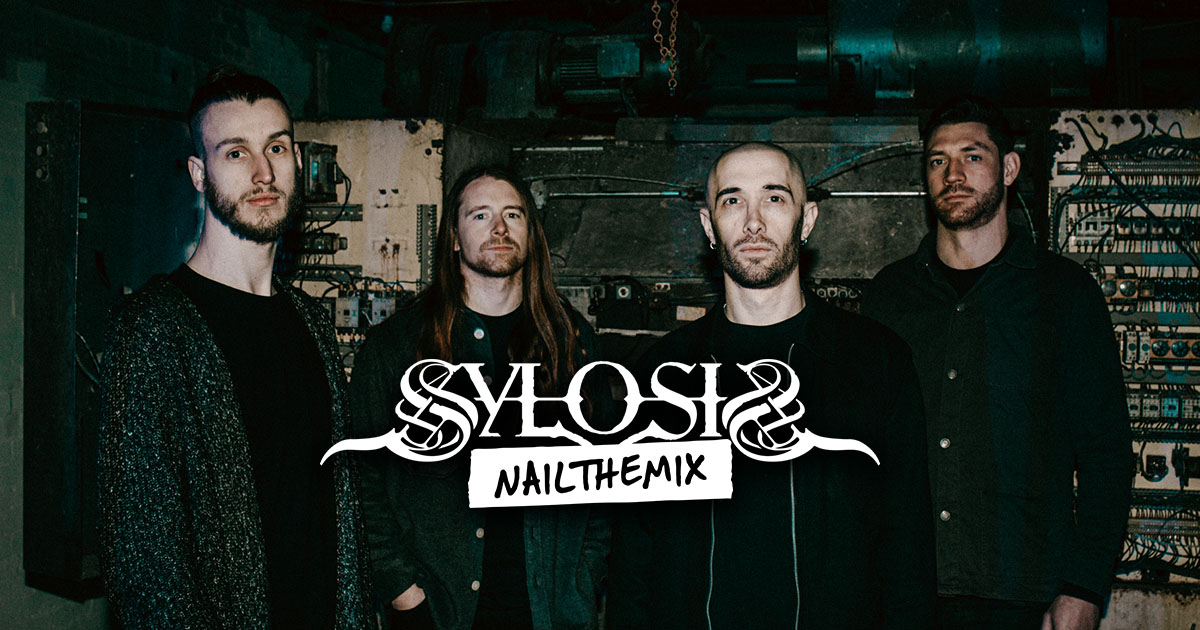
Josh Middleton, the mastermind behind Sylosis, thinks he knows why. In a recent chat, he broke down his philosophy for crafting guitar tones that are heavy, dynamic, and dangerous—in all the best ways. It’s a bit of a throwback mentality that flies in the face of some modern mixing “rules.” Forget what you’ve been told; it’s time to bring back the weight.
The Modern Metal Tone Problem: Too Much Mid-Range, Not Enough Bottom
According to Josh, a lot of modern guitar tone issues boil down to two related problems: an over-emphasis on mid-range and a fear of low-end.
The Mid-Range Pendulum
Remember the ‘90s? From classic Scott Burns death metal productions to Pantera, the scooped-mid sound was king. Then, the advice pendulum swung hard the other way. Every guitar magazine and forum told us to crank the mids to cut through the mix.
The problem? We may have over-corrected. Josh points out that many contemporary tones are so packed with mid-range they become fatiguing to listen to. That signature honky, congested sound might be articulate, but it sacrifices power and can be harsh on the ears over the course of an album.
Where Did the Weight Go?
At the same time, the low-end has disappeared. Back in the day, you’d hear a lot more bottom-end bloom from guitar cabinets. Now, especially with the rise of amp sims, tones tend to be more compressed and limited right out of the box. That massive, almost-out-of-control chug you feel in your chest at a live show gets tamed before it even hits the mix.
Josh’s approach is to bring back that dangerous low-end rumble. He wants his guitars to sound thick and powerful, verging on unruly, because that’s what sounds truly heavy. If you want to hear exactly how he pulls this off, you can watch him mix Sylosis’ ‘Poison for the Loss’ from scratch on Nail The Mix.
Rethinking Your Filters: The High-Pass & Low-Pass Gospel Isn’t Always Right
One of the biggest culprits in killing guitar tone, according to Josh, is the auto-pilot approach to filtering. We’re all taught to high-pass and low-pass our guitars, but we often do it without stopping to ask why.
Stop Mindlessly High-Passing
The default move for many mixers is to slap a high-pass filter (HPF) on the guitars and set it somewhere around 100Hz, or even higher, to “clean up the mud” and make room for the bass. Josh argues this can be counterproductive.
When you cut everything below 100-120Hz, the only “low-end” your guitars have left is often in the 150-250Hz range—the exact area that can sound muddy and indistinct. Your ear is drawn to that leftover mud because the foundational sub-bass is gone.
A Smarter Approach: Low-Shelving vs. High-Passing
Instead of an aggressive HPF, Josh suggests a more nuanced approach. Try a gentler filter slope, or don’t high-pass as aggressively. Or, consider using a low-shelf. By using a strategic EQ move to pull down the problematic low-mids instead of a filter that removes everything, you can retain some of that deep, foundational low-end information while still cleaning up the tone. It’s about carving out problem areas, not amputating the entire low end.
Let Your Guitars Breathe: The Case Against Low-Passing
On the other end of the spectrum, low-pass filtering has also become a default move. Josh pushes back on this hard. For the Sylosis tones, he used relatively dark-sounding Mesa Boogie cabinets. Because the source tone wasn’t overly fizzy to begin with, he didn’t need to low-pass them at all.
In fact, he does the opposite. He often adds a significant boost around 10k to bring out air and life. He feels there’s a ton of energy and excitement in those upper frequencies. If you just low-pass everything at 8k or 10k because you think you’re “supposed to,” you’re killing the liveliness and aggressive edge before it has a chance to shine.
The Anti-Saturation & Anti-Soothe Stance
Two other staples of modern mixing are saturation and dynamic EQs like Soothe. While powerful tools, Josh advises using them with extreme caution on guitars.
Say No to Saturation
It’s tempting to use saturation plugins to add warmth or harmonics. Josh mentions using a Cornford amp sim plugin that has a tape emulation feature. While he admits it sounds pleasing and can soften harshness, he finds it ultimately makes the tone “wooly” and robs it of its “razor-sharp edge.”
For the aggressive aesthetic he’s going for with Sylosis, he avoids saturation on his guitars entirely. He prefers to get his tone dialed with deliberate EQ moves and targeted multi-band compression, keeping the core tone as pure and aggressive as possible.
Metal Shouldn’t Be “Nice”: Using Soothe Sparingly
Josh gives a nod to incredible mixers like Nolly Getgood and Chris Clancy who use Soothe on guitars to great effect. However, he personally tries to avoid it, striving to get a killer sound at the source that doesn’t need that kind of fixing. He points out that all his favorite classic guitar tones from 20 years ago were made without it.
More importantly, he warns that over-using tools like Soothe can homogenize a mix and make everything sound the same. Metal isn’t supposed to be nice and smooth. It needs some of that harshness to sound dangerous. He recalls analyzing a tone he loved and discovering a massive spike at 3.2k—a frequency many would instantly cut. Sometimes, those “ugly” frequencies are what provide the aggression. If you kill every harsh frequency, you kill the energy.
How Tuning Shapes Your Tone Decisions
Your guitar’s tuning is the foundation of your tone, and it directly impacts your EQ decisions.
Finding the Sweet Spot: C# Standard
For Josh, the ideal tuning for heavy, clear guitars is somewhere between D and C standard. For the latest Sylosis record, they landed on C# Standard (like Testament on The Gathering). He feels this tuning is the sweet spot—it’s low enough to be crushing and heavy, but still tight and articulate enough that fast, thrashy riffs don’t turn into a blurry mess and sound like a different genre.
Adapting to Lower Tunings
The lower you tune, the more you have to sacrifice true low-end from the guitars and rely on mid-range to define the notes. While working with Architects, who tune as low as G# and F#, Josh found his core philosophy didn’t change much. He was still looking for high-end air and low-end weight, but understood that the guitars couldn’t carry the same sub-bass as they do in higher tunings. The fundamental weight had to come from the bass guitar, while the guitars provided the aggressive texture and harmonics.
Take Control of Your Tone
Reading about these concepts is one thing, but seeing how they’re applied in a real session is a total game-changer. These philosophies aren’t just theories; they’re the exact principles Josh Middleton used to craft the monstrous guitar tones for the latest Sylosis album.
Sylosis on Nail The Mix
Josh Middleton mixes "Poison For The Lost"
Get the Session
If you’re ready to move beyond presets and generic advice, check out our free guide, Unlock Your Sound: Mixing Modern Metal Beyond Presets. And if you want to be a fly on the wall and watch Josh build his mix from the ground up—explaining every plugin, EQ move, and decision along the way—grab a seat for his exclusive session on Nail The Mix. You get all the multitracks so you can mix the song yourself and see how your choices stack up. It’s time to make your guitars sound powerful again.