Pro Tools for Metal: Your FAQs Answered
Nail The Mix Staff
The great DAW debate. It’s the modern musician’s version of the Fender vs. Gibson argument, and Pro Tools always seems to be at the center of it. Is it still the king? Is it an overpriced dinosaur? Does it even matter what you use when bands are dropping pro-level records made in a bedroom with Reaper or Logic?
For modern metal producers, the stakes are ridiculously high. The bar for production quality has skyrocketed. What passed for a decent local band demo 15 years ago wouldn’t even make it past the first listen today. You’re dealing with 8-string guitars tuned to oblivion, drummers playing at inhuman speeds, and layers of synths and samples that would make a 90s producer’s head spin.
So when it comes to your choice of DAW, the question isn’t just “what’s best?”—it’s “what’s best for handling the sheer density and controlled chaos of a modern metal mix?”
Let’s break down the most common Pro Tools FAQs from a metal producer’s perspective.
Is Pro Tools still the "industry standard" for metal?
Yes and no. This needs some context.
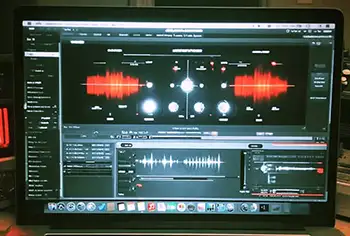
For decades, if you walked into a major recording studio anywhere in the world, you were walking into a Pro Tools room. Period. That legacy means a massive number of seasoned, high-level producers built their entire workflow inside of it. A lot of the pros you look up to—the ones mixing bands like Periphery, Gojira, and Lamb of God—are likely Pro Tools power users. Check out the list of Nail The Mix instructors and you’ll see it’s a popular choice.
However, the "standard" today is less about creative necessity and more about file compatibility. The biggest advantage of Pro Tools’ legacy is that you can take your session files to almost any professional studio or mix engineer and they can open them.
But for the home studio producer? The game has changed. DAWs like Logic Pro X, Reaper, and Cubase are more than capable of producing world-class metal records. The real "standard" in 2023 isn’t the software; it’s the expectation of a polished, punchy, and perfect-sounding final product.
What are Pro Tools’ biggest strengths for mixing metal?
While other DAWs have caught up, Pro Tools still absolutely excels in a few key areas that are critical for modern metal. It boils down to one word: audio.
Unmatched Audio Editing
Modern metal production is built on tight, surgical editing. We’re talking about locking every single drum hit and guitar chug to the grid with ruthless precision. This is where Pro Tools shines.
- Beat Detective: This is the OG tool for editing multi-tracked live drums. If you’ve got a drummer who’s a beast but rushes the fills, Beat Detective lets you slice, quantize, and smooth out their performance across all the drum mics simultaneously, keeping the phase relationship intact. It’s complex, but once you master it, it’s arguably the fastest way to turn a great performance into a flawless one.
- Elastic Audio: Perfect for those ridiculously fast, palm-muted, 16th-note guitar riffs. Elastic Audio lets you grab transient markers on your audio tracks and snap them directly to the grid without having to chop the audio into a million tiny pieces. It’s a lifesaver for tightening up rhythm guitars and bass to the kick drum.
- Clip-Based Workflow: The way Pro Tools handles audio clips feels incredibly intuitive for heavy editing. Quick crossfades (the "smart tool"), precise nudging, and clip gain are second to none for tasks like de-essing screams or comping together the perfect vocal take.
Rock-Solid Mixing and Bussing
Pro Tools was designed from the ground up to emulate a large-format analog mixing console, and that DNA is still present. Its bussing and routing capabilities are incredibly robust and stable. When you’re building complex parallel processing chains—like blending multiple distortion plugins on a bass bus or using parallel compression to make a snare drum explode—Pro Tools just works. It handles high track counts and complicated routing without breaking a sweat.
What are the main complaints about Pro Tools?
No DAW is perfect, and Pro Tools has its share of frustrations, especially for the modern producer who does more than just record and mix audio.
Clunky MIDI and Virtual Instruments
This is the big one. While it has improved over the years, the MIDI workflow in Pro Tools feels ancient compared to Logic or Cubase. Writing and editing MIDI for programmed drums with libraries like GetGood Drums or Superior Drummer 3 can feel slow and unintuitive. The same goes for composing complex synth parts with plugins like Serum.
Many producers adopt a hybrid workflow: they’ll do their MIDI programming and composition in Logic or Reaper, then export the audio stems to Pro Tools for editing and mixing.
The Subscription Model and Cost
Avid’s move to a subscription-only model was… controversial. For a producer on a budget, the ongoing cost can be a major turn-off compared to Reaper’s one-time $60 license or Logic’s one-time $200 price tag. This financial barrier is a significant reason why other DAWs have gained so much ground in the home studio world.
How does Pro Tools handle the demands of modern metal?
This is where the rubber meets the road. Can the old guard handle the new breed of metal?
Ultra-Low Tunings and Bass Management
With bands using 8 and 9-string guitars, the low-end of a mix becomes an absolute warzone. You have guitars occupying the same frequency range as the bass, which is fighting the kick drum. Pro Tools has the tools you need to referee this fight.
A common workflow is to use a surgical EQ like the FabFilter Pro-Q 3 to aggressively high-pass the guitars. For an 8-string tuned to Drop E, you might put a steep HPF all the way up at 80-100Hz to carve out a clean pocket for the bass guitar to live in. Then, you can use Pro Tools’ bussing to sidechain compress the bass from the kick drum, so the bass ducks out of the way for a split second every time the kick hits, creating clarity and punch. This is an essential part of how to balance metal guitars and bass.
Huge Track Counts and Plugin Chains
Quad-tracked rhythm guitars, clean guitar layers, bass DI, bass amp, 20 tracks of vocals, plus a dozen synth and sample tracks… modern metal sessions are massive. Pro Tools handles this without issue. Features like "Track Freeze" and "Commit" are essential, allowing you to print CPU-hungry plugins like Neural DSP amp sims or complex reverb chains into new audio files, freeing up processing power for the mix bus.
Do I really need Pro Tools to make a pro-sounding metal record?
Absolutely not.
Let’s be clear: the quality of modern metal production comes from the engineer, not the DAW. The skills you have—knowing how to dial in a guitar tone, how to mix drums that slam, how to use compression and EQ to create space in a dense mix—are infinitely more important than the software you click around in.
The good news is that the barrier to entry for gear is lower than ever. The bad news is that the barrier for skill is higher than ever. That’s the real challenge.
Your focus should be on learning the why behind production decisions, not just the what. Why does one compressor sound punchy on a snare while another sounds flat? Why does that EQ curve on the guitar bus make the whole mix sound bigger?
That’s where education becomes non-negotiable. Being a fly on the wall while a world-class producer mixes a real song is the ultimate shortcut. In the Nail The Mix catalog, you can watch pros like Will Putney, Jens Bogren, and Dan Lancaster build a mix from scratch in Pro Tools, Cubase, Logic, and more—explaining every single move they make.
Ultimately, whether you choose Pro Tools or another DAW, mastering your tools and understanding the fundamental principles of metal production is what will separate you from the pack.