
Mutt Lange-style vocal stacking and the ‘dry punch’ chorus trick (ft. Papa Roach)
Nail The Mix Staff
Let’s be real, the vocals on a Papa Roach track are an event. They’re packed with emotion, aggression, and a larger-than-life texture that cuts right through a heavy mix. Ever wonder how producer Kane Churko gets that signature sound? It’s not just about one magic plugin; it’s a combination of clever layering, creative processing, and smart automation that makes everything hit with maximum impact.
We dug into a session with Kane where he broke down his vocal production process for Papa Roach, and the techniques are pure gold. Forget generic presets; these are the kinds of actionable tricks you can use to elevate your own vocal mixes. Let’s dive into some of the key strategies he uses.
The Foundation: Building a Wall of Backing Vocals
A huge part of the Papa Roach sound comes from massive, choir-like backing vocals (BVs). But it’s not just about stacking endless takes of the same singer. Kane often steps up to the mic himself (along with his legendary producer father, Kevin Churko) to lay down BVs for the projects they work on.
Why? Adding a different voice—even for harmonies or gang vocals—introduces a new texture. Too many layers of the lead vocalist’s voice can sometimes sound thin or phasey. A different voice adds body and support, creating a thicker, richer sound.
The Mutt Lange Method: Stacking for Size
Inspired by the legendary producer Mutt Lange (Def Leppard, AC/DC), Kane’s approach is all about the stack. Even a single backing vocal take that might sound a bit weak or imperfect on its own can become monstrous when layered.
The process is straightforward but powerful:
- Record multiple takes of the same harmony or part.
- Pan these takes wide, spreading them across the stereo field.
- Blend them together. Four takes (two panned left, two panned right) can turn a simple idea into a powerful wall of sound.
The individual parts blend to sound more cohesive and powerful than any single take could. This is how you get that epic, arena-rock feel.
The Secret Weapon: Adding Texture with Whispers
Here’s a killer trick Kane uses to add grit and air without cranking up the distortion: layered whispers. He’ll record quiet, raspy whispers of the lyrics and tuck them underneath the main sung backing vocals.
You might not even hear them distinctly in the final mix, but you’ll feel their effect. This technique adds a “pseudo rasp” and a breathy airiness that gives the BVs an aggressive edge and helps them cut through. It’s a classic Def Leppard trick that adds a unique texture you can’t get from EQ or saturation alone. It’s a subtle move that makes a huge difference in the final character of the vocal stack.
Smart Processing for Polish and Character
With all those vocal layers, clean and creative processing is essential to make sure everything sits right in the mix.
Taming Harshness with Modern De-Essing
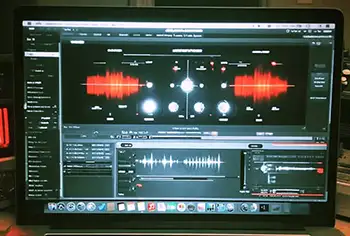
Sibilance (“s” and “t” sounds) can get out of control fast with heavily layered and compressed vocals. Kane uses a de-esser to keep things smooth, often reaching for a modern tool like the iZotope Ozone de-esser. He favors it for its highly visual interface, which makes it easy to pinpoint and reduce problem frequencies without over-processing.
Often, the de-esser settings that work for the lead vocal will be a great starting point for the backing vocals, too. Taming harshness is a key part of dynamics control, ensuring your vocals are powerful without being painful. If you want to dive deeper into controlling dynamics, check out these metal compression secrets to get your tracks punching.
Creative Effects: The Leslie Rotator Trick
For sections that need a different vibe, like a bridge, Kane gets creative with modulation. On the Papa Roach track, he automates a Leslie rotator speaker simulation plugin to kick in just on the backing vocals for one section.
By setting the rotator to “slow,” he creates a dreamy, spooky, and weirdly phasey effect that makes the BVs feel otherworldly and distinct from the rest of the song. It’s a perfect example of how to use an unexpected effect to create a memorable moment in your arrangement.
Creating Impact with Vocal Automation
Static mixes are boring. Kane uses automation to bring his vocal mix to life, creating dynamic shifts that make the big moments hit even harder.
Strategic Delay Throws
Instead of leaving a delay on all the time, Kane automates “delay throws” to highlight specific words or the end of a phrase. He’ll ride the delay send fader up for a single word and then bring it back down, creating an echo that fills the space without cluttering the entire vocal.
To work even faster, he’ll copy the automation from one section (like the first verse) and paste it into a similar section (like the second verse), tweaking as needed. This adds depth and ear candy throughout the track.
The “Dry Punch” Technique
This is a monster of a trick for making your choruses explode. Right before the chorus hits, Kane will mute all of his vocal effects—delays, reverbs, everything. He does this by grouping all his vocal auxiliary tracks and automating the group’s mute for just a beat or two.
The result? The vocal becomes completely dry for a split second. Then, when the chorus slams in and all the effects come back, it sounds absolutely massive. This moment of silence and contrast makes the impact feel ten times bigger. Creating this kind of space is a fundamental mixing move, and you can learn more about how to carve your core with EQ strategies to make every element of your mix pop.
Bring It All Together
From building a wall of sound with stacked BVs to adding texture with whispers and creating impact with automation, these techniques are essential parts of the modern rock vocal sound. They prove that a killer vocal mix is about smart, creative decisions, not just finding the right preset.
Papa Roach on Nail The Mix
Kane Churko mixes "F.E.A.R"
Get the Session
These tips are just a glimpse into Kane Churko’s process. In his full Nail The Mix session, you can watch him mix the entire Papa Roach track from scratch, explaining every plugin, EQ move, and automation ride along the way.
If you’re ready to stop guessing and start learning the techniques the pros use on massive records, Nail The Mix gives you the multi-tracks and a front-row seat. See how producers like Kane Churko, Will Putney, and Dan Lancaster get their signature sounds, and start applying their methods to unlock your own sound beyond presets. Get inside the session and see exactly how it’s done with the Papa Roach NTM course.