Mixing Tasty Jinjer Drums w/ Max Morton
Nail The Mix Staff
Let’s talk about a modern metal mix’s foundation: the kick drum. It has to be powerful, consistent, and punch through a wall of guitars without turning into a muddy mess. The big question these days is often whether to completely replace the natural kick with samples or to enhance what’s already there.
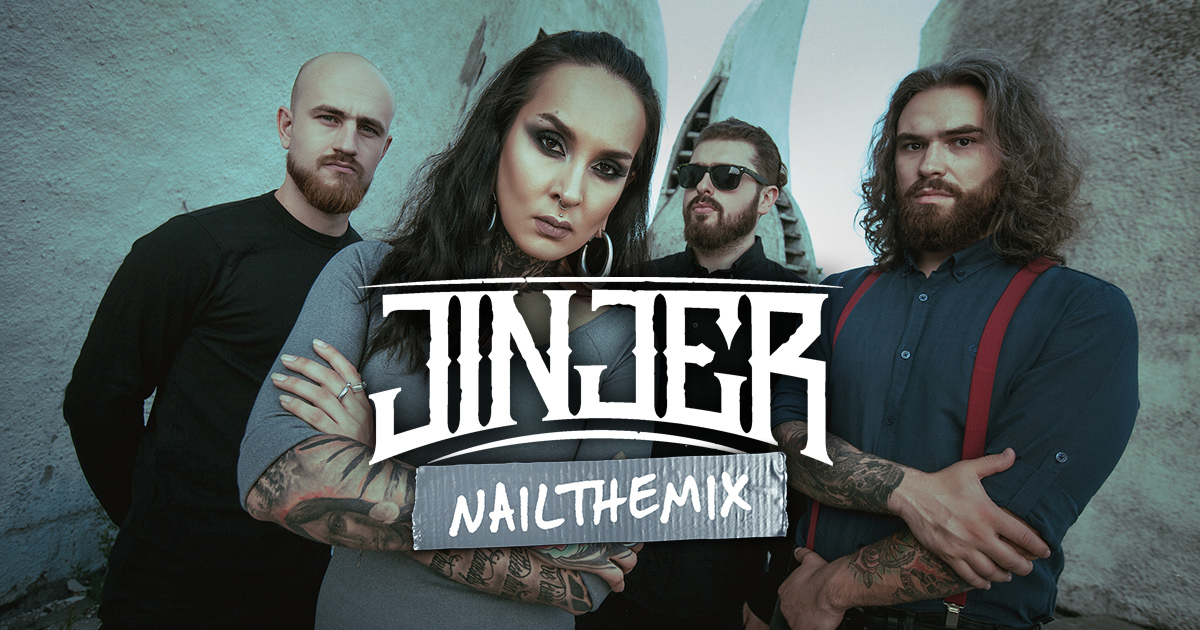
While there’s nothing wrong with full replacement, if you’ve got a killer performance from a drummer like Jinjer’s Vladislav Ulasevich, you don’t want to toss it out. You want to make it even better. In his session with us, producer Max Morton shows exactly how he does this—by layering samples not to fix a weak kick, but to reinforce an already powerful one, adding the final 10% of weight and consistency.
Here’s a breakdown of his technique for getting that massive Jinjer kick sound.
Get Your Natural Drum Sounding Great First
This is the most important step, and it’s where a lot of mixers go wrong. They hear a raw drum kit and immediately reach for samples to fix it. Max takes the opposite approach. He works with the natural kick first—using EQ, gating, and other processing—to make it sound as powerful as possible on its own.
Only after the natural kick sounds almost perfect does he consider adding a sample. The sample isn’t there to create a good sound from scratch; it’s there to enhance a sound that’s already working. It’s for adding specific characteristics that might be missing, like a super-consistent low-end or a more pronounced attack.
Of course, if you’re dealing with a bad performance or a poorly recorded kit, you might have to rely more heavily on samples. But when you have a solid foundation like the Jinjer tracks, the goal is enhancement, not replacement.
Triggering Your Samples with Precision
Once you’ve decided to add a sample, you need to trigger it perfectly from the live kick drum. Max discusses two ways to do this, depending on the situation.
The Two Methods: Manual vs. Automatic
For ultimate precision, especially with a less consistent drummer or when you’re blending the sample in heavily (like 50/50), Max recommends a manual approach. In Cubase, his team goes through the track and manually adjusts every single hitpoint to ensure it’s perfectly aligned. They then convert these hitpoints to a MIDI track, carefully adjusting velocities to match the original performance. This MIDI file then feeds a sampler. It’s a lot of work, but it’s flawless.
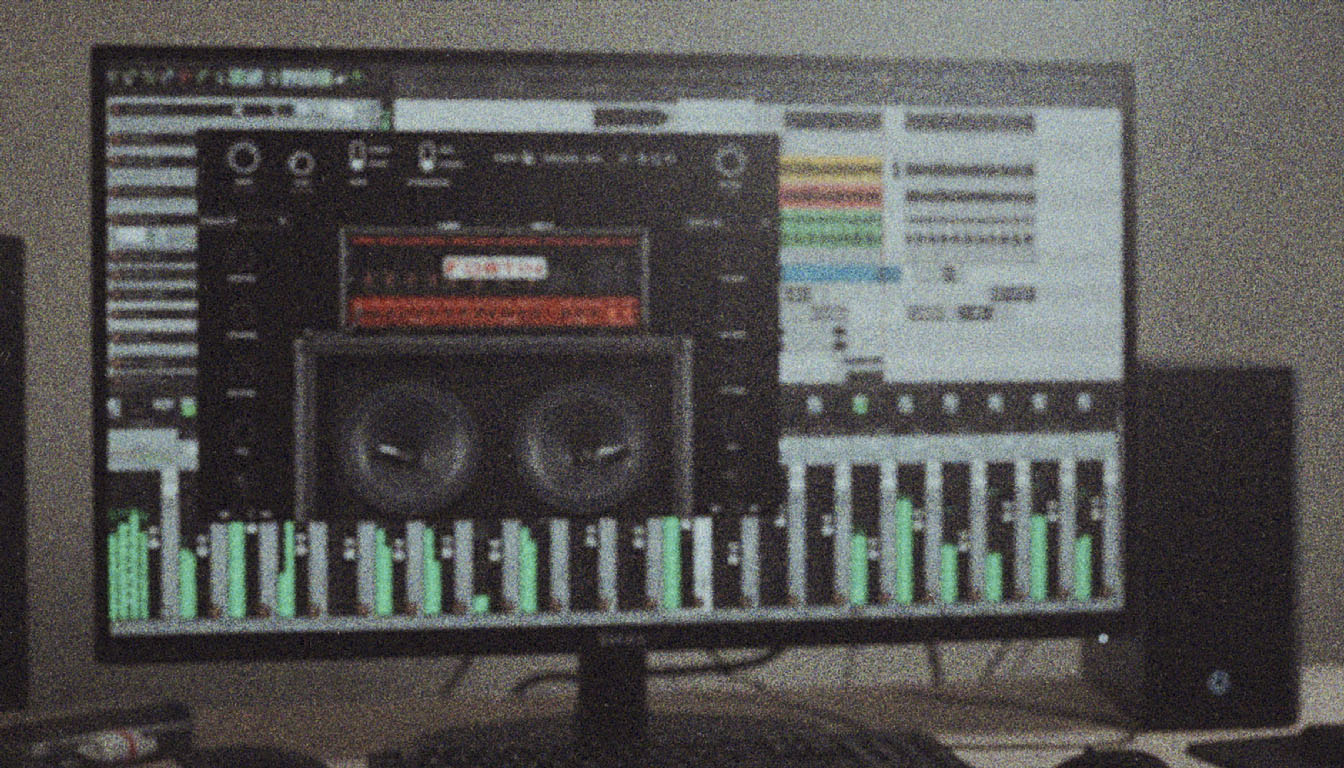
However, for a situation like this Jinjer track—where the drummer is incredibly tight and the sample is just for subtle reinforcement—a plugin like Slate Digital Trigger is the perfect tool for the job. It’s fast, efficient, and gets the job done well.
Setting Up Slate Digital Trigger
To get the cleanest signal for the plugin, Max opts to use the Shure Beta 91A mic track as the trigger source, rather than the Audix D6. The Beta 91A, being an internal kick mic, has a ton of transient information and very little bleed from the snare or cymbals, making it an ideal source for accurate triggering.
Inside Trigger, he adjusts the settings to get perfect hits without any misfires. Crucially, he turns the dynamics control all the way down. Since the sample will be blended quietly into the mix, he wants every hit to have the exact same velocity for maximum consistency.
Choosing and Shaping Your Sample
The sample you choose and how you process it is critical. It’s not about finding the “best” sounding kick sample on its own, but one that fills the gaps in your natural kick.
Sample Choice: Don’t Overthink It
You might be surprised to learn that for this powerful, modern metal track, Max reaches for “good old Kick 10” from a Steven Slate Drums library. It’s a classic, almost “trivial” sample, but it does one job perfectly: reinforcing the fundamentals. Like the famous “P-City” kick sample, it’s a utility tool that provides a solid, reliable low-end and a clear attack. You don’t need a unique, character-filled sample when your only goal is to add a bit of weight and firmness.
Surgical Sample EQ
Because the sample is a secondary, supporting element, you can be aggressive with your EQ without fear of ruining the overall kick tone. Max’s goal is to isolate only the parts of the sample he needs.
- Cut the Mids: The first thing he does is remove the “honkiness” from the Kick 10 sample, carving out the mids to leave just the deep low-end and the high-end click.
- Boost the Attack: Next, he wants to add firmness in the beater-attack range. He first uses a standard 12 dB/octave bell to sweep and find the sweet spot between 2-5kHz. Realizing he likes the character of that whole region, he switches to a wider 24 dB/octave bell to boost a broader range.
- Dial it Back: He initially boosts this attack range by nearly 5 dB. While it sounds firm, it also makes the sample too audible—he can clearly “hear” Kick 10 instead of just feeling its effect. He backs the boost down to around 2.5 dB. Now, the reinforcement is there, adding firmness and consistency without overpowering the natural character of Vlad’s kick drum.
Blending and Phase: The Final Glue
Getting the sample to blend seamlessly with the live kick all comes down to the final blend and, most importantly, phase alignment.
Finding the Perfect Phase Relationship
To check the phase, Max does something brilliant: he temporarily turns up the sample so it’s equally as loud as the natural kick. This makes any phase issues incredibly obvious. He then flips the phase polarity on the sample.
- If the low end gets bigger and punchier, they were out of phase.
- If the low end disappears, they were in phase.
His goal is simple: find the polarity setting that results in the biggest, fattest combined low end.
The High-Pass Filter Test
Here’s another pro move. The main drum bus has a high-pass filter (HPF) on it, cutting out unnecessary sub-low frequencies. Conventionally, you might put the exact same HPF on the sample track. Max tries this, but after A/B testing, he finds the kick sounds “fuller, bigger, and way lower” without the HPF on the sample.
It might sound more “precise” with the HPF, but it also sounds thinner. By leaving the full-frequency sample in, it adds an “oomph” and a synthesized low-end character that he loves. This is a perfect reminder to always trust your ears over rules.
Once the phase and EQ are set, he brings the sample’s fader way down—about 6 dB quieter than the main kick. When flicking the sample on and off, you can hear the kick doesn’t change character, it just becomes more solid, even, and powerful.
Take It Further
Mastering these sample blending and processing techniques is a huge step toward pro-level metal mixes. You can see how every small decision—from the trigger source to the width of an EQ bell—contributes to the final, massive sound.
Jinjer on Nail The Mix
Max Morton mixes "On The Top"
Get the Session
If you want to see exactly how pros like Max Morton make these decisions in real-time, check out Nail The Mix. You can get your hands on the full multitracks for this Jinjer session and watch Max build the entire mix from scratch, explaining every plugin and every move. It’s the ultimate way to move beyond presets and truly unlock your sound.
Stop guessing and start learning the techniques behind the biggest records in metal. Dive into the Jinjer session on Nail The Mix today.