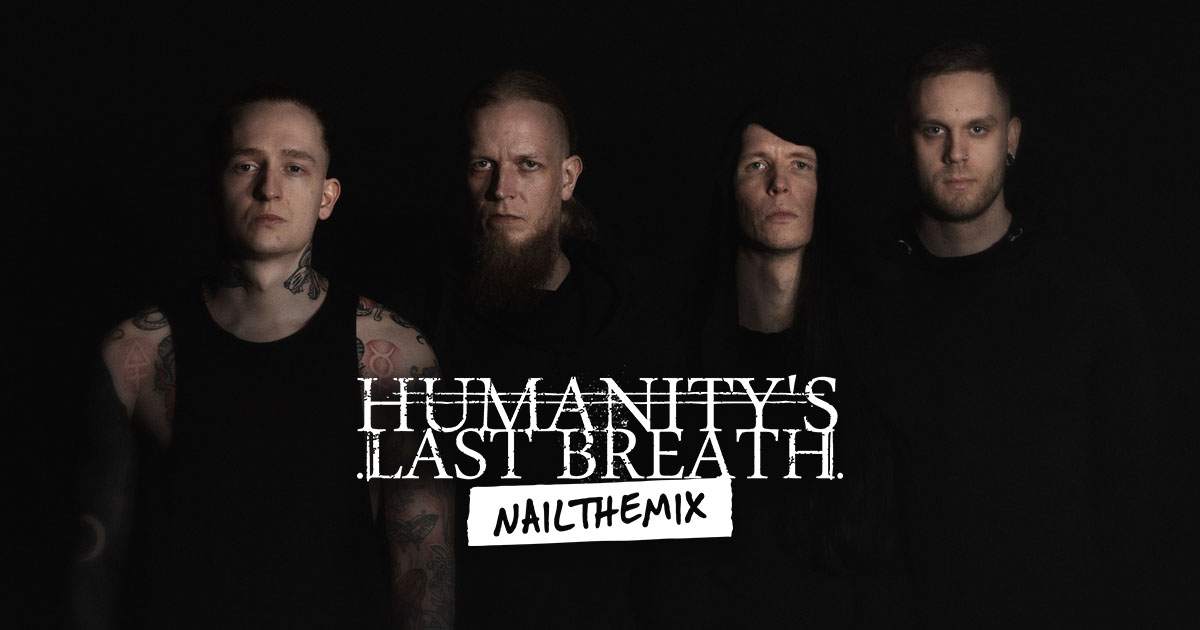
Download Humanity’s Last Breath “Labyrinthian” raw multi-tracks (ft Buster Odeholm)
Nail The Mix Staff
Mixing modern metal is an exercise in controlled chaos. When you’re dealing with bands as sonically devastating as Humanity’s Last Breath and Thrown, you’re not just balancing levels—you’re wrestling with frequencies that can swallow a mix whole. We got a chance to tear into the multi-tracks for Humanity’s Last Breath’s “Labyrinthian” and Thrown’s “Guilt,” the exact sessions mixed by the legendary Buster Odeholm for Nail The Mix.
Let’s break down the unique challenges these tracks present and the techniques you can use to tame these beasts.
Humanity’s Last Breath – Conquering “Labyrinthian”
This session is a beast, clocking in at around 57 tracks of pure, unrelenting heaviness. It’s the kind of project that’s both intimidating and incredibly rewarding to mix.
The Wall of Guitars: DI’s and Low-End Clarity
Right off the bat, you get raw DI guitar tracks. This is a massive win for any mixer, as it gives you total control to craft the tone from scratch. A quick listen to the DIs reveals the core challenge: these guitars are tuned so low it’s absurd, likely an F# or something in that punishing territory.
The real test in a mix like this is managing the low-end. With guitars tuned this far down, achieving a tight, punchy bottom end without turning your mix into a wall of mud is a monumental task. As a starting point, throwing on a plugin like Neural DSP’s Gojira Archetype reveals the potential. The tone is instantly sick and brutal, but it will require careful sculpting to sit right. This is where your skill as a mixer is truly tested—can you build a tone that’s heavier than the original?
The session also includes lead tracks, providing a perfect canvas for creative sound design to cut through the dense rhythm foundation.
A Surprisingly Clear Bass Foundation
You might expect the bass to be fighting for space in the sub-frequency trenches, but the approach here is clever. The session features a triple-tracked bass DI. What’s interesting is that the performance often sits in a higher octave, providing definition and attack rather than just another layer of low-end rumble.
To really open up the mix, try panning the doubled bass tracks hard left and right. This creates a powerful stereo bass effect that adds immense width and lets the kick drum punch through the center. These are pristine, well-recorded DIs with great dynamic consistency, making them a fantastic foundation to build upon.
Pristine Drums and Raw Power
The raw drum tracks are immaculate. Every shell piece was captured with a fantastic signal-to-bleed ratio, making them a dream to process.
- Kick: The Kick In and Kick Out mics are clean and punchy, providing both the clicky attack and the low-end thump needed for this style.
- Snare: The Snare Top and Bottom are perfectly in phase and offer a huge, cracking sound right out of the box.
- Cymbals & Rooms: With multiple overheads and a mid-sized room mic, you have all the tools necessary to either create a tight, focused drum sound or a massive, ambient wash.
Analyzing the Vocals & Production
The vocals are ridiculously sick. A look at the waveforms suggests a very light touch on the way in—maybe a gentle limiter just kissing the peaks, but nothing overly squashed. This gives you maximum flexibility to apply your own compression strategies for modern metal and make the vocals sit exactly where they need to be. Add in a healthy dose of post-production layers like risers, cinematic impacts, and sub drops, and you have all the ingredients for a truly epic metal mix.
Thrown – Building “Guilt” From the Ground Up
Next up is “Guilt” by Thrown. While the track count is more modest at around 24 tracks, it presents a completely different set of challenges that are incredibly relevant for any modern producer.
The MIDI Drum Challenge: Remapping and Tone Crafting
This is the big one: the drums for “Guilt” are delivered as MIDI. This immediately puts you in the producer’s chair. The session comes with a MIDI map, but it’s up to you to translate it to your sampler of choice, whether it’s Superior Drummer, GetGood Drums, or in this case, a quick load into Drumforge Bergstrand.
This is a fantastic real-world exercise. As a professional mixer, you are constantly sent MIDI files from different DAWs and drum plugins. Learning to quickly and effectively remap MIDI to your personal drum library is an essential skill. It forces you to not only be a mixer but also a sound designer, crafting the perfect drum kit to serve the song.
Guitar and Bass: Pure DI Tone-Shaping
Just like the HLB track, you get clean, punchy DIs for both guitar and bass. The bass DI is particularly great, with a ton of transient attack that will hit a distorted amp or a plugin like the SansAmp beautifully. The lead guitars feature some cool whammy octave effects, giving you a chance to play with automation and create some ear candy.
Powerful Vocals and Minimalist Post-Production
The vocals on this track are raw, powerful, and full of aggression. They’re the clear focal point. The post-production is more restrained here—a few sub-booms, impacts, and reverse effects are all that’s needed. This track is a masterclass in “less is more,” relying on the strength of the riff and the vocal performance to deliver the beatdown.
The Pro’s Approach: Your Turn to Mix
So, you have brutally low-tuned guitars that threaten to turn your mix to mud, and a full song that needs its drum sound built entirely from MIDI. How would a master of modern metal like Buster Odeholm approach these problems?
THROWN on Nail The Mix
Buster Odeholm mixes "guilt"
Get the Session
Watching a pro navigate these hurdles is one thing, but getting your hands on the same files is how you truly learn. With the Humanity’s Last Breath & Thrown Nail The Mix session, you don’t just watch; you do. You get the DIs, the MIDI, and the raw drum shells to forge your own path.
It’s your chance to see if you can manage that low-end, build a convincing drum kit, and deliver a mix that rivals the original. Learning the why behind a pro’s every move—why they chose that specific amp sim, or how they applied surgical EQ strategies for mixing modern metal—is what separates the amateurs from the pros. It’s about learning a process so you can unlock your sound beyond just using presets.
Ready to get your hands dirty? Download the Humanity’s Last Breath and Thrown multi-tracks and show the world what you’ve got.