
The Best Free Pultec-Style EQ Plugins For Heavy Mixes
Nail The Mix Staff
The Pultec EQP-1A is a piece of hardware that’s reached mythical status. You’ve seen it in pictures of legendary studios, and you’ve heard producers talk about it with a reverence usually reserved for vintage Neve consoles or a perfect tube amp. This isn’t your everyday surgical EQ for notching out annoying frequencies. A Pultec is a “finishing” EQ, a broad-strokes color box that adds weight, air, and an undeniable musical character to anything it touches.
Its most famous feature is the “low-end trick”—the ability to boost and cut the same low frequency simultaneously. It sounds counterintuitive, but due to the different shapes of the boost and cut curves, it creates a tight, powerful low-end bump while scooping out a bit of the mud right after it. It’s pure magic on kick drums and bass guitars.
So, do you need to drop a couple grand on a hardware clone or a few hundred bucks on a premium plugin emulation to get that sound? Hell no. The truth is, some free plugins absolutely nail that vibe.
But let’s get one thing straight. It matters which plugins you use, but only to a degree. If you need to tame guitar fizz, a dynamic EQ like Soothe is the right tool for the job. If you want a specific amp sound, you need the right amp sim. But when it comes to general EQs? The differences can get microscopic. What really matters is knowing why you’re reaching for a Pultec-style EQ in the first place, and having the skills to apply it effectively.
Let’s dive into the best free options and, more importantly, how to use them to make your metal mixes hit harder.
A Quick Reality Check on Plugins
Before we get to the goods, let’s talk about Plugin Acquisition Syndrome. We’ve all been there. You see a top-tier producer like Jens Bogren or Will Putney using some cool new plugin, and you immediately think, “I need that.” You end up with ten different SSL channel strips and twenty compressors, but your mixes don’t magically get 20x better.
Here’s the thing: those top-level producers could get a killer mix with your DAW’s stock plugins. Their mixes are great because they know what they’re doing. They use specific tools to chase that last 0.5% of character that they can hear in their heads. The real skill is knowing when to use a broad, musical EQ like a Pultec versus a surgical tool like FabFilter Pro-Q3.
Ultimately, your workflow and your decisions matter more than the brand on the plugin. Focus on mastering a few great tools rather than endlessly collecting new ones. That said, a great Pultec-style EQ is a damn good tool to have in your arsenal.
Our Top Picks for Free Pultec EQs That Don’t Suck
Here are three incredible, 100% free Pultec-style EQs that can hang with the expensive stuff. We’ll also break down exactly how to use them in a heavy mix.
Analog Obsession – PULTY
Analog Obsession has been putting out an insane amount of high-quality free plugins, and PULTY is a standout. It’s a simple, no-nonsense emulation that captures the feel and sound of the original hardware. It just works.
Download PULTY from Analog Obsession on Patreon
How to Use It in a Metal Mix:
- The Ultimate Kick Drum Punch: This is what the Pultec was born for. Set the low-frequency selector to 60Hz. Now, turn up both the “Boost” and “Atten” (attenuation/cut) knobs. Start around 4-5 on both and adjust to taste. You’ll get a massive, tight thump at 60Hz and a clean scoop in the boxy 100-200Hz range. It makes your kick drum punch through the mix without becoming a muddy mess.
- Weighty Bass Guitar: For a bass DI that needs more authority, try the same trick at either 60Hz or 100Hz. It adds foundational weight while carving out space for the kick drum. You can also add a touch of high-frequency boost around 3kHz or 5kHz to bring out some string attack and help it cut through distorted guitars.
- Adding Body to a Snare: If your snare sounds thin, a boost at 100Hz can add the “thwack” and body it’s missing. Be gentle here; a little goes a long way.
Kiive Audio – Warmy EP1A
The Warmy EP1A is another fantastic free emulation with a gorgeous interface and a smooth, musical sound. It’s known for being, well, warm. It’s fantastic for adding that expensive-sounding polish to vocals and instruments.
Download the Warmy EP1A from Kiive Audio
How to Use It in a Metal Mix:
- Screaming Vocals that Breathe: Metal vocals often need to be aggressive but can quickly become harsh. A Pultec is perfect for adding “air” without sharpness. Try a generous boost at 12kHz or 16kHz. Because the boost curve is so broad and gentle, it lifts the top end in a way that feels open and expensive, not brittle or spiky.
- Making Guitars Cut: While you should primarily be shaping your guitars with surgical EQ, sometimes the overall guitar bus needs a little something extra. A very slight boost at 5kHz or 8kHz can add presence and help the guitars slice through a dense mix without messing with the core tone you’ve already dialed in.
- Bringing Cymbals to Life: Use the high-frequency boost to make your overheads and room mics sparkle. A boost at 10kHz can bring out the shimmer of your cymbals so they don’t get lost behind a wall of guitars.
Ignite Amps – PTEq-X
This one is the secret weapon. The PTEq-X is an absolute beast that actually emulates three different vintage passive EQ units in one plugin: the EQP-1A, the MEQ-5 (a midrange-focused EQ), and the HLF-3C (a simple high/low cut filter). The versatility here is off the charts.
Download the PTEq-X from Ignite Amps
How to Use It in a Metal Mix:
- The “Glue” on Your Mix Bus: This is a classic trick. Put the PTEq-X on your master bus. Add a tiny 0.5dB or 1dB boost at 30Hz or 60Hz for weight, and a similar tiny boost at 12kHz for air. This subtle move can help “glue” the entire mix together, making it sound more cohesive and powerful.
- Shaping the Drum Bus: This is where the PTEq-X really shines. Use the main EQP-1A module for the low-end trick on your entire drum bus for ultimate punch. Then, engage the MEQ-5 mid-band module to push the snare’s “crack.” Try a boost somewhere between 1.5kHz and 3kHz to make that snare pop right out of the speakers. This combination of low-end weight and midrange aggression can take your drum sound to a whole new level. When you get your drums hitting this hard, you’ll want to make sure your compression game is on point to control the new dynamics.
Let’s Take a Look
When analyzing with an EQ curve analyzer, a 7 dB boost at 60 Hz creates a wide low-shelf boost that extends all the way up to 1 kHz.
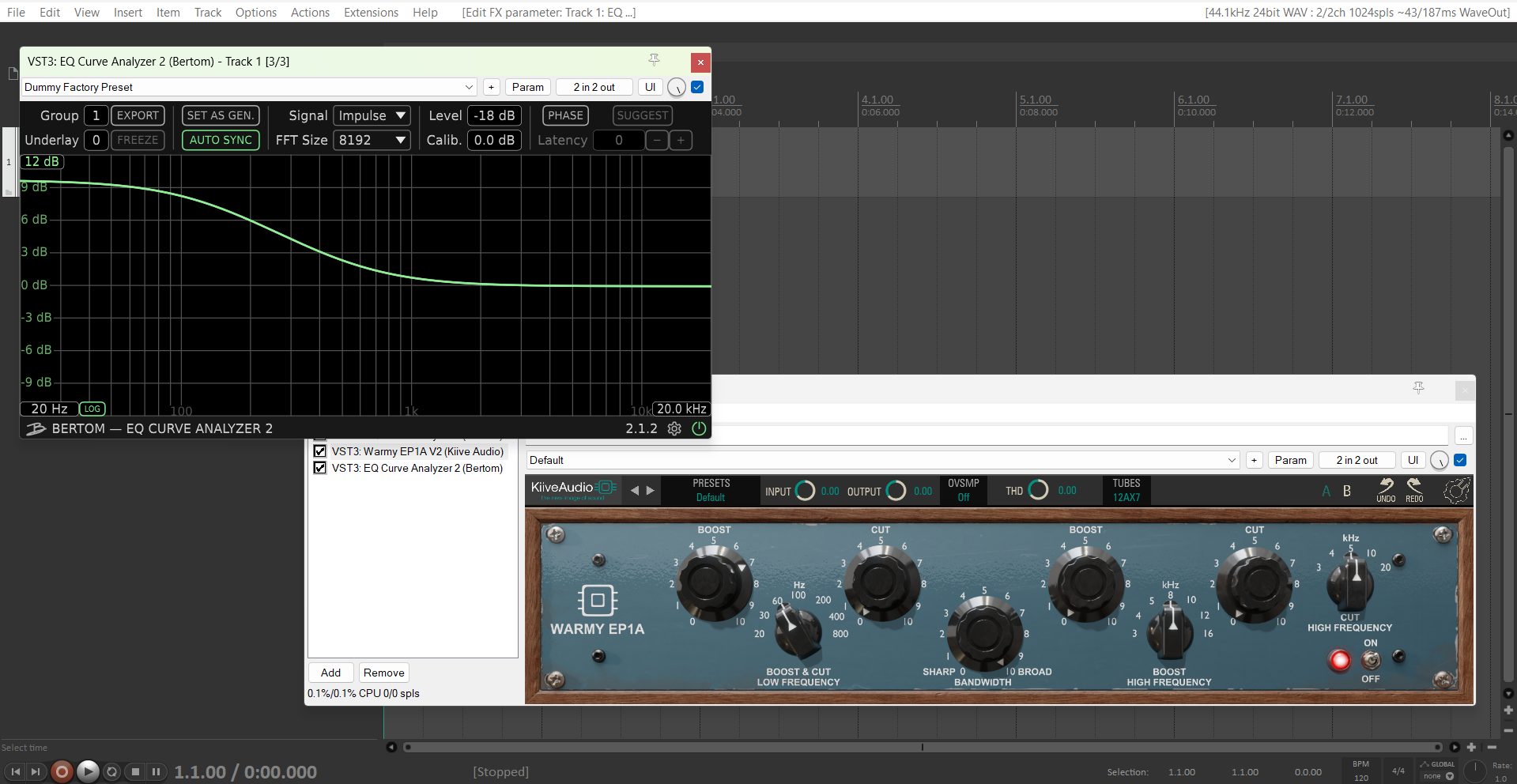
However, when you apply a 7 dB cut at 60 Hz, the curve shifts dramatically: the midrange frequencies are reduced, and the low-end boost becomes much more focused.
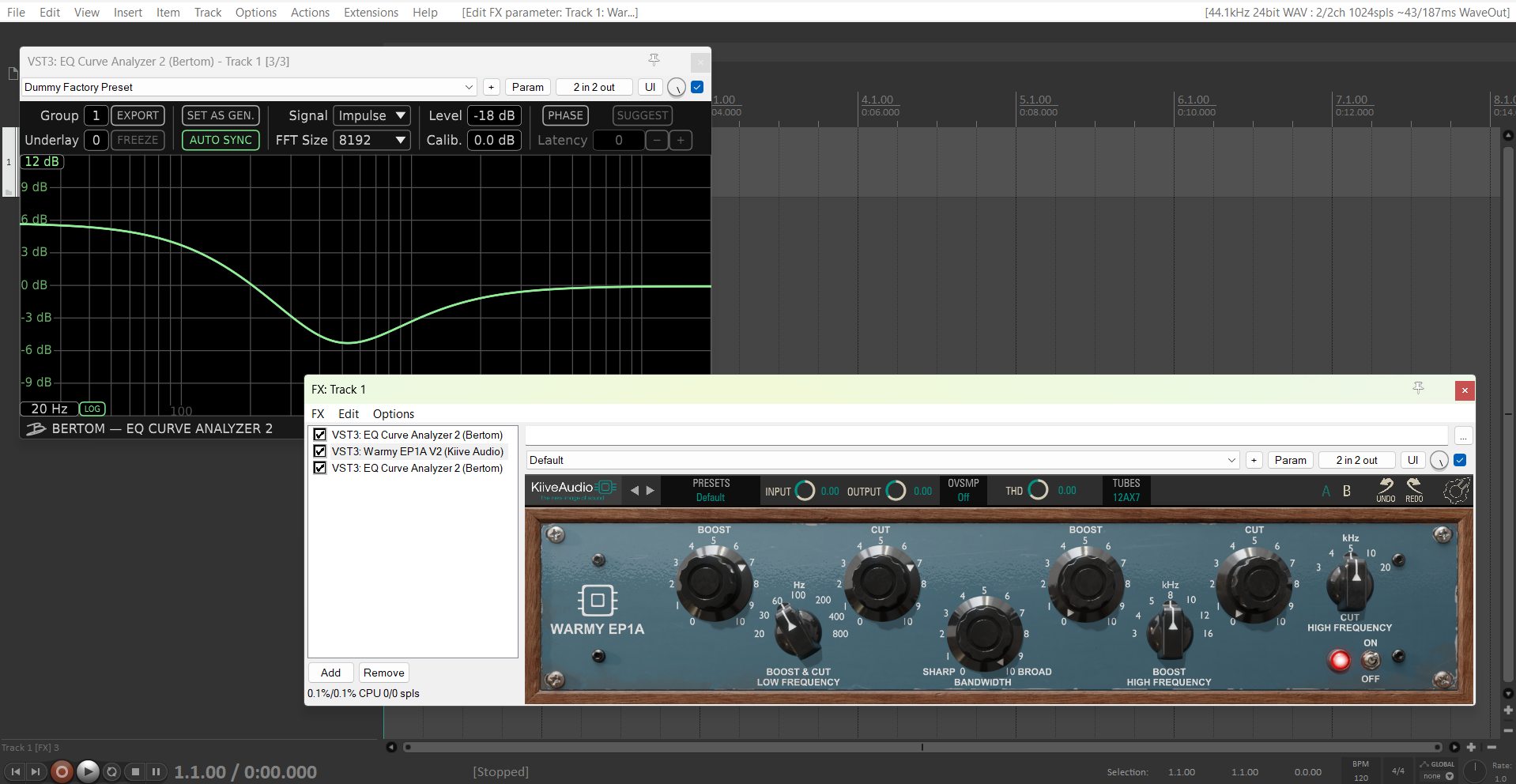
This results in a bigger, cleaner low end, which is why the Pultec EQ technique is so popular in mixing and mastering. While you should never mix with your eyes alone, this visual perfectly illustrates the unique tonal shaping and “Pultec magic” that makes this style of EQ so powerful.
The Secret Ingredient: Learning from the Pros
These free plugins are more than powerful enough to deliver professional results. But the tool is only half the story. The real game-changer is understanding the why—why a pro mixer chooses a Pultec over another EQ, how they balance the boost and cut for the perfect kick sound, and how that one EQ decision fits into the entire mix.
It’s one thing to read about the low-end trick; it’s another to watch a producer like Tue Madsen or Nolly Getgood apply it to the multi-tracks of a massive song, explaining their exact thought process. You get to see how that one move on the kick drum interacts with the bass, the guitars, and the rest of the mix.
If you’re ready to stop just collecting plugins and start mastering the techniques that truly matter, check out the Nail The Mix sessions catalog. You get the raw multi-tracks from bands like Meshuggah, Gojira, and Periphery and watch the original producers mix them from scratch, explaining every single decision they make. You’ll learn more from one session than from months of guessing. It’s time to learn not just what tools to use, but how the best in the world use them.