Dialing In Decapitated’s Natural Kick Drum Attack
Nail The Mix Staff
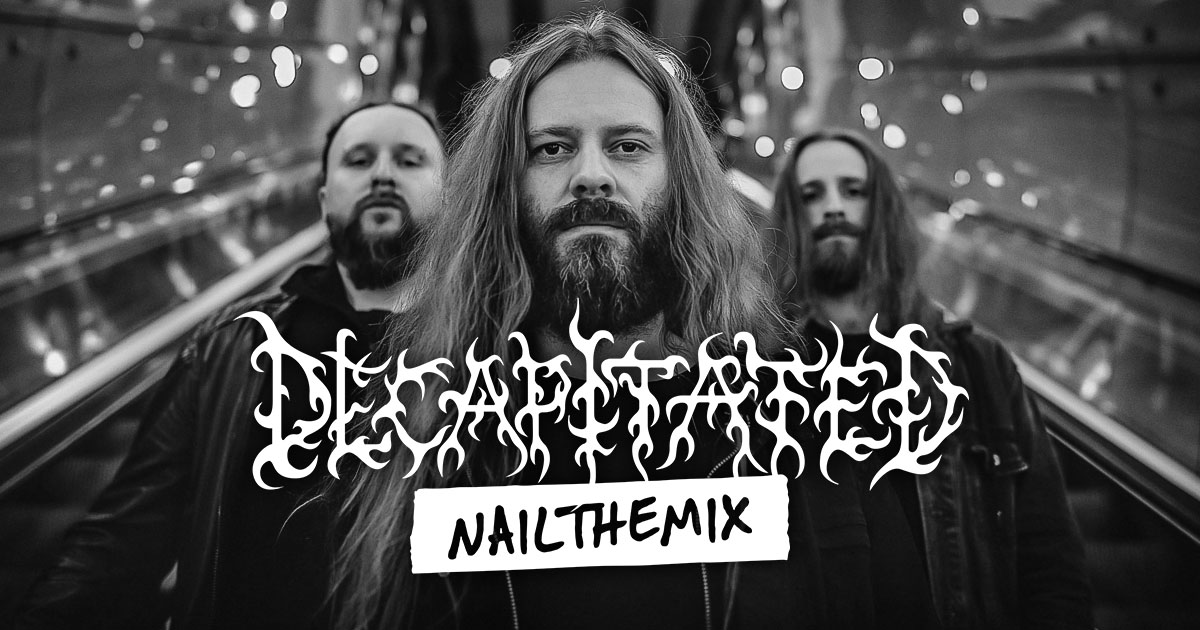
Let’s be honest, in the world of modern metal, programmed drums and samples are everywhere. But there’s a raw, visceral power to a well-mixed natural kick drum that samples just can’t replicate. When you’re talking about the technical ferocity of a band like Decapitated, that human element is crucial. Ever wonder how to get that kind of power and clarity from a real kit? We got a look inside the session with producer David Castillo to see exactly how he wrangles the low-end thunder for Decapitated, and it’s a masterclass in blending and precision.
The approach starts with understanding that one mic is rarely enough and that for a band like this, you’re dealing with two separate kick drums. Here’s a breakdown of how David builds that killer tone from the ground up, straight from his Nail The Mix session.
The Foundation: Building a Full Sound with Multiple Mics
To capture the full spectrum of a kick drum—from the sharp slap of the beater to the resonant boom of the shell—David relies on a classic multi-mic setup. This gives him maximum flexibility in the mix to blend different characteristics into one cohesive sound.
The Inside Attack and Punch
Inside the kick, it’s all about capturing the initial transient and aggressive character. For this, David uses a combination of two go-to microphones:
- Shure Beta 52A: This is a classic for a reason. It delivers a scooped, modern sound right at the source, with a solid low-end thump and a present click that’s perfect for metal.
- Shure SM91 (or similar): This is a boundary microphone that lays inside the drum, often on the pillow or padding. It captures a ton of sharp, snappy attack from the beater hitting the head, which is essential for making the kick cut through a wall of distorted guitars.
By blending these two “inside” mics, you get both the “thump” and the “click” that form the core of a modern metal kick sound.
The Outside Body and Low-End
For the low-frequency weight and resonance, David places a Neumann U 47 FET on the outside of the kick drum. This mic is legendary for capturing rich, detailed low-end. Its job isn’t to get the attack, but rather the “whoomf” of air moving and the tone of the drum shell itself. This outside mic is carefully EQ’d to get rid of cymbal and snare bleed, focusing purely on providing that foundational sub-bass and low-mid power.
Shaping the Sound: David’s Go-To Kick Drum Processing Chain
With the mics blended, the next step is to shape the tone with a consistent-yet-flexible plugin chain. David often starts with a similar chain on his kick tracks, tweaking it for the specific needs of the song.
Step 1: Carving with EQ
First up is the EQ. David’s process demonstrates how you can use different EQs for different jobs.
He starts with the classic Waves SSL E-Channel. His first move is to find the fundamental frequency of the kick drum. He’ll often create a narrow boost and sweep through the low end until the kick really blossoms, usually somewhere between 50Hz and 80Hz. Once found, he can boost it to taste. He also uses the SSL to start cleaning up any boxiness or mud in the low-mids (around 200-500Hz).
After the initial shaping, he’ll often reach for a more surgical tool like the FabFilter Pro-Q 3. This is for fine-tuning—making more precise cuts to the low-mids and even subtly shaping the high-end transient to make it sound a bit warmer and less “pointy.” Mastering these kinds of EQ strategies is fundamental to a clean, powerful mix.
Step 2: Adding Punch with Compression
Next in the chain is an 1176-style compressor, like the Waves CLA-76. However, David notes that he doesn’t use it every time. Its use depends entirely on the drummer’s performance. If the playing is very consistent, compression might not be needed. If it needs a bit more punch and dynamic control, the 1176 is perfect. With a fast attack and release, it can help make the kick feel more aggressive and controlled. The key is to be careful not to squash the low end out of the signal, which fast compression can sometimes do. It’s a delicate balance that separates a good mix from a great one. Learning to wield metal compression is a skill that takes practice.
The Secret to a “Live” Feel: Embracing Imperfection
Here’s where things get really interesting. Decapitated uses two separate kick drums, not just a double pedal on a single drum. Instead of trying to force them to sound identical with samples or editing, David does the opposite: he embraces their subtle differences.
He applies the same processing chain to the second kick but fine-tunes it so that while it lives in the same frequency “league” as the first one, it has its own unique character. The drummer’s left foot will never hit exactly like the right, and the two drums will never be tuned perfectly alike. This slight variation between the left and right kicks is what makes the performance sound human, dynamic, and less like a sterile, triggered sample.
Taming Harsh Transients with Saturation
During the mix, David noticed the transient on the second kick was a little too “annoying” or harsh. Instead of reaching for another EQ, he used a cool trick: he inserted the Avid Lo-Fi plugin. Used subtly, Lo-Fi can act like a tape machine, adding a touch of saturation and distortion that gently shaves off and warms up sharp, brittle transients. He’s usually just using it between a setting of 0.1 to 0.5—just enough to control the harshness without it sounding overtly distorted. It’s a perfect example of using a “character” plugin as a problem-solver.
The Final Result
By blending multiple mics and applying a smart, multi-stage processing chain, David Castillo builds a kick drum sound that is both brutally powerful and authentically human. The final key is allowing the natural imperfections of a two-kick performance to shine through, giving the Decapitated rhythm section its signature live-and-breathing feel.
Decapitated on Nail The Mix
Daniel Bergstrand mixes "One-Eyed Nation"
Get the Session
This is just a tiny peek into the level of detail involved. Imagine watching David build this entire mix from scratch, explaining every plugin choice, every fader move, and every decision that goes into a world-class metal production. At Nail The Mix, you can. We give you the multitracks from huge bands like Decapitated and let you watch the original producer mix the song live. It’s time to unlock your sound beyond presets and see how the pros do it. Check out the full Decapitated mixing session with David Castillo to learn these techniques and so much more.