
Making Lead Guitars Cut Through Dense Prog Metal (ft. Allegaeon)
Nail The Mix Staff
Let’s be honest, making prog metal lead guitars sit right in a dense mix is a serious challenge. You need them to soar above the blistering rhythm guitars, intricate drums, and thunderous bass, but what do you do when the lead tones you were sent are baked in and sound almost identical to the rhythms?
This is the exact scenario legendary producer Dave Otero (Cattle Decapitation, Archspire) faced when mixing “Of Beasts and Worms” for progressive death metal titans Allegaeon. Instead of having the DI tracks to re-amp, he had to work with printed tones. We got a front-row seat to see how he tackled this problem head-on, turning a potentially muddy mess into a clear, powerful lead section.
Here’s a breakdown of his techniques you can apply to your own mixes.
Creating a Unique Space for Leads
Right off the bat, Dave’s first move is to see if the leads can work by piggybacking off the existing rhythm guitar processing. It’s a smart, time-saving workflow step. He routes the leads to the main guitar bus, even pulling over a Soothe plugin instance from the rhythm tracks to do some initial cleanup.
But to truly separate the leads, they need their own unique character and ambience.
The “Luscious Bed” of Tape Delay
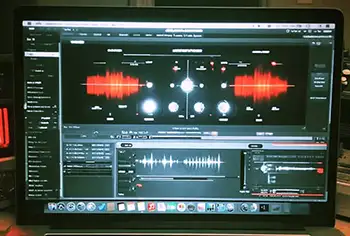
This is where the magic starts. Instead of a standard, pristine digital delay, Dave reaches for something with more vibe: a tape-style delay. He pulls up a preset that gives the leads a soft, decaying echo that adds a ton of depth.
Why does this work so well?
- Ambience Without Clutter: A tape delay’s repeats are often darker and more saturated than the original signal. This creates a lush ambient bed for the lead to sit on without creating distracting, clean echoes that “step on” the actual guitar performance.
- Reverb-Like Quality: The softened repeats fill space in a way that feels somewhere between a delay and a reverb, gluing the lead into the mix while giving it a distinct dimension.
- The Old-School Vibe: The specific plugin Dave uses here is a deep cut—the Voxengo Analogflux Delay. It’s an older 32-bit plugin he runs through a J-Bridge wrapper. It’s a testament to the “if-it-ain’t-broke” philosophy and proof that sometimes the perfect tool is one you’ve trusted for years.
The Balancing Act: Leads vs. Rhythms
With the leads now having their own ambient space, a new problem emerges: they’re starting to overpower or “eat” the rhythm guitars. The knee-jerk reaction for many mixers would be to just turn the leads down or EQ them into oblivion.
Dave takes a different approach.
Making Room by Enhancing the Rhythms
Instead of just cutting the leads, Dave goes back to the rhythm guitars to help them hold their ground. He strategizes that if he can make the rhythms feel bigger and wider, they’ll create a more solid foundation for the leads to sit on top of.
He does this by EQing the rhythm tracks to:
- Add Brightness: A little more top-end helps the rhythms cut through and not get washed out by the lead’s presence.
- Boost Wider Mids: He finds a sweet spot in the mid-range and boosts it with a wider Q, effectively making the rhythm section feel larger and more encompassing without directly clashing with the lead’s core frequencies.
This is a pro-level move: solving a balancing issue by enhancing the element being overshadowed, rather than just diminishing the louder one.
Taming High-End Harshness (Without Killing the Tone)
Here it is: the eternal struggle of mixing metal guitars. How do you cut out all that nasty, fizzy, harsh stuff in the upper-mids and highs without completely neutering the guitar tone and losing all the aggression?
Surgical Tools for a Modern Problem
Dave points out that modern tools have made this task way easier. He relies heavily on dynamic resonance suppressors like oeksound Soothe and Accentize Refinement. Instead of manually hunting for every single annoying frequency with a super narrow EQ band (which takes forever), these plugins intelligently listen to the audio and dynamically turn down only the harshest resonant peaks. When it comes to modern metal guitar EQ strategies, this is a massive time-saver.
The 2-Minute Rule to Avoid Ear Fatigue
Whether you’re using a fancy plugin or a stock EQ, the most important piece of advice is universal: don’t overdo it.
It’s incredibly easy to get lost chasing harsh frequencies. If you spend 30 minutes soloed on the guitars, laser-focused on that 4-8kHz range, your ears will become so fatigued and accustomed to the harshness that you’ll inevitably cut way too much. The result? Guitars that sound dull and lifeless in the full mix.
Dave’s solution is simple:
- Work Fast: Address the harshness in a minute or two. Get it sounding better, then move on.
- Come Back Later: If it still needs tweaking after you’ve worked on other parts of the mix, you can always revisit it with fresh ears.
This prevents you from going down the rabbit hole and destroying a perfectly good guitar tone.
See the Full Mix Come Together
These techniques are just a glimpse into how a world-class producer handles the nuanced challenges of a modern metal mix. From using vintage-style effects for ambience to enhancing rhythms and quickly taming harshness, every move is deliberate and effective.
Watching a pro like Dave Otero apply these concepts in real-time is one of the best ways to level up your own productions. On Nail The Mix, you can do exactly that. We give you the full multitracks from massive songs and let you watch the original producer mix it from scratch, explaining every plugin, fader move, and decision.
Allegaeon on Nail The Mix
Dave Otero mixes "Roundabout"
Get the Session
If you want to see exactly how Dave built this entire mix, from setting up the session to the final polish, you can get access to the full Allegaeon mixing session. Learn how he mixed the crushing drums, thundering bass, and brutal vocals to create the final, polished track. Stop relying on presets and start learning the techniques that will truly unlock your sound.
Check out the full Allegaeon session with Dave Otero and start making better mixes today.