Mixing Bullet For My Valentine’s Natural Metal Kick w/ Carl Bown
Nail The Mix Staff
The kick drum in a Bullet For My Valentine track is a force of nature. It’s powerful, punchy, and cuts through a wall of guitars, but it still sounds like an actual, acoustic kick drum.
We got a look inside the session with producer/mixer Carl Bown as he broke down his unique and slightly unconventional approach to mixing the kick for BFMV. Forget rigid formulas; Carl’s philosophy is closer to “jazz mixing heavy metal”—a creative, responsive process that prioritizes feel and the final result over textbook rules. Let’s dive into some of his killer techniques.
A Counterintuitive Start: Limit First, Compress Later
Right off the bat, Carl’s workflow might surprise you. While many mixers start with samples or a gate, he begins with the raw acoustic kick-in mic and immediately reaches for a limiter. This sets the stage for his entire processing chain.
Taming Dynamics with a “Gentle Kiss”
Before any EQ or gating, Carl applies a touch of limiting. We’re not talking about smashing the signal into a brick wall. The goal is to just “gently kiss” the very top of the waveform. By catching the loudest, most inconsistent peaks, this simple move evens out the performance, creating a more solid foundation. It might seem minor, but it ensures the kick drum is held in place dynamically before any other processing colors the sound. Mastering musical dynamics is about more than just volume.
Gating for Clarity, Not Sterility
With the dynamics under control, the next step is cleaning up bleed from the cymbals and snare. Carl uses a gate, but with a crucial caveat: he doesn’t eliminate all the bleed. While he might dial in a significant reduction—around 18dB in this session—he intentionally leaves a little bit of the room sound in. Removing every last bit of bleed can leave a kick sounding sterile and disconnected from the kit. Leaving that trace of ambience helps it feel natural and part of a real performance.
Restoring the Punch with Compression
Here’s where the “jazz mixing” really kicks in. The initial limiting slightly softens the transient, or the “front” of the kick drum. To get that punch back, Carl uses a compressor after the limiter and gate. By setting a slower attack on the compressor, he allows the initial transient to poke through before the compression kicks in, effectively re-shaping and re-emphasizing the beater’s impact. This technique not only restores the attack but also adds its own sonic character and further glues the performance together. It’s a prime example of how to creatively use dynamics to shape tone, not just control volume.
The “No Filter” Rule: Preserving Phase Coherency
One of the most valuable insights from Carl’s session is his approach to EQ, specifically what he doesn’t do. You won’t find him slapping a high-pass filter on the kick-in, kick-out, or sample tracks individually.
Why Filtering Can Wreck Your Kick Tone
When you’re blending multiple microphones and samples for a single source like a kick drum, phase is everything. Every EQ move, especially a filter, introduces a small amount of phase shift. If you start filtering individual tracks, their phase relationships can go haywire, resulting in a weak, hollow, or comb-filtered sound where you expect a powerful low-end punch. Carl’s tracks—the kick-in mic, kick-out mic, and EZdrummer sample—are all in phase to start, and he wants to keep it that way.
To see exactly how he sets up his routing and maintains this phase relationship throughout the entire mix, you can watch him build this BFMV track from scratch right here on Nail The Mix.
Surgical EQ for a Clean, Powerful Kick
Just because he avoids filtering individual tracks doesn’t mean he avoids EQ altogether. Instead of broad strokes, he uses surgical cuts with kick drum EQ to solve specific problems on the acoustic kick track.
Carving Out Mud and Annoying Frequencies
Using the Waves SSL E-Channel Legacy plugin, Carl identifies and removes problematic frequencies that clutter the kick sound:
- Taming the “Tub”: Both the kick-out mic and the sample contain a lot of low-end information. He makes a specific cut to remove some of the “tubby” mud, cleaning up the low-mids without sacrificing weight.
- Removing the “Chirp”: He identifies a harsh, almost microphonic feedback-like “chirp” in the upper-midrange. Using a narrow Q, he notches this frequency out, removing the annoying artifact without affecting the core tone.
- The Boost-and-Sweep: He finds a particularly “disgusting” frequency by boosting a band with a narrow Q and sweeping through the spectrum until the ugly resonance jumps out. Once he finds it, he turns that boost into a cut, cleaning up the kick in a precise, targeted way.
These are the kind of essential EQ strategies for mixing modern metal that separate pro mixes from amateur ones.
See the Full Mix and Unlock Your Sound
Carl Bown’s kick drum technique is a masterclass in creative problem-solving. By using a limiter for control, a compressor for punch, and a “phase-first” approach to EQ, he builds a kick sound that’s both massive and incredibly natural.
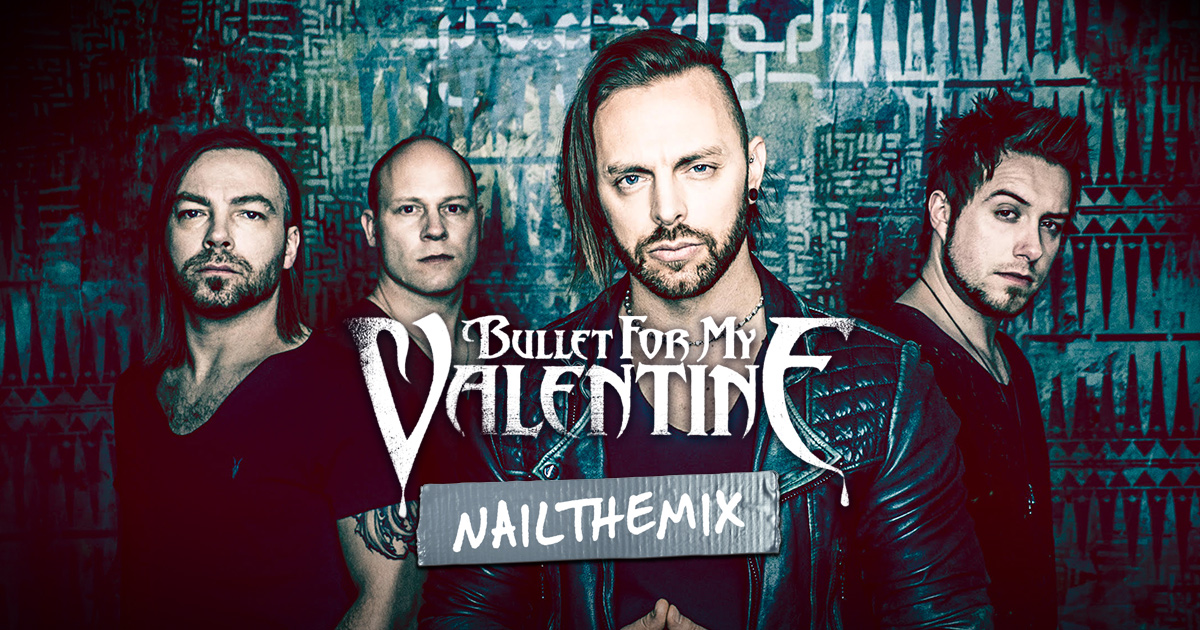
Bullet For My Valentine on Nail The Mix
Carl Bown mixes "Over It"
Get the Session
This is just a tiny glimpse into the process. Imagine watching Carl apply this same philosophy to the snare, toms, overheads, guitars, bass, and vocals, explaining every plugin choice and automation move for mixing the drums along the way. With a Nail The Mix membership, you can. You get to download the actual multitracks from this Bullet For My Valentine song and watch Carl mix it from start to finish.
If you’re ready to move beyond presets and generic tutorials, Nail The Mix offers a chance to learn directly from the producers behind the albums you love. It’s time to unlock your sound by seeing how the pros do it, every single month. Check out the full Bullet For My Valentine mixing session with Carl Bown and start elevating your mixes today.