What’s the Best Compressor Plugin for Metal Mixes?
Nail The Mix Staff
You’ve asked it. We’ve all asked it. You scroll through forums, watch a dozen YouTube videos, and see your favorite producer using some shiny new plugin. The question burns in your mind: “What is the best compressor plugin?” You think if you just had that one plugin, your mixes would finally sound huge, punchy, and professional.
Here’s the truth: you’re asking the wrong question.
The idea that one single plugin is the “best” is a trap, one that leads to plugin acquisition syndrome (GAS) and a hard drive full of tools you barely understand. The real answer isn’t about which plugin is superior, but which one is the right tool for the specific job at hand. More importantly, it’s about how well you know how to use it.
Any of the world-class instructors at Nail The Mix could take the stock plugins in your DAW and deliver a crushing mix. Why? Because they don’t rely on the gear; they rely on their skills and their ears. Their mixes are great because they know what they want to achieve and how compression works on a fundamental level.
So, instead of a simple “buy this” list, let’s break down the types of compressors you’ll encounter and which plugins are absolute killers for specific tasks in a heavy metal mix. This is your guide to thinking like a pro and building a small, versatile toolkit you can master. For a deeper dive into the fundamentals, check out our complete guide to metal compression.
The All-Rounder: Your Go-To Digital/VCA Compressor
Every producer needs a workhorse. This is your desert-island compressor—the one you can use on anything from a drum bus to a vocal to a full mix. It needs to be clean, flexible, and reliable. Typically, this role is filled by a VCA-style or a modern digital compressor.
You don’t need twenty of these. You need one that you know like the back of your hand.
Must-Have Plugins
- FabFilter Pro-C 2: If you can only own one modern compressor, this is arguably it. It’s a Swiss Army knife. With eight different compression styles (Clean, Classic, Opto, Vocal, etc.), lookahead, a side-chain EQ, and an incredible visual interface, it can do just about anything. It’s perfect for when you need precise, transparent control without adding a ton of color.
- SSL G-Series Bus Compressor (from Waves, UAD, Solid State Logic, etc.): The sound of rock and metal. This VCA compressor is legendary for a reason: it adds punch, movement, and “glue” to anything you run through it. It’s a staple on the drum bus and the mix bus.
- Pro Tip: For a punchy drum bus, try a slow attack (10 or 30ms), a fast release (0.1s or Auto), and a ratio of 2:1 or 4:1. Aim for just 2-4dB of gain reduction. This will let the initial transients of your kick and snare crack through before the compressor clamps down, making your drums feel bigger and more cohesive.
- Your Stock DAW Compressor: Seriously. The stock compressors in Logic Pro X, Pro Tools (Dyn 3), Reaper (ReaComp), and Cubase (Standard Compressor) are incredibly powerful and transparent. The main difference between these and third-party options is often the user interface. If you learn your stock compressor inside and out, you can get 99% of the way there. It’s about the decisions you make, not the brand name on the plugin.

The Character Injectors: FET & Opto Compressors
Sometimes you don’t want transparent control. You want vibe, color, and a bit of dirt. This is where emulations of classic analog hardware shine. They add harmonic distortion and have unique compression characteristics that can bring a sterile digital track to life.
FET Compressors: The Aggressive Choice
Field-Effect Transistor (FET) compressors are known for being fast, aggressive, and sometimes gritty. The undisputed king of this style is the Urei 1176.
- Waves CLA-76: A go-to for a reason. This emulation of Chris Lord-Alge’s favorite 1176 units is perfect for adding bite and energy. It’s brilliant for pinning a screaming vocal in place so it never gets lost in the mix or for adding smack to a snare drum.
- Actionable Detail: For an explosive drum room sound, put the CLA-76 on your room mic tracks and engage the infamous “All Buttons In” mode (the “!” button). This gives you an extreme, distorted compression that, when blended underneath your main drum shells, adds massive size and energy.

Optical Compressors: The Smooth Operator
Optical (or “Opto”) compressors use a light element and a photosensitive cell to determine the gain reduction. This process gives them a smooth, musical compression that’s program-dependent—the release time changes based on the input signal. The classic here is the Teletronix LA-2A.
- Waves CLA-2A: With only two main knobs (Gain and Peak Reduction), the LA-2A is incredibly simple to use. It’s magic for smoothing out bass guitar performances without killing their dynamics. The gentle compression evens out the notes, making the low end feel more solid and consistent. It’s also a fantastic choice for adding warmth and body to clean vocals.

The Surgical Strike: Multiband & Dynamic Problem Solvers
What happens when you only want to compress a specific frequency range? That’s where a multiband compressor comes in. It’s like having multiple compressors, each focused on a different part of the sound.
This isn’t your everyday tool, but for solving tricky problems, it’s indispensable.
- FabFilter Pro-MB: The gold standard for multiband compression. Its interface is intuitive and lets you easily create bands to tame specific issues.
- Actionable Detail: Got a bass tone that’s simultaneously muddy in the lows and has an annoying clank in the mids? Slap Pro-MB on it. Create a band around 150-300Hz to control the mud and another around 800Hz-1.5kHz to tame the clank, leaving the fundamental punch untouched.
- Soothe2 by oeksound: While technically a dynamic resonance suppressor, Soothe2 functions like an incredibly detailed and automated multiband compressor. It’s an absolute lifesaver for taming harshness in cymbals, fizz in high-gain guitars, or sibilance in vocals without making things sound dull. If you’re struggling to EQ your metal guitars to sit right, Soothe2 can be the magic wand that removes harsh frequencies only when they appear.
The Heavy Hitter’s Secret: Parallel Processing & Latency
You’ll hear this technique mentioned all the time in professional metal mixes. Parallel compression (or “New York” compression) involves duplicating a track, slamming one copy with an aggressive compressor, and then blending that crushed signal back in with the original, dry signal.
This gives you the best of both worlds: the punch and dynamics of the original signal, plus the fatness and sustain of the compressed signal.
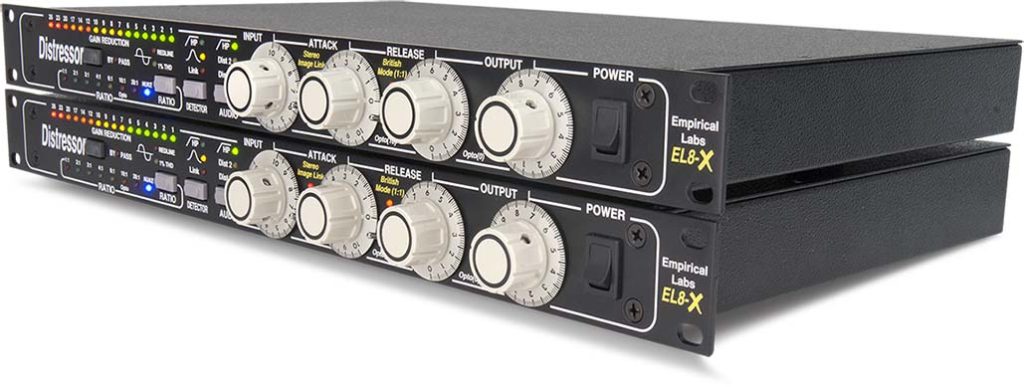
You can use any compressor for this, but aggressive, fast compressors like an 1176 or an Empirical Labs Distressor emulation (like the Slate Digital FG-Stress) are classic choices.
A Word of Warning: Latency and Phase
When you use plugins, especially in parallel, you have to be mindful of latency. Every plugin introduces a tiny bit of processing delay. Modern DAWs have Automatic Delay Compensation (ADC) to manage this, but it’s not always perfect. If the parallel, compressed track is even slightly out of time with the original, it can cause phasing issues (a hollow, weak sound).
This is why understanding your tools and your DAW is critical. It’s a reminder that a mixer’s job goes beyond just turning knobs; it’s about managing a complex technical environment to achieve an artistic goal.
The Hard Truth: The Best Compressor is You
So what’s the best compressor plugin for metal? It’s the one you know how to use to solve the problem in front of you.
- Need to glue your drums together? An SSL G-Bus is a great starting point.
- Need to add bite to a snare? Grab an 1176-style FET comp.
- Need to smooth out a bass track? An LA-2A-style Opto is your friend.
- Need to fix a fizzy guitar? A multiband compressor or Soothe2 will do the job.
Stop chasing the next shiny object. Instead, build a small, powerful arsenal and spend your time learning it. Your skills and your taste are what will make your mixes stand out, not the number of plugins you own. The world’s top producers—guys like **Jens Bogren, Will Putney, and Nolly Getgood**—could be stripped of their fancy third-party plugins and still deliver a banger mix with stock tools, because their ears and experience are the real secret weapons.
Reading about these techniques is one thing. But seeing them in action is a whole other level. Imagine watching the producer who mixed your favorite album dial in these exact compressors on the final multitracks. At Nail The Mix, that’s exactly what you get.
Every month, you get a new set of multitracks from a massive band and watch the original producer mix it from scratch, explaining every plugin choice and every decision. Check out our full catalog of past mixing sessions and see for yourself how the pros build world-class mixes, not with magic plugins, but with masterful technique.