Dynamic scene-based mixing in a 150-track rock session (ft. Gemini Syndrome)
Nail The Mix Staff
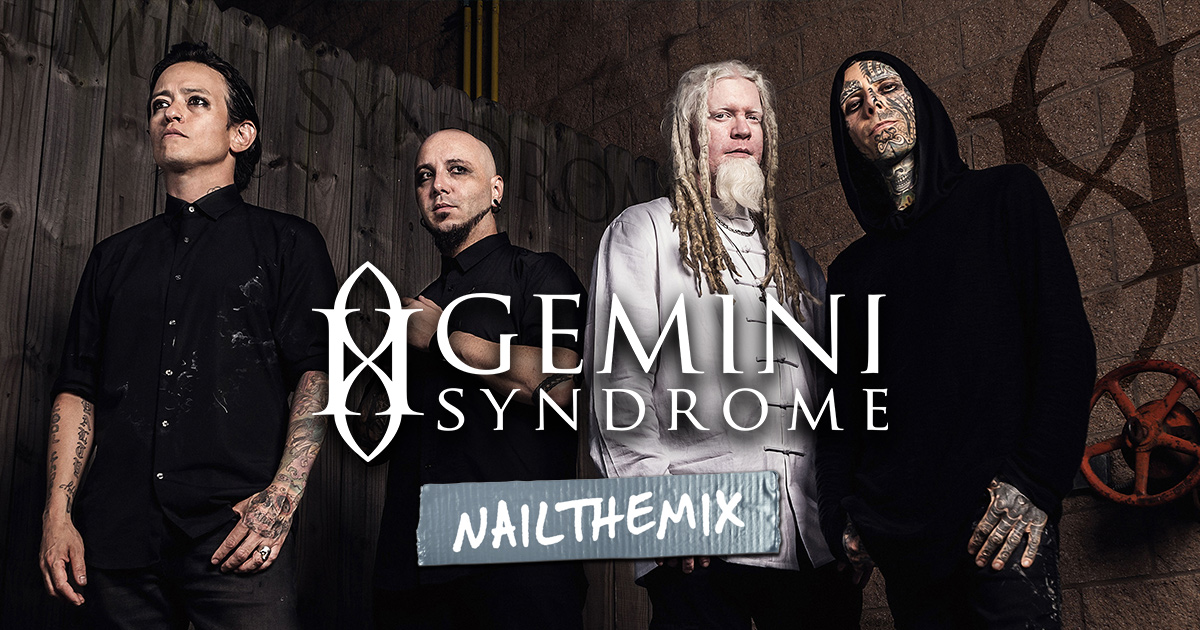
Let's be real: opening a session with over 150 tracks can be intimidating. When you get the raw multi-tracks for a modern radio-rock banger like Gemini Syndrome’s “Anonymous,” produced by the legendary Kane Churko, you’re not just looking at a song—you’re looking at a masterclass in layering and production. This isn't your standard-fare metal track; it's a meticulously crafted pop-metal epic where every element is designed to build a massive, polished sound.
We dove into the raw session, and what we found were some killer production techniques you can apply to your own mixes. This is your chance to go behind the curtain and see how a track of this magnitude is built. If you want to get your hands on these multi-tracks and watch Kane mix it himself, you can do that right here on Nail The Mix.
Taming the Chaos: Session Prep & The Stereo DI Trick
With a project this size, organization is everything. The session is so dense that even before an unboxing, some pre-organization into busses is necessary to make it manageable. But the real gold is in how the individual tracks are delivered, especially the guitars.
A Clever Pro Tools Hack for Stereo Guitar Tracks
Kane Churko has an efficient workflow for tracking guitars. Instead of creating separate tracks for the DI and the amped tone, he prints them to a single stereo file. In this session, the left channel contains the raw DI signal, while the right channel has the processed Kemper tone.
So how do you work with that without manually splitting every single file into mono?
If you’re in Pro Tools, there’s an elegant solution: the stock Trim plugin.
- Insert the Trim plugin on the stereo guitar track.
- In the plugin window, you’ll see controls for both the left and right channels.
- To isolate the amped tone (right channel), simply mute the left channel’s signal path within the plugin and turn its volume all the way down.
This simple move lets you use just the amped signal while keeping the DI safely embedded in the file, all without messing with the file structure. It’s a clean, non-destructive way to manage complex guitar recordings.
Building a Modern Rock Drum Sound, Piece by Piece
The drum production on "Anonymous" is a perfect example of clean, controlled, and powerful modern techniques. It takes an exceptionally tight drummer to pull this off, but the results speak for themselves.
The Power of Separated Cymbals
One of the first things you'll notice is that nearly every cymbal has its own dedicated track. We’re not just talking overheads; there are individual tracks for hi-hats, multiple crashes, and other elements. While the session does include overhead and room mics, they serve more to capture the overall kit ambiance rather than being the primary source for the cymbals.
Why do this? Total control.
By having the hi-hats on a separate track, for instance, you can process the verse groove completely differently than the chorus without affecting the crash cymbals. This layout practically forces you into a dynamic mixing mindset, allowing you to create distinct sonic "scenes" for each section of the song.
The Art of Layering: Bass, Guitars, and Synths
“Anonymous” is a textbook example of how to use layers to create a sound that’s bigger than the sum of its parts. It’s an orchestration of rock elements.
The Bass Foundation
While the session is massive, the core bass tone is surprisingly straightforward: two tracks, a DI and a Kemper tone. What’s cool is that the producer’s creative intent is already baked in. You can hear a killer wah effect on the bass during certain response phrases, and it’s printed right into the audio. You don’t have to guess or try to recreate it; you just have to mix it.
Orchestrating Guitars and Synths
The guitars and synths work together in a complex dance. You’ll find tons of small, interlocking guitar parts that combine to create one cohesive riff. Then, you have multiple synth layers—pads, arps, and textures—that follow the guitar progressions to add depth and smoothness.
The challenge here is balance. It’s incredibly easy for synths to overtake the guitars and wash out the mix. Your EQ skills need to be on point to carve out space for each element. The goal is to let the synths make everything feel bigger without sacrificing the punch and aggression of the guitars.
Percussion & Vocals: The Pop Production Icing
This is where the track’s pop sensibilities really shine. The sheer number of percussion and vocal layers is what takes it from a great rock song to a radio-ready anthem.
Adding Groove with Percussion
Beneath the powerful drums, there’s a whole world of percussion adding motion. You’ve got stomps, group claps, shakers, and electronic loops. When you solo these elements, you can hear how they create an infectious, underlying groove. Even when they’re tucked low in the mix, they add an energy that a drum kit alone can’t provide. Decisions about which of these elements should be prominent and which should be subtle texture are a huge part of mixing this song.
Tackling 65+ Vocal Tracks
Yes, you read that right. The session contains over 65 tracks of vocals. This is pure pop production philosophy. For nearly every lead vocal line and every harmony, there are multiple doubles. You might have a lead line stacked four times to get a thick, solid, and perfectly in-your-face sound.
For those with less powerful CPUs, this is a perfect opportunity to create submixes. Bouncing down a harmony stack to a single stereo stem is a great way to save processing power. This is also where you can apply some gentle bus compression to glue the layers together before they even hit your main vocal bus.
The Big Lesson: Why You Need a Dynamic Mix
If there’s one major takeaway from the “Anonymous” session, it’s the importance of dynamic mixing. A "set and forget" approach will not work here. The way the tracks are arranged—with different sounds and parts for the verse, pre-chorus, and chorus—is an invitation to automate your mix and create a journey for the listener.
Your verse drum sound can be tight and focused, your chorus can explode with big room mics, and your bridge can be drenched in effects. This session teaches you to think like a producer and mixer simultaneously, constantly evolving the sound to serve the song.
Reading about these techniques is a great start, but there’s no substitute for seeing them in action. On Nail The Mix, you don't just get theory; you get to watch the original producers build these tones from the ground up, and you get the multi-tracks to do it yourself. It's the ultimate way to level up your modern metal mixes.
If you’re ready to see exactly how Kane Churko wrangles this 150+ track beast into a polished, powerful final mix, grab your All-Access Pass and explore our full library of sessions today!