How To Get Modern Metal Bass Tones with Toontrack Metal EBX
Nail The Mix Staff
Everyone obsesses over metal guitar tone. We spend hours tweaking amp sims, auditioning IRs, and debating the merits of a Tube Screamer versus a Fortin Grind. But here’s the thing: a huge part of what makes a guitar tone feel massive and crushing has nothing to do with the guitar itself. It’s the bass.
A powerful, well-defined bass tone is the foundation that lets heavy guitars sound their best. It fills out the low-end without turning to mud and adds a layer of aggressive grind that glues the whole rhythm section together.
The problem? Recording bass for modern metal is a massive pain. Especially in lower tunings, if your player frets even slightly too hard, the note goes sharp. Trying to fix that intonation nightmare across an entire song is enough to make you want to quit. This is exactly why a powerful virtual instrument like the Toontrack Metal EBX is an absolute game-changer. Let's break down why it's so effective and how to use it to get a pro-level bass tone in your mix.
What is the Toontrack Metal EBX?
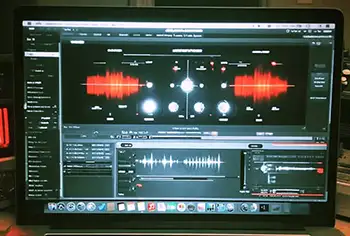
At its core, the Metal EBX is a sound expansion for Toontrack’s EZbass platform. But it’s not just any bass library. It was produced by the legendary Jens Bogren (Opeth, Arch Enemy, Amon Amarth) and features a meticulously sampled Dingwall Combustion 5-string bass.
If you know modern metal, you know Dingwall. Their fanned-fret design and impeccable build quality make them the go-to for tight, articulate low-end, even when tuned way down. This EBX captures that sound perfectly. You get a super-clean DI signal that is an ideal blank canvas for mixing, alongside several presets crafted by Jens himself, ranging from dirty and distorted to clean and punchy.
Why Programmed Bass is the Modern Metal Standard
Before we even get into mixing, let’s address the elephant in the room. Some producers feel like using a virtual instrument is "cheating." The reality is, the vast majority of modern metal albums you love use programmed bass. It’s not a shortcut; it’s a smart production choice. Here’s why.
The Intonation Problem You Didn't Know You Had
As mentioned earlier, bass intonation in low tunings is a serious issue. When a bassist digs in on a low B or F# string, the act of fretting the note can bend it sharp. When you layer that slightly sharp bass note against perfectly-tuned, multi-tracked guitars, you get a dissonant, phasey mess that’s incredibly difficult to fix.
With MIDI and the Toontrack Metal EBX, every single note is perfectly in tune, every time. The consistency is flawless, providing a rock-solid harmonic foundation for your guitars to sit on.
It's All About a Faster Workflow
Let's be honest: even with a world-class player, you're going to spend a ton of time editing a real bass performance. You'll be tightening the timing to lock in with the kick drum and quantizing riffs to align perfectly with the guitars. By the time you’re done with the slicing, dicing, and pitch correction, the performance might as well be a virtual instrument anyway. Programming it from the start saves hours of tedious editing, letting you focus on the creative parts of production.
The Split-Bass Mixing Technique For Maximum Impact
So you have your perfect MIDI bass performance using the Metal EBX. Now what? The standard for mixing metal bass today is the “split-bass” or multi-band processing method.
The core idea is simple: heavy distortion sounds awesome on bass, but it also destroys low-end frequencies. By splitting your bass signal into multiple tracks, you can get the aggressive distortion you want while retaining a clean, powerful fundamental. With a MIDI instrument, this is incredibly easy to set up.
Layer 1: The Low-End Foundation
This is your core weight.
- Create a track with EZbass on it and load the clean DI preset from the Metal EBX.
- Add some compression to even out the dynamics. You want every note to be solid and consistent. Something like an 1176-style plugin (like Slate’s FG-116 or Waves' CLA-76) with a medium attack and fast release works great.
- Use an EQ and apply a steep low-pass filter. Roll off all the high-end clank and string noise, starting your cut somewhere around 250-400Hz. This track is only for low-end information. You can boost a little around 80Hz for weight if needed.
Layer 2: The Gritty, Clanky Highs
This layer is all about aggression and helping the bass cut through the wall of guitars.
- Duplicate your EZbass track, including the MIDI performance.
- On this track, do the opposite with EQ: use a high-pass filter to cut out all the low-end mud. Start the cutoff around 250-400Hz—right where you started cutting the low-end track. This prevents phase issues between the two layers.
- Now, send this high-passed signal into your favorite distortion plugin. The sky's the limit here: a classic SansAmp emulation, a Darkglass plugin from Neural DSP, or even a guitar amp sim like the TSE BOD or Neural DSP Parallax will work wonders. The goal is to get a nasty, clanky, aggressive tone that’s almost all midrange and treble.
Layer 3 (Optional): Sub-Bass Reinforcement
For maximum low-end consistency, especially in sections with fast kick drum patterns, many producers add a third layer: a pure sine wave sub.
- Duplicate the MIDI track again.
- Instead of EZbass, load up your DAW’s stock synthesizer and select a simple sine wave patch.
- Use an EQ to aggressively low-pass this track, cutting everything above 80-100Hz. You just want the pure sub-frequency rumble.
- Gently blend this track underneath your other two bass layers. It should be felt more than heard, adding a powerful and consistent foundation to the low-end. The best part? Since you're using MIDI, this takes about 30 seconds to set up.
Bringing It All Together
Once you have your three layers, route them to a single stereo bus or group track. On this "Bass Bus," you can add final processing to glue them together. Some light bus compression can help make the three layers feel like a single instrument, and a final EQ can help you carve out a space for the bass in the overall mix. Check out our guide on balancing metal guitars and bass to see how the two instruments interact.
This multi-layer technique gives you incredible control. Bass not cutting through? Turn up the distortion track. Need more weight in the chorus? Automate the volume of the low-end or sub track.
These techniques are the "what" and the "why" of modern metal bass production. But seeing them applied in a real session is a whole other level of learning. Imagine watching one of the world-class Nail The Mix instructors actually dial in these tones, blending the layers, and making them sit perfectly with drums and guitars in a real song.
That’s exactly what you get with a Nail The Mix membership. Every month, you get the raw multi-tracks from a massive song and watch the original producer mix it from start to finish, explaining every single decision.
Ready to see how the pros do it? Check out our full catalog of sessions and take your mixes to the next level.