
Dialing In Sick Metal Tones w/ Toneforge Guilty Pleasure
Nail The Mix Staff
So you got a weird DI track. We’re not talking about a slightly noisy guitar part; we mean something truly out there. Maybe it’s a bassline played on a baritone with old strings, or maybe, just maybe, it’s a Megadeth cover played on a shovel with a single string and an EMG-style pickup.
Sound insane? It is. But it’s also a perfect test for a killer amp sim.
The truth is, with the right tools and techniques, you can turn even the most unconventional DI signal into a massive, mix-ready guitar tone. It’s all about knowing how to leverage your plugins. We’re going to break down how to take a wild DI and make it slam using JST’s Toneforge Guilty Pleasure and some smart bus processing.
The Foundation: A Clean DI is Non-Negotiable
Before we even touch an amp sim, let’s talk about the source. The single most important factor for getting a great amp sim tone is a great DI signal. In this case, the shovel-guitar was tracked using a proper DI box, not just plugged straight into an audio interface.
Why does this matter so much?
- Impedance Matching: A real DI box correctly matches the impedance of the pickup, preserving the full frequency spectrum of your instrument. Plugging straight in can often result in a thin, brittle, and weak signal.
- Signal Level: It provides a clean, healthy, low-noise signal at the correct level for your preamps.
- Flexibility: A solid DI is a blank canvas. You can re-amp it endlessly through different plugins or even real amps without losing quality.
Getting this right from the start makes every subsequent step infinitely easier and more effective.
Dialing in the Core Aggression with Toneforge Guilty Pleasure
With a clean DI ready, the goal was to get a tone true to the source material: Megadeth’s “Holy Wars.” That sound is classic thrash metal, built on the legendary Marshall JCM800. This is exactly where Toneforge Guilty Pleasure shines.
Choosing the Right Tool for the Job
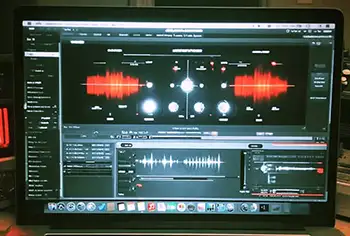
Toneforge Guilty Pleasure is built for this specific flavor of metal tone. It has that tight, aggressive, and slightly “honky” mid-range character that defines the era. The best plugins are often the ones that require the least amount of work to get 90% of the way there, and Guilty Pleasure is a prime example. You load it onto the track, and it immediately gives you that familiar, usable sound.
The layout is simple and intuitive, which means less time tweaking endless knobs and more time mixing. For this track, just loading up the plugin provided an instant thrash tone that sat in the ballpark of the original record.
Refining the Tone with Strategic Bus Processing
The amp sim provides the core tone, but bus processing is where you make it fit perfectly into a dense mix. Instead of processing each guitar track individually, sending them all to a single stereo bus allows you to shape the collective guitar sound cohesively.
Here’s the simple-but-deadly two-step chain used to take the shovel guitar tone from good to great.
1. Carving Out Space with Surgical EQ
The initial tone from Guilty Pleasure was cool, but it had some of that characteristic low-mid buildup that can make guitars feel boxy and fight with the bass and snare. The fix is a classic one: a bit of subtractive EQ.
Using a stock plugin like the Logic Pro Channel EQ, a cut was made in the low-mids. This simple move instantly scooped out the mud, allowing the punch of the kick and snare to come through while helping the guitars’ high-end attack cut through the mix. You’re not reinventing the wheel here; you’re just cleaning up problem areas so the best parts of the tone can shine.
Learning where and when to make these cuts is fundamental to powerful mixes. If you want to dive deeper into how the pros approach this, check out our complete guide to EQing metal guitars for maximum impact.
2. Adding Weight and Vibe with Saturation
After the EQ, the tone was cleaner but needed some extra “fatness” and “life” to feel finished. This is the perfect job for console saturation.
By inserting Slate Digital’s Virtual Mix Rack on the guitar bus and using the a VCC (Virtual Console Collection) module, we can add that analog character. By driving the saturation, you introduce subtle harmonic distortion that glues the guitar tracks together, making them sound bigger, richer, and more three-dimensional. It’s a subtle move that makes a huge difference, taking the guitars from feeling like separate tracks to one unified, powerful force.
These kinds of saturation and “glue” techniques often overlap with dynamic control. For a deeper look into how bus processing can shape your dynamics, explore our hub on metal compression secrets.
From Shovel to Sledgehammer: The Final Result
Let’s recap the journey:
- Start with a clean DI from a proper DI box.
- Use Toneforge Guilty Pleasure to nail that core '80s thrash tone instantly.
- Route guitars to a bus for cohesive processing.
- Cut muddy low-mids with a simple EQ.
- Add saturation with a plugin like VCC to add weight and glue.
The result? A guitar tone recorded on a shovel that sounds absolutely massive and sits perfectly in a full-on metal mix. It proves that at the end of the day, a stringed instrument is a stringed instrument, and with the right production mindset, you can turn anything into sonic gold.
Want to See How the Pros Do It?
This kind of creative problem-solving is what separates good mixes from great ones. Imagine being able to watch the actual producers behind your favorite albums tackle these challenges in real-time.
At Nail The Mix, that’s exactly what you get. Every month, we give you the raw multitracks from a massive metal song, and you get to watch the original producer mix it from scratch, explaining every single plugin, setting, and decision along the way. You can see our entire catalog of past and upcoming sessions to get an idea of the artists we work with.
Better yet, we have a massive library of tutorials just like this one. Over 1,500 more tutorials are available as part of URM Enhanced, covering every aspect of rock and metal production from tracking to mastering. Learn directly from our incredible roster of Nail The Mix instructors and start making the best-sounding music of your career.