
Using Trackspacer to carve a perfect pocket for vocals in a dense mix (ft. Oceano)
Nail The Mix Staff
Let’s be honest, in a genre as sonically dense as deathcore, getting vocals to sit right is a Herculean task. Between the down-tuned riffage, gravity blasts, and thunderous bass, a vocal can easily get buried. But as legendary producer Joey Sturgis showed us while breaking down his mix for Oceano, the vocals are still the most important element. They have to be powerful, clear, and command attention.
So how does he do it? It’s not about one magic plugin, but a smart chain of processing where each step serves a specific purpose. We got an inside look at the exact techniques Joey and his team used to make these vocals absolutely monstrous. Here’s a breakdown of the signal chain, full of actionable tricks you can try in your own deathcore and metal mixes.
The Foundation: Let the Vocals Carve Their Own Space
Before even touching an EQ on the vocal track itself, the first move is to ensure the vocal can always be heard. The secret here isn’t just turning up the fader; it’s about dynamically making the rest of the mix get out of the way using a clever sidechain trick.
The Trackspacer Sidechain Setup
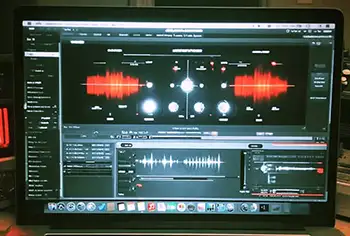
Here’s the setup: all the vocals are routed to a single vocal bus. This bus is then sent to the sidechain input of a Wavesfactory Trackspacer plugin. But here’s the key—the Trackspacer plugin isn’t on the vocal bus. It’s placed on the main instrumental bus.
When the vocals come in, Trackspacer listens to their frequencies via the sidechain and dynamically ducks those exact same frequencies in the entire instrumental mix. It essentially carves out a perfect, real-time pocket for the vocal to sit in, but only when the vocal is present. It’s a far more transparent way to create clarity than static EQ.
Dialing in the Frequency Range
You don’t want Trackspacer ducking the entire frequency spectrum, as that can lead to weird pumping in the low-end or make your cymbals sound strange. The trick is to narrow its focus. For the Oceano mix, the range was set to operate between roughly 300 Hz and 6 kHz. This targets the critical midrange where vocals and guitars are constantly fighting for dominance, while leaving the sub-bass rumble and the high-end air of the cymbals untouched and consistent.
Processing the Individual Vocal Tracks
With the main ducking system in place, the next step is to process each individual vocal layer to be as consistent and controlled as possible before they are summed together in the vocal bus.
Extreme Compression for Consistency
For the main vocal layers, Joey uses his own JST Gain Reduction plugin. The philosophy here is all about consistency. The plugin is used with its default setting, applying so much compression that no matter how dynamic the incoming performance is, the output level remains virtually the same. This might sound extreme, but it completely simplifies gain staging and ensures the vocal sits locked in place. Effective metal compression is often about control first and foremost.
Taming Sibilance at the Source
Each vocal track also gets its own de-esser, set to a basic “Single Vocal” mode. Dealing with harsh “ess” sounds on each track individually prevents them from stacking up and becoming a much bigger problem later on the main vocal bus.
Creating Width with SideWidener
When a vocal layer needs to be wide rather than centered, the JST SideWidener is the tool for the job. For this mix, it was set to Mode 2 with both the Width and Tone knobs at 100%. This pushes the vocal far out to the sides, creating a huge stereo image and making room in the center for the lead vocal.
The Vocal Bus: Glue and Polish
Once all the individual tracks are controlled and routed to the main vocal bus, it’s time for the final shaping that makes them sound like a cohesive, polished performance.
Dynamic EQ with Soothe2
First in the bus chain is oeksound Soothe2. Think of it as an automatic smart EQ. It listens for any harsh or resonant frequency buildups—which are common when you stack multiple distorted vocal takes—and automatically turns them down. For this mix, it was set to “Hard” mode to more aggressively catch any unpleasant harshness. A great workflow tip is to crank the “Depth” knob to clearly hear what frequencies are being removed, then dial it back until it sounds natural.
Sweetening the Tone with Vintage EQ
The vocals for Oceano were recorded with a Shure SM7B, a fantastic mic that can sometimes sound a bit dark or dull without some help. To counteract this, an iZotope Vintage EQ is used for some gentle “sweetening.” Smart EQ strategies are about enhancing what’s good, not just fixing what’s bad.
In this case, small boosts around 3kHz and 5kHz were added. Even though it was only a couple of dB, this little bit of high-mid and treble energy is what helps the vocal cut through the guitars and feel more present and professional. When heard in the full mix, this small move makes a huge difference.
Final De-Essing for Cohesion
You might think that de-essing every track was enough, but there’s one more step. A final de-esser is placed on the bus, this time in “All-Round” mode. This acts as a final safety net, catching any cumulative sibilance from the combined tracks that might have slipped through the initial processing.
Adding Depth and Space with Effects
The final touch is adding time-based effects on sends to give the vocals size and dimension.
Rhythmic Delay
For delay, the choice was Waves H-Delay, set to a dotted eighth note in a ping-pong style. A dotted delay creates its own distinct cadence and rhythm that interacts with the main groove, which is an especially cool effect on screamed vocals. It adds a sense of layered complexity and motion.
Clean Reverb for Size
To give the vocals a sense of being in a real space, Native Instruments Raum was used. The goal was a clean, spacious sound that adds depth and size without clouding the mix with a muddy reverb tail. It’s all about making the vocal feel bigger, not further away.
Bringing It All Together
From the foundational Trackspacer trick to the multi-stage compression and EQ, this vocal chain is a perfect example of modern metal mixing. Each tool has a clear job, and they all work together to produce a vocal that is brutal, clear, and sits perfectly on top of a dense instrumental.
Oceano on Nail The Mix
Joey Sturgis and Nick Matzkows mixes "Mass Produced"
Get the Session
Learning these individual techniques is a massive step forward. But imagine watching Joey Sturgis apply them in real-time, explaining every decision as he mixes the entire Oceano song from scratch. In the full Nail The Mix session, you can do exactly that. You get the raw multitracks to mix yourself and can see how a pro takes these concepts and builds a radio-ready mix from the ground up. If you’re serious about taking your skills to the next level, seeing the pros work is the ultimate cheat code.
Check out the full Oceano session with Joey Sturgis and discover how you can unlock your sound.