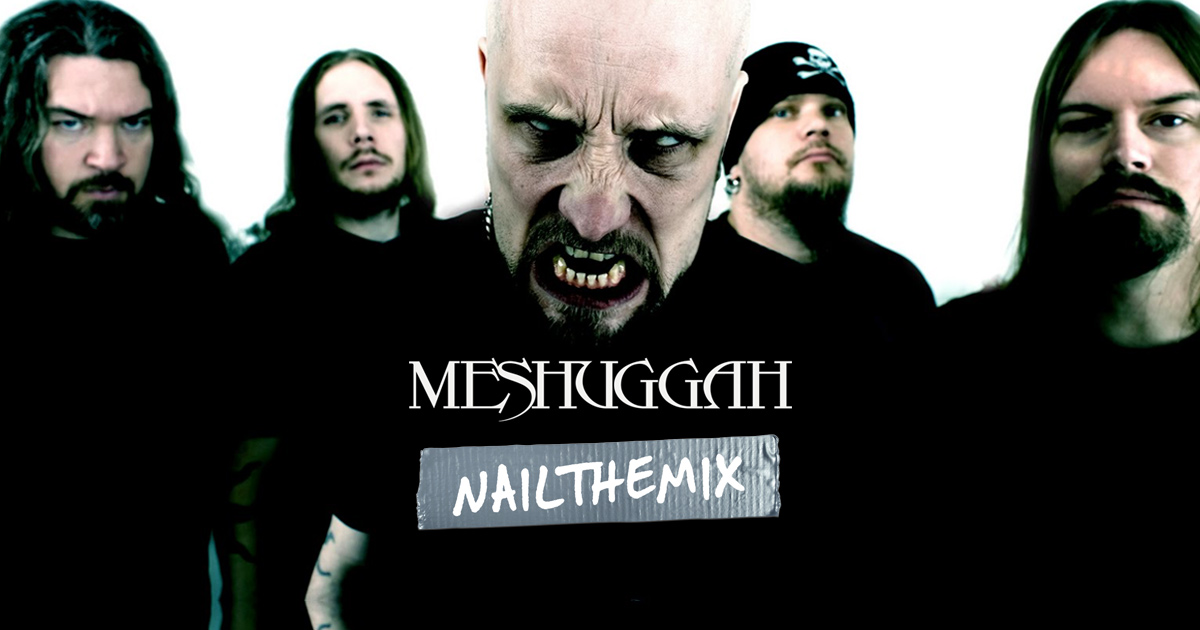
Mixing Meshuggah’s ‘Future Breed Machine’: Lessons from the 1994 Multitracks
Nail The Mix Staff
“Future Breed Machine.” The name alone is iconic. This track didn’t just put Meshuggah on the map; it redrew the map entirely, birthing a style of technically brutal metal that countless bands have tried to replicate since. It’s hard to believe this masterpiece was recorded back in 1994. Even more insane? Producer and mixer Daniel Bergstrand was only 19 years old when he captured this lightning in a bottle.
We’re cracking open the raw multitracks from the Nail The Mix session to see what made this recording so damn powerful from the source. Forget endless plugins and editing tricks; this is about raw performance and smart engineering. Let’s dive in and see what lessons these legendary tracks hold for your own mixes.
The 1994 Blueprint: 24-Track ADAT and No Frills
Before we even touch a fader, it’s crucial to understand the context. This was recorded on 24-track ADAT tape. That’s 23 tracks for music and one for SMPTE timecode to sync the machines. There was no “I’ll just add another track” luxury. Every choice was deliberate and permanent.
Here’s the surprisingly simple track layout:
- Drums: Kick L, Kick R, Snare, 5 Toms, Hats, Overheads L/R
- Bass: Bass DI, Bass Cabinet
- Guitars: Rhythm L, Rhythm R, Stereo Lead, Clean Guitars L/R
- Vocals: 2 Main Vocal tracks, 2 Backing Vocal tracks
Notice what’s missing? No dedicated room mics. No safety DIs for the rhythm guitars. This wasn’t about capturing endless options; it was about committing to killer sounds from the get-go.
The Rhythmic Foundation: Pristine Drums Without a Click
The drum performance on this record is legendary, and the raw tracks reveal why. This is a masterclass in both performance and engineering.
Expertly Engineered Tones
One of the first things you notice is just how clean and distinct everything is. The five tom tracks, for example, have incredibly little cymbal bleed. This is the result of precise mic placement and a drummer who knows how to control their instrument. The overheads capture a crisp, clear stereo image of the cymbals, providing all the “air” for the kit without needing separate room mics to fill it out. This is a perfect example of getting it right at the source.
The Human Grid: Playing “Shuga Tight”
Here’s the kicker: there’s no click track. The band played to their own internal clock, and they were absolutely locked in. The term “Shuga-tight” is often used today to describe rhythm tracks edited to inhuman perfection, but the irony is that the original “Shuga-tight” was just five guys in a room playing with breathtaking precision. The faint noise and hum between the impossibly tight guitar chugs aren’t flaws to be gated out; they’re the proof that this was performed by humans. It’s a powerful reminder that the best grid is often the one created by world-class musicians.
Building the Wall of Sound: Guitars and Bass
Meshuggah’s guitar and bass tones are the bedrock of their sound, and the raw tracks show how they achieved that weight and clarity.
The Secret Weapon: Monstrous Bass Tone
It’s often said that a great metal guitar tone is built on an even better bass tone, and this session is proof. The bass here is an absolute monster, a blend of a clean DI signal and a miked cabinet. It’s got all the low-end girth you need, but it’s that gnarly, aggressive midrange that sounds like it’s being played by someone with wrists the size of tree trunks. That character is what allows the bass to cut through the mix and support the guitars without turning into low-end mud. Getting your bass to sound this authoritative is a crucial step towards a powerful metal mix.
Why You Don’t Always Need Guitar DIs
Some producers might panic at the sight of heavy rhythm guitars with no DI tracks. But when the recorded tone is this good, who needs them? The rhythm guitars are massive right out of the gate. They are tight, aggressive, and have a focused midrange that’s already carved out a space in the mix.
All you’d really need to do here is maybe tame a little bit of the low-mid buildup to prevent clutter. A little surgical carving with a good equalizer is often all a great tone needs to sit perfectly. This is a great place to use smart EQ strategies for mixing modern metal to enhance, not replace, the core tone.
Vocals and Leads: Cutting Through the Chaos
With a rhythm section this dense and aggressive, getting vocals and leads to stand out can be a challenge. But here, it’s all about the power of arrangement and performance.
A Masterclass in Arrangement
Listen to the iconic minor-second lead guitar parts. They slice through the mix effortlessly, and there isn’t a single plugin on them. This is the result of a perfectly crafted lead tone combined with a brilliant arrangement that leaves sonic space for it to shine. The lead occupies a frequency range that the rhythm guitars don’t, allowing it to be heard clearly without fighting for space.
A Vocalist That Just Projects
The same principle applies to Jens Kidman’s iconic vocals. With the fader at zero, his performance cuts right through the wall of sound. You can hear that the vocal was compressed on the way in during recording—a classic pro move to control dynamics and add presence from the start. Understanding how to use compression in metal at the tracking stage can save you a ton of work later. There are no vocal doubles here, just one powerhouse take that commands the song.
Don’t Ruin It: The Final Takeaway
Working with tracks of this caliber teaches the most important lesson in mixing: less is more. The players and producer Daniel Bergstrand already delivered 90% of a world-class mix on a silver platter. The job of the mixer is simply to do a bit of leveling, some gentle carving, and let the performance do the heavy lifting.
Meshuggah on Nail The Mix
Daniel Bergstrand mixes "Future Breed Machine"
Get the Session
Want to get your hands on these legendary multitracks and try mixing a piece of metal history yourself? Nail The Mix members get exclusive access to the raw tracks from Meshuggah’s “Future Breed Machine”, along with a full mixing course from a world-class producer.
Imagine not just reading about these techniques, but applying them to the actual session files from this iconic song. At Nail The Mix, you get to do exactly that every single month with tracks from bands like Gojira, Lamb of God, and Periphery. It’s your chance to learn directly from the producers who shaped the genre.
Stop guessing and start learning from the best. Grab the Meshuggah multitracks and see what you can create.