
Mixing synths in modern rock with MeldaProduction M-Distortion (ft. Papa Roach)
Nail The Mix Staff
Let’s talk about that iconic synth line in Papa Roach’s “Who Do You Trust?”. It’s the first thing you hear, and it immediately sets a modern, electronic tone for a rock banger. That sound wasn’t an accident. It was a carefully crafted choice by producer and mixer Kane Churko to push the boundaries of what a rock song can be.
Mixing synths into a heavy rock track is a delicate balancing act. You need them to add color and energy without overpowering the guitars or making the song feel out of place for rock fans. During his Nail The Mix session for the track, Kane Churko broke down his entire process, revealing some killer techniques for blending the electronic and the aggressive.
Let’s dive into how he made these synths work.
Building the Foundation with Subtlety and Power
Before diving into the main synth hooks, Kane built the low-end foundation. Interestingly, he started with a stereo print of the intro from the band’s original demo. He wasn’t looking for a distinct melodic part, but for something else entirely.
For this kind of sub-bass element, the philosophy is simple: it should be felt more than it is heard. It’s about adding weight and pressure to the track. To achieve this, he used a fairly aggressive EQ move, ducking the signal considerably right around 80 Hz. This carves out space and prevents the sub from turning into uncontrolled mud, keeping the low-end tight while still providing that physical impact.
This is a core principle of modern mixing: every element needs its own space. Mastering EQ strategies for modern metal is crucial for creating that separation and power.
Adding Brutal Grit with Distortion
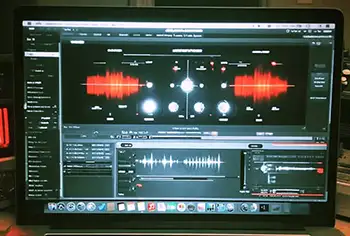
One of the lead synth sounds in the track has a seriously aggressive, crunchy character. To get there, Kane reached for one of his go-to plugins for synths and even guitars: MeldaProduction’s M-Distortion.
He cranked the drive knob to get a sound that, on its own, felt almost “brutal” and overblown. The magic of this particular distortion plugin is its ability to add that much saturation and overdrive without completely hollowing out the low end. This allows the synth to feel full-range and powerful while still having that crunchy, distorted texture. He spent time dialing in the Drive and Direct knobs to find the perfect blend.
This is a great reminder that distortion isn’t just for guitars; it’s a powerful tool for shaping any sound and giving it aggressive character.
Creating Vibe and Space with Effects
With the core tone established, it was time to give the synths some life and make them sit properly in the mix.
H3: Adding A Subtle Rhythmic Sway
Kane added a simple quarter-note delay to one of the main synth parts. The effect itself is barely perceptible—you don’t consciously hear distinct echoes. But what it does is add a subtle rhythmic “sway” to the sound. The quiet delays landing on the off-beats create an almost subliminal groove, giving the electronic part a more musical and less static feel. He was careful to tuck this delay gently into the mix so it remained a textural element, not a dominant feature.
H4: Final EQ Polish
For the final EQ shaping, the moves were simple but effective.
- Low-End Roll-Off: He cut the low end around 38 Hz to clean up any unnecessary sub-rumble.
- High-End Sizzle: He added a slight boost way up high, around 9.3 kHz. This adds a nice “sizzle” or airy excitement to the top end, helping the synth cut through the mix and giving it a sweet, almost-saturated feeling that grabs the ear.
The Philosophy: Pushing Rock Forward
Why go to all this trouble to integrate electronic sounds? Kane shared some incredible insight into the bigger picture. In his view, rock is a smaller format compared to pop, urban, or country. To grow, rock music needs to reach the massive audience of people who don’t already listen to rock radio.
Electronic and pop elements act as a bridge. A pop fan who hears that synth intro might feel comfortable enough to stick around for the heavy guitars. It’s about playing the “long game” to make rock music that can compete with anything on the Top 40 charts, from Lady Gaga to Kanye West.
He also made a killer point about what “heavy” even means to a younger generation. To a teenager today, the rebellious, aggressive energy of dubstep might feel more “punk rock” than a classic Les Paul and a Marshall stack. Heavy is a feeling, not a specific instrument. By incorporating new sounds, rock can evolve and remain relevant.
The Story Behind the Sound
That signature synth riff almost didn’t make it. The band initially had reservations, worrying it wasn’t “active rock enough” and they even experimented with replacing it with guitar parts.
Ultimately, they circled back to the original synth. The song was written with the intention of being a B-side or a bonus track—an “oddball” on the record. But that distinctive, electronic-infused character is precisely what made it stand out and become a lead single. It’s a powerful lesson in trusting your initial creative instincts and not being afraid to take risks.
Learn to Mix Like The Pros
These techniques for mixing synths, distortion, and effects are powerful tools you can apply to your own music. But reading about them is just the beginning.
Papa Roach on Nail The Mix
Kane Churko mixes "F.E.A.R"
Get the Session
Imagine watching Kane Churko build this mix from the ground up, explaining every plugin choice and every fader move. With Nail The Mix, you can. Every month, you get the real multi-tracks from a massive song and watch the original producer mix it in a live, in-depth session. You’ll learn everything from dialing in massive tones to mastering audio compression and beyond.
If you’re ready to see how pros like Kane Churko craft hit rock songs, check out his full session and learn how to mix rock music today.