Joe Barresi: Living Legend Of Metal Production
Nail The Mix Staff
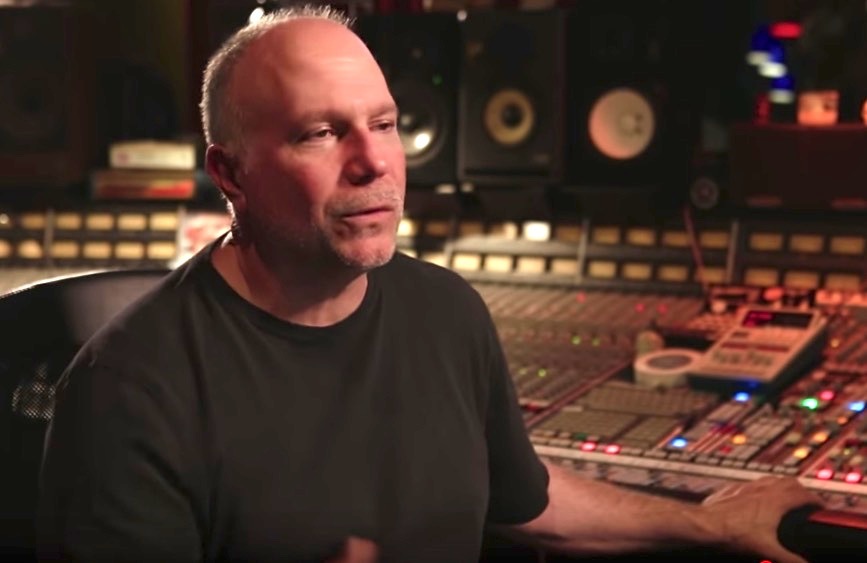
When you hear a record engineered or produced by Joe Barresi, you know it. The sound is gigantic, raw, and feels like it’s being played by a real band in a real room. From the desert-rock grit of Queens of the Stone Age and Kyuss to the complex power of Tool and the sheer aggression of Slipknot, Barresi’s signature is an organic weight that’s often imitated but rarely duplicated.
So how does he do it? It’s not about finding a magic plugin or a single secret setting. It’s about a deeply ingrained philosophy of capturing sound at the source with meticulous, and often extensive, microphone techniques. Let’s dig into some of the foundational methods that define the Joe Barresi sound for guitars and drums.
Profile: The Architect of Heavy Tones
Joe Barresi isn't just a producer; he's an engineer's engineer. His career is a roadmap of some of modern heavy music's most iconic-sounding albums. He was there for the genesis of stoner rock with Kyuss’s Blues for the Red Sun, shaped the punishing grooves of the Melvins, and helped define an era of hard rock with Queens of the Stone Age’s landmark album, Songs for the Deaf.
His work with bands like Tool on 10,000 Days and Avenged Sevenfold on The Stage showcases his ability to handle immense complexity while retaining power and clarity. He brings a classic analog sensibility to the modern era, proving that the best tones are often captured before they ever hit the DAW. This commitment to engineering fundamentals is why he’s a legend and one of the most respected Nail The Mix instructors in the industry.
The Barresi Guitar Method: Texture and Weight
Barresi’s guitar tones are all about layers and depth. It’s not just about one mic on one speaker. It’s about combining different tonal characteristics to create a single, massive sound that fills the soundstage.
The Classic 57/121 Combo
This is probably the most well-known guitar micing technique associated with modern rock, and Barresi is a master of it. The setup is simple in concept: you place two different microphones on the same speaker cone, right next to each other, and blend them.
- The Mics: A Shure SM57 and a Royer R-121.
- The Why: These two mics are almost perfect complements. The SM57 delivers that classic, aggressive midrange bite and forward punch that helps guitars cut through a dense mix. The R-121, a ribbon mic, is much darker and smoother. It captures the low-mid warmth and body of the amp and tames the harsh, fizzy top-end that a 57 can sometimes over-emphasize.
- How to Do It: Point both mics at the same spot on the speaker cone (usually where the dust cap meets the cone). In your DAW, bring up the SM57 to get your core aggressive tone. Then, slowly blend in the R-121 to add weight, body, and smoothness until the sound is full and balanced. Always check for phase alignment—flipping the phase on one mic can sometimes lock the low-end in even tighter.
The Third Mic: Capturing the Room
A huge part of the Barresi sound is space. He makes a single guitar amp sound like it's in a huge hall. He does this by adding a distant room mic to his close-mic setup.
- The Mics: Often a high-quality condenser or a different ribbon mic, like a Neumann U 47 FET or a Coles 4038.
- The Why: The room mic captures the sound of the amp reverberating in the physical space. This adds a natural depth and dimension that you can’t get from a reverb plugin. It makes the guitar sound bigger and more three-dimensional.
- How to Do It: Place a mic anywhere from 5 to 15 feet away from the amp. Experiment with the position—pointing at the amp, pointing at a reflective wall, placing it on the floor. Blend this mic in very subtly underneath your 57/121 combo. A great trick is to apply some heavy compression to the room mic to bring up the sustain and make it "breathe" with the performance.
Engineering Colossal Drums: It’s All About the Mics
Barresi drums are the polar opposite of sterile, sample-replaced kits. They are dynamic, explosive, and full of character. This comes from his "more is more" approach to micing the drum kit, capturing it from every conceivable angle to build a complete sonic picture.
Beyond Simple Overheads
While a standard spaced pair of overheads works, Barresi often employs multiple sets of mics to capture the cymbals and the kit as a whole. One of his signature moves is using a "player's perspective" setup to capture what the drummer is hearing.
This can involve placing a mono mic over the drummer's right shoulder (for a right-handed player) pointing down at the snare and kick beater. This single mic can become the solid center of your drum image, providing a focused, punchy core that you can build the rest of your stereo mics around.
The Power of Parallel Compression
This is a go-to technique for getting that fat, explosive drum sound without losing transient detail.
- The
Concept: You send all your main drum mics (kick, snare, toms, overheads) to an auxiliary bus. On that bus, you insert a very aggressive compressor and absolutely smash the signal. Think super-fast attack, fast release, and a high ratio—the goal is to create a pumping, breathing, highly-sustained sound. - The Blend: You then blend this heavily compressed bus in behind your main, unprocessed drum bus.
- The Result: You get the best of both worlds. The main bus provides the clean punch, attack, and "tick" of the cymbals. The parallel bus adds body, fatness, and sustain to the shells and makes the whole kit sound more energetic and powerful. You can do this with any DAW and a compressor plugin that can be driven hard, like emulations of the Universal Audio 1176 or Empirical Labs Distressor. This is one of the most vital tricks in the book for powerful, modern drums, and you can learn even more about metal compression secrets to take it further.
The Mix Philosophy: Commit and Enhance
Because Barresi puts so much work into the recording phase, his mixing approach is often about enhancing what's already there rather than performing major surgery.
EQ as a Sculptor, Not a Surgeon
When your mic selection and placement are on point, you don’t need to fight the sound with EQ. Barresi’s EQ moves are often broad and for character, not correction.
Instead of notching out dozens of frequencies on a poorly recorded guitar, he gets the tone right with the 57/121 blend. In the mix, he might use a Pultec-style EQ plugin (like the Waves PuigTec EQP-1A or the UAD Pultec EQP-1A) to add a broad low-end boost around 60-100Hz for weight and a high-end boost at 10-12kHz for "air" and "presence." It's about making a great sound even better. The key is to think about EQing your metal guitars with a focus on enhancement.
See It All Come Together
Reading about Joe Barresi's techniques is one thing. But seeing how a legend actually puts these principles into practice, blends the mics, dials in the compression, and makes those critical EQ decisions in a real session is a total game-changer. It’s how you go from theory to tangible results in your own mixes.
Nail The Mix gives you that "fly-on-the-wall" experience. Every month, you get the multitracks from a real metal song and watch the original producer mix it from scratch, explaining every single move along the way. If you want to see how the pros truly build their tones, explore the entire catalog of Nail The Mix sessions and start learning from the best in the business.