How It’s Done w/ Jens Bogren: Inside His Course
Nail The Mix Staff
You’ve been working on a mix for days. Maybe it’s your own band, a client’s project, or even one of the sessions from Nail The Mix. You’ve poured everything you have into it, and you think, “This is it. This is the best mix I’ve ever done.”
Then you A/B it against a record by Jens Bogren— maybe something by Opeth, Amon Amarth, or Arch Enemy… and that feeling of triumph evaporates. You feel like you want to quit forever, right?
If that sounds familiar, you’re in the right place.
That gap between a good mix and a world-class, professional mix can feel like an impossible chasm. But it’s not magic. It’s not about having one secret plugin or a million-dollar mixing console. It’s about having a strategy.
Too many of us have a hard drive full of plugins and a “bucket of Legos” worth of tips and tricks from YouTube, but no master plan for how to put them together. What separates the pros is a deep-seated philosophy that guides every single decision, from the first mic placed to the final master.
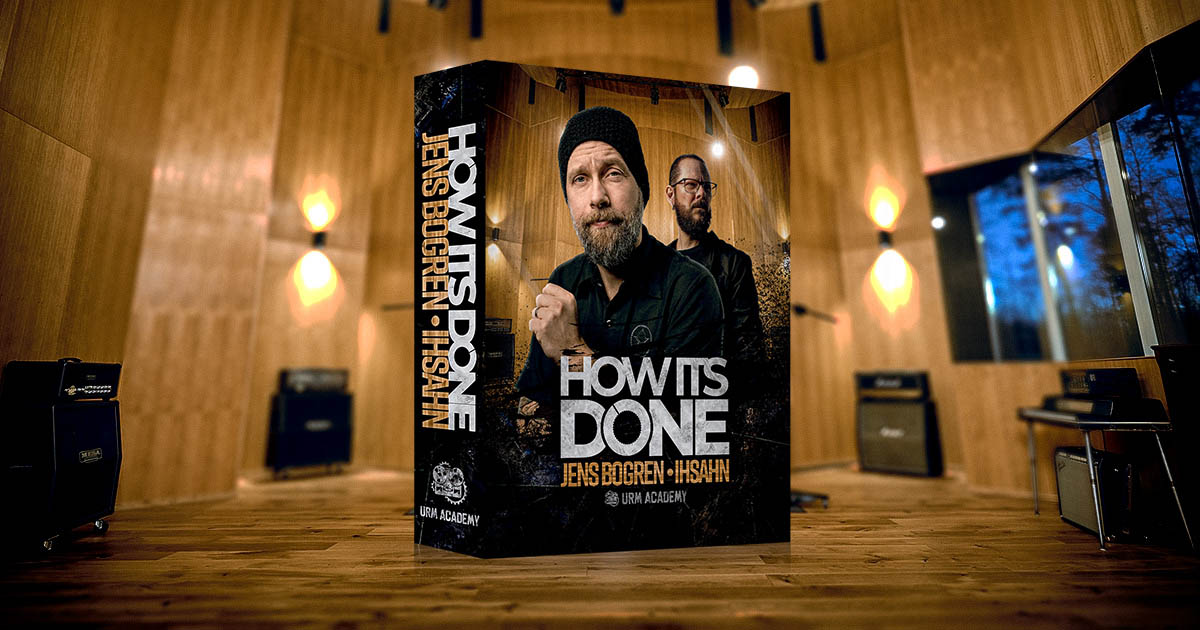
We got an unprecedented look into that exact philosophy when we flew to Örebro, Sweden, to film legendary producer Jens Bogren and iconic artist Ihsahn (of Leprous and Emperor fame) create the song “The Observer” from the ground up for the course, How It’s Done. The entire 35-hour process was captured in real-time, with nothing hidden or redacted.
What we learned was that Jens’s entire production playbook is built on four powerful pillars. And understanding them is the key to closing that gap.
Every Detail Matters: The Foundation of a World-Class Mix
The first pillar is an almost superhuman attention to detail. Jens is an unrivaled master of precision, and his meticulousness is all-encompassing. He knows that every minute choice plays a crucial role in the final sound.
This isn’t just about getting a good drum sound; it’s about scrutinizing the manufacturing year of a microphone, the angle of a cabinet in the room, and even the length and quality of the cables being used.
Actionable Example: Building the Guitar Tone
During the session, the guitar tone wasn’t just “dialed in.” It was constructed piece by piece.
- Amp Shootout: The process began with a deliberate choice between several amps, including a Diezel VH4, a vintage Mesa Boogie Dual Rectifier (a pre-500, Rev C model), and a boutique MLC Subzero 100. The goal wasn’t just to find what sounded “heavy,” but what best served the specific riffs in the song, a decision made collaboratively with Ihsahn.
- The Cabinet is King: Jens believes 80% of the guitar sound is in the cabinet and the micing. His go-to is often a Mesa Rectifier oversized cab from the early 2000s loaded with Vintage 30 speakers. He even has his cabinets flush-mounted into the studio wall, which provides better low-end response by controlling reflections.
- Micron-Level Scrutiny: The microphones themselves are carefully chosen. Jens might A/B multiple Shure SM57s because they can sound different depending on the year they were made. He even has a modified SM57 with a higher-end transformer for a flatter response and a modified Shure SM7 with the grill cut out so he can get it closer to the speaker cone.
This pillar isn’t just about gear; it extends to performance. During tracking, they focused relentlessly on capturing the energy of a take, knowing that you can suck the life out of a performance by over-editing it later. It’s a constant balance of technical perfection and raw emotion.
It’s Not What You Have, It’s Knowing How To Use It
This brings us to the second pillar: you must know your gear inside and out. This doesn’t mean you need tons of fancy outboard equipment. It means having an encyclopedic, practical understanding of the tools you do have, whether that’s a few stock plugins or a rack of boutique preamps. Your knowledge must extend beyond the spec sheet to how the gear interacts with the artist, the room, and the music in a real-world situation.
Actionable Example: The Vocal Setup
Setting up a vocal mic might seem simple, but countless tracks are ruined at this stage by avoidable errors. Jens’s approach reveals how deep this pillar goes.
- Tame the Room First: The number one enemy of a clean vocal recording is early reflections from nearby walls, which create comb filtering and a “boxy” sound. Before even thinking about a mic, Jens identifies the spot in the room with the least amount of audible reflection, often by simply walking around and listening. For home studios, this is often the center of the room, as far from any walls as possible.
- The Right Mic for the Job: The microphone choice is purposeful. For the lush clean vocals in “The Observer,” he reached for a tube condenser like the Neumann U 67. However, he notes that for a grittier sound or for recording in a less-than-perfect room, a dynamic mic like the Shure SM7B is often a better and safer choice because it’s less sensitive to the surrounding space.
- Even the Lyric Stand is a Tool: Here’s a detail most people never consider: a music stand placed directly in front of the singer creates a massive reflection point that can ruin your vocal sound. Jens is extremely careful to place any lyric sheets or iPads off to the side or at an angle where the reflections are fired away from the microphone’s capsule.
Serve the Song, Not Your Ego
A nugget of wisdom that defines truly great producers is that you must always do what’s best for the song. Your job is to enhance the music, to make sure the song is better when it leaves your studio than when it arrived. This often means checking your ego at the door and being willing to kill your darlings.
Actionable Example: Deconstructing the Arrangement in Pre-Production
Watching Jens and Ihsahn work through the song structure was a masterclass in this philosophy.
- Brutal Honesty: Some of the musical passages Ihsahn had written were incredible—technically brilliant and superior to what most bands could ever hope to achieve. However, if a part didn’t serve the song’s overall momentum or emotional arc, it was readily discarded.
- Egoless Collaboration: The feedback process can be a minefield for many artists and producers, who struggle to give critiques without offending or receive them without taking it personally. But Jens and Ihsahn navigated this with ease. They voiced their opinions, debated ideas, and came to solutions together, like adding a new screaming vocal line to build tension into a chorus instead of letting an instrumental section drag.
This ability to have an open dialogue is a skill. It’s no coincidence that artists at this level are dedicated to creating the best music possible, and they understand that requires trusting the feedback of their colleagues.
The Art of Balance: More Than Just Faders
Finally, we arrive at the fourth pillar: mixing is balance. This doesn’t just mean balancing the levels with your faders. It signifies creating a harmonious relationship among all the components, where every element complements the others. A massive part of achieving this balance is managing phase relationships.
Actionable Example: Solving Drum Phase
You bring up the faders on your overhead mics, and suddenly your powerful snare drum sounds thin and weak. This is a classic phase issue. Because the sound of the snare reaches the overhead mics later than the close mics, the waveforms can be out of sync, canceling out crucial low-end frequencies.
- Beyond the Polarity Switch: Simply flipping the polarity doesn’t always work, and manually time-aligning the tracks can make the drum kit sound less focused and smear the transients. The real art is in manipulating phase in more subtle ways.
- Your EQ is a Phase Tool: Jens demonstrates how an equalizer is also a phase-shifting device. Whenever you apply a filter, it rotates the phase of the signal around the crossover frequency.
- Strategic Phase Rotation: In the session, Jens uses a FabFilter Pro-Q 3 on the overheads. By carefully dialing in a high-pass filter, he’s not just removing low-end rumble; he is intentionally rotating the phase of the low-mid frequencies in the overheads. With the right frequency and Q settings, he can get the overheads to snap back into a constructive phase relationship with the snare’s body, resulting in a full, impactful drum sound without sacrificing punch or clarity.
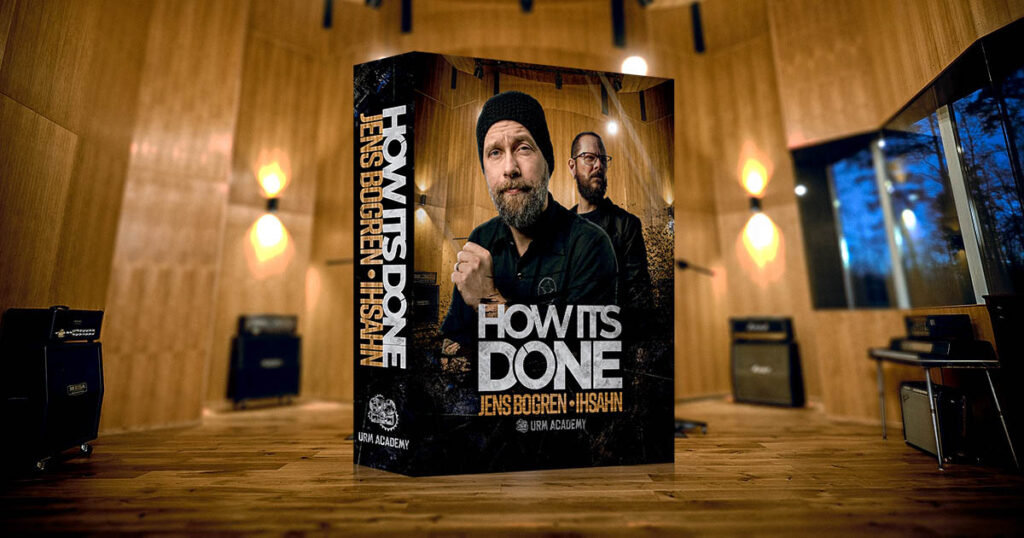
Learn How It’s Done
These four pillars—meticulous detail, deep gear knowledge, serving the song, and achieving true balance—are the foundation of a professional production strategy. They are the “why” behind every “what.”
The techniques discussed here are just a tiny fraction of what’s revealed in the full How It’s Done w/ Jens Bogren course. If you’re ready to move beyond simply collecting tricks and want to build your productions on a foundation of proven, professional strategy, this is your chance to learn from a true master of the craft.
It doesn’t matter if you’re a beginner or a seasoned pro, or whether you’re working in a commercial studio or a bedroom with headphones. This course is designed to teach you the decision-making process and workflows that will save you years of painful trial and error.
Ready to learn how it’s really done?