The Andy Sneap Sound: Deconstructing His Iconic Metal Mixes
Nail The Mix Staff
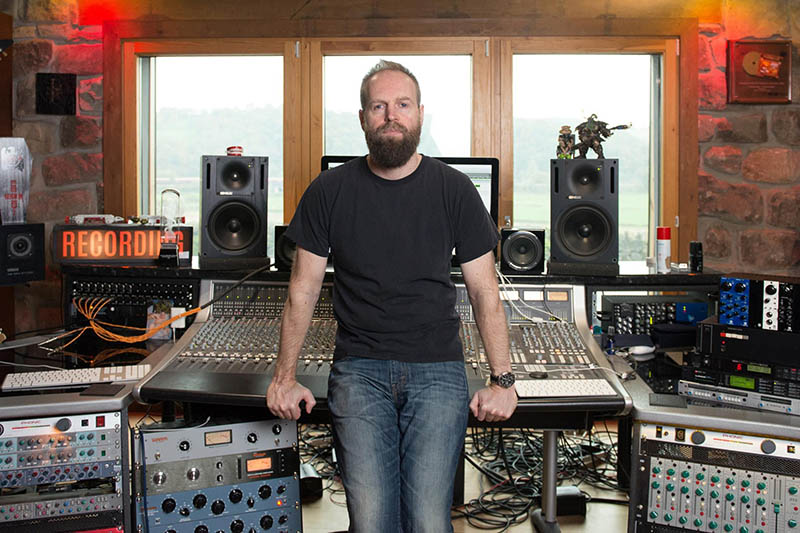
If you've listened to heavy metal in the last 20 years, you've heard Andy Sneap's work. His name is synonymous with a certain kind of sound: polished, aggressive, and unbelievably tight. From modern thrash titans like Testament and Megadeth to metalcore pioneers like Killswitch Engage and Trivium, his fingerprints are all over the genre.
But how does he do it? What makes an Andy Sneap mix sound so distinctly… Sneap? It’s not one single trick, but a combination of meticulous techniques, a deep understanding of guitar tone, and some legendary processing chains that have become industry standards.
Let's break down some of the core components of his production philosophy that you can start applying to your own mixes.
A Quick Profile: The Architect of Modern Metal
Before he was a world-renowned producer, Andy Sneap was shredding on guitar for the British thrash band Sabbat. This background as a musician gives him a crucial perspective: he understands what it feels like to be on the other side of the glass. He knows what a great guitar tone should feel like to play.
His production career took off in the late 90s and early 2000s, where he essentially crafted the sonic blueprint for a generation of melodic death metal and metalcore. Albums like Arch Enemy's Wages of Sin and Killswitch Engage's The End of Heartache set a new bar for how heavy and clear a metal record could sound. His ability to make even the most downtuned, chaotic riffs sound articulate and powerful is what makes him a go-to producer for so many bands. It's why he sits among the legends in our list of Nail The Mix instructors.
The Guitar Tone: Where It All Begins
The foundation of any Sneap mix is the guitar tone. It’s got to be huge, but it also needs to be controlled.
Amps and Mics: The 5150 Foundation
The undisputed king of the Sneap sound is the Peavey 5150/EVH 5150 III/Peavey 6505 amplifier. He’s used it on countless records. This amp has the perfect gain structure for modern metal—tons of saturation and aggression, but it can be dialed in to stay tight and focused. He often pairs this with a classic Marshall JCM800 for a slightly different flavor to blend.
For micing, a tried-and-true combo is the key:
- Shure SM57: No surprise here. Pointed at the sweet spot of the speaker cone, it captures that essential upper-midrange bite and aggression that makes guitars cut through a mix.
- Sennheiser MD 421: Placed right beside the SM57, the 421 adds low-mid body and warmth. Blending these two mics gives you the best of both worlds: the attack and presence of the 57 with the weight and thickness of the 421.
EQing the Sneap Way: Surgical Precision
This is where a lot of the magic happens. Andy Sneap’s guitar EQ isn't just a simple mid-scoop; it’s about surgically shaping the tone to fit perfectly in the mix.
High-Pass and Low-Pass Filters are NON-NEGOTIABLE
This is maybe the most important step for achieving that tight, modern sound.
- High-Pass Filter (HPF): Cut everything below 80-120Hz. Seriously. All that low-end rumble just muddies up the mix and fights with the bass guitar and kick drum. Get rid of it.
- Low-Pass Filter (LPF): Taming the high-end fizz is just as important. Use an LPF to roll off the harsh frequencies above 8-10kHz. This removes that nasty, fizzy top-end that can make distorted guitars sound cheap and grating, while keeping the essential "air" and pick attack.
The Low-Mid Scoop
Yes, you still need a mid-scoop, but it has to be done with purpose. The goal is to carve out space for other instruments and remove the "boxy" or "honky" frequencies. Find the problem area, usually somewhere between 300Hz and 500Hz, and pull it down with a relatively wide Q. This cleans up the mud without making the guitars sound hollow.
For a deeper dive into these techniques, our guide on how to EQ metal guitar has you covered.
https://youtu.be/F3zW6iF0G7M?si=o_d2Nn8J2Zf_1K7e
The Power of Impulse Responses (IRs)
In the modern era, you don’t always need a real amp and cab. Andy Sneap has famously embraced digital tools and even created his own highly sought-after Impulse Response packs (like his Toontrack EZmix pack). Using a high-quality IR that was captured with his specific mic placement and signal chain can get you 90% of the way to his signature tone right inside your DAW.
Punchy Drums and Bass That Cuts
A great mix isn't just about guitars. Sneap's drums and bass are just as meticulously crafted.
Sample Blending for Perfect Drums
That super-punchy, consistent kick and snare sound you hear on his records? That’s sample blending. It's the practice of layering drum samples underneath the live acoustic drum tracks to enhance them.
He'll often blend a sample with a sharp "click" to the kick drum to help it cut through the dense guitars, and layer a punchy, aggressive snare sample to ensure every backbeat has maximum impact. Tools like Slate Trigger 2 or the stock sampler in your DAW are perfect for this.
Aggressive Gating and Compression
On drums, gates are used aggressively to remove cymbal bleed from the tom and snare mics, creating a super clean and tight drum sound. Following the gate, heavy-handed compression is often used to add snap and sustain to the snare and to even out the tom fills.
Bass Guitar: The Missing Link
The bass tone in a Sneap mix has a very specific job: fill the gap between the kick drum and the guitars. This is often achieved by blending a clean DI signal (for the low-end foundation) with a distorted amp or plugin signal (like a SansAmp). The distortion adds harmonics in the midrange that allow the bass to be heard even on small speakers, without adding mud to the overall mix.
The Famous Mix Bus Trick
Here it is. The technique that producers have been talking about for years: the multiband compressor on the guitar bus.
Andy Sneap is known for using a multiband compressor, like the Waves C4, specifically on his main rhythm guitar bus. But he's not using it to compress the whole signal. He uses it to solve a very specific problem: the low-mid "woof" from palm-muted chugs.
Here’s the setup:
- Isolate one band of the multiband compressor and set it to cover the problematic low-mid area, roughly from 150Hz to 400Hz.
- Set a fast attack and fast release.
- Set the threshold so that the compressor only kicks in during the loudest palm mutes.
- Apply just a few dBs of gain reduction.
The result? The guitars remain big and powerful, but whenever a chunky palm mute hits, the compressor quickly ducks that muddy frequency area, keeping the entire mix clean and tight. It’s a genius move that maintains clarity without sacrificing weight.
Putting It All Together: Learn From the Masters
Deconstructing these techniques can give you a massive leg up in your productions. You can apply the EQ curves, try the bus compression trick, and experiment with sample blending right now.
But reading about a mix is one thing. Watching it get built from the ground up by the person who made it famous is a completely different experience. Imagine seeing a pro like Andy Sneap (or талантливый_инженер like him) dial in that multiband compressor in real-time, explaining why he set the threshold just so, or blending the perfect kick sample into the mix.
That's exactly what we do at Nail The Mix. Each month, we hand you the full, raw multitracks from a massive song and let you watch the original producer mix it from scratch. You get to see every plugin, every fader move, and every decision explained. If you're serious about taking your metal mixes to the next level, check out our full catalog of mixing sessions and see how the pros really do it.