How to mix POLYPHIA guitars (“Crush”)
Nail The Mix Staff
Let’s be real: when you get the multitracks for a Polyphia song, you know you’re in for a wild ride. The track “Crush” is no exception. It’s a landscape of lush, atmospheric synths, ridiculously intricate guitars, and a powerful, groovy rhythm section. But there’s a big catch for anyone used to mixing modern metal: there are no traditional, chugging rhythm guitars.
This presents a unique challenge. How do you create a full, impactful mix that feels heavy and complete without that familiar wall of sound? We dug into the raw multitracks from the Nail The Mix session with producer Nick Sampson to see how it’s done. The answer lies in making every single element count and understanding how they interlock to create a sound much larger than the sum of its parts.
The Foundation: A Drum Kit Built for Groove and Clarity
The raw drum tracks for “Crush” sound incredible right out of the gate, which is a testament to top-tier playing and engineering. But to make them punch through this dense arrangement, you need to pay attention to the details.
The Kick: Trigger Tricks and Sample Blending
Right away, there’s a cool pro-level trick to notice. The provided kick trigger track is actually placed slightly ahead of the acoustic kick drum hits. Why? It’s a clever technique for driving a gate on the kick mic. By having the trigger open the gate milliseconds before the beater hits the skin, you ensure you get the full, uncompromised transient of every single hit. No more clipped, clicky kick attacks.
Nick Sampson also provided two distinct kick samples. One is a tight, focused sample for adding punch, while the other is a big, wide, roomy sound. The roomy sample is boomy, and in a typical metal track, it might be too much. But in a mix like this, it’s perfect for adding the size and space that heavy rhythm guitars might otherwise occupy. Blending the clean transient from the gated mic with the punch of one sample and the epic space of the other is key to getting that signature Polyphia low-end power.
The Snare: High-Tuned Attack and Ghost Note Detail
To cut through the wall of synths and lead guitars, the snare is tuned high, giving it a sharp, cracking tone. But a high-tuned snare can sometimes lack body. That’s where the provided snare sample comes in. It’s not meant to replace the acoustic snare, but to be blended underneath to add weight and power, especially on the backbeats.
To make sure none of the drummer’s intricate playing gets lost, there’s also a dedicated bottom snare mic. This is your secret weapon for bringing out all those tasty ghost notes and sensitive articulations. Carefully balance the top mic’s crack, the sample’s body, and the bottom mic’s sizzle, and you’ll have a snare that’s both articulate and powerful.
The Rhythmic Core: That Iconic Slap Bass
In “Crush,” the bass isn’t just holding down the low end; it’s a lead instrument carrying a primary rhythmic motif. You simply can’t hide this bass behind a wall of distortion—it needs to be front and center.
Making the Bass the Star
For metal mixers used to just splitting the bass, distorting the top, and calling it a day, this track requires a different approach. The slap tone is pristine and needs to be treated with care. Think clean, powerful, and dynamic. Getting the metal compression right is crucial. You want to control the dynamic peaks of the slaps and pops without squashing the life out of the performance. The goal is consistency, so every note is audible and impactful.
Locking in the Low End
The groove of this song lives and dies by the interplay between the punch of the kick drum and the rhythmic thumps of the bass. If you can get the low-end of that bass and the low-end of the kick locked in so they punch together perfectly, you’ve basically won half the battle. This is a perfect scenario for using sidechain compression or a dynamic EQ, ducking the bass DI’s low frequencies ever so slightly whenever the kick hits to eliminate any mud and create a clear, defined, and unbelievably groovy low-end punch.
Filling the Void: Guitars and Synths as the “Rhythm” Section
So, how do you fill all that space left by the absence of rhythm guitars? With a mountain of perfectly arranged lead guitars and synths.
Layering Guitars for Width and Texture
Instead of a single “wall of sound,” Polyphia builds a “web of sound.” The arrangement is full of tasteful, harmonized lead lines. One of the classiest-sounding parts of the mix is how octave guitar parts are doubled and panned hard left and right. This technique creates a massive sense of width and sophistication that a mono rhythm guitar track could never achieve. Add in the various FX guitar layers, swells, and melodic bits, and you have a complex tapestry that’s both heavy and intricate.
The Synth Blanket: Taming the Low-End and Balancing Melodies
The synths in this track are absolutely massive. They act as a foundational blanket that glues the entire song together. You have deep sub basses, lush pads, and arpeggiated synths all working together. The sheer amount of low-frequency information from the bass guitar, kick drum, and various synths can quickly turn into a muddy mess.
This is where surgical EQ strategies become your best friend. You need to carefully carve out space for each element so they can coexist without fighting. High-pass filtering on elements that don’t need the sub-bass information is a must. The chorus also presents a fun challenge: the main guitar melody is doubled by a synth. Deciding which element takes the lead and how you balance them volume-wise is a critical mixing decision that will define the impact of the hook.
Bring It All Together (And Your Chance to Mix It)
Mixing a track like Polyphia’s “Crush” is a masterclass in balance and control. It forces you to think beyond standard metal mixing formulas and focus on creating space for intricate, layered parts to shine.
These are the exact kinds of challenges that turn good mixers into great ones. And the best way to learn is by doing. If you want to get your hands on these exact same multitracks and try these techniques for yourself, you can. At Nail The Mix, we give our members the raw multitracks from massive songs like this every single month.
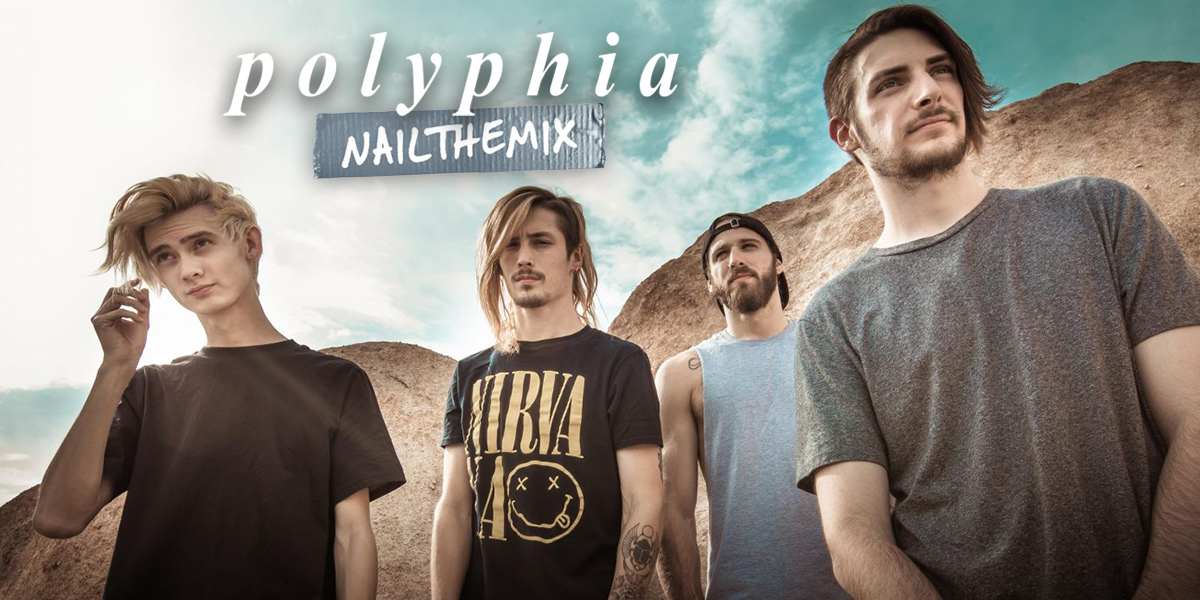
Polyphia on Nail The Mix
Nick Sampson mixes "Crush"
Get the Session
Imagine not just reading about these techniques, but actually applying them to the real tracks from Polyphia’s “Crush.” You can experiment with kick samples, dial in that slap bass, and find the perfect balance between all those synths and guitars. It’s part of a bigger mission to help producers unlock their sound and move beyond presets.
Ready to give it a shot? Download the raw multitracks for “Crush” by Polyphia and see what kind of soundscape you can create.