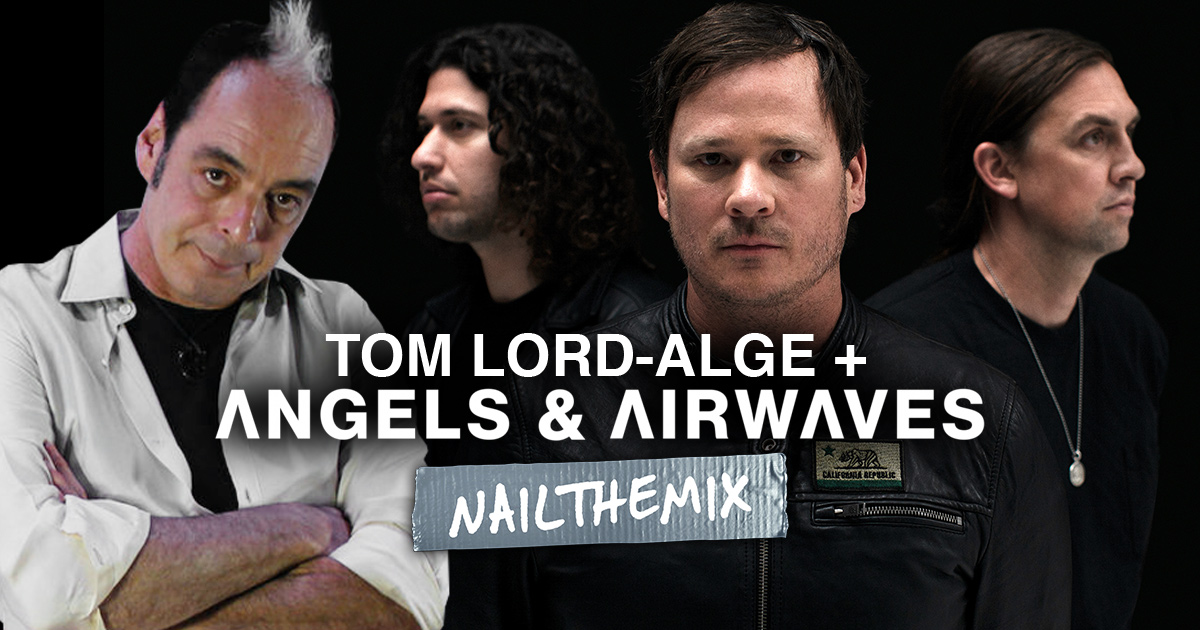
How Tom Lord-Alge mixes Tom DeLonge’s vocals with Valhalla Vintage Verb (ft. Angels & Airwaves)
Nail The Mix Staff
The vocal sound of Angels & Airwaves is iconic. It’s spacey, anthemic, and drenched in a signature ambience that helps define the band’s entire vibe. But how do you take a raw vocal track and transform it into that massive soundscape without it turning into a washed-out mess?
We got a front-row seat as legendary mixer Tom Lord-Alge (TLA) broke down his approach to mixing the vocals for Angels & Airwaves. Forget subtle, transparent processing; TLA’s method is about making bold moves to create a vocal that spits, barks, and perfectly commands a dense, driving rock track. Let’s dive into his key techniques.
Getting That Aggressive Vocal Bite
Before you even think about reverb, the dry vocal needs to have the right attitude. For this track, TLA’s goal was to make Tom DeLonge’s vocal aggressive and upfront, almost like it was overloading the mic pre in a musical way. This required some heavy-handed processing.
Why Heavy-handed Processing Wins
While your first instinct might be to use small, surgical increments of EQ and compression, TLA demonstrates that for this style, you need to go big. He pushed the vocal hard to get it to jump out of the speakers.
Using the Focusrite D2 EQ, he made significant boosts and cuts to shape the tone, followed by an equally aggressive amount of compression. The result, when soloed, might sound a bit shocking compared to the unprocessed track. But in the context of the full mix, that aggression is exactly what’s needed for the vocal to cut through and feel energetic. This is a core concept in modern mixing: don’t be afraid to push your tools to get the character you need.
The Power of EQing Into Your Compressor
TLA’s signal chain order is a crucial part of his sound. He consistently places his EQ before his compressor.
Why does this work so well for vocals?
- Shape First, Squeeze Later: You can add brightness and presence—that extra top-end sparkle that helps vocals cut through—with the EQ.
- Tame the Harshness: The compressor, placed after the EQ, then reacts to that brighter signal. It naturally pulls back and tames the newly boosted top-end, preventing it from getting harsh or brittle while retaining the clarity.
This technique allows you to get an incredibly bright and present vocal that still feels smooth and controlled. It’s a classic move that’s essential for getting professional-sounding rock vocals.
Crafting The Signature Reverb Space
The reverb is where the real Angels & Airwaves magic happens. It’s not just a simple hall reverb; it’s a carefully constructed effect designed to create rhythm and space.
The Pre-Delayed Reverb: A Modern Approach
A huge part of the sound is a prominent pre-delayed reverb. TLA takes their original idea and makes it his own with a modern plugin chain.
Here’s the setup:
- Plugin 1: A Simple Delay. Before the signal even hits the reverb, it goes through a delay plugin. This is used to set the pre-delay time rhythmically with the track and, importantly, to add some feedback for a few repeats.
- Plugin 2: Valhalla Vintage Verb. After the delay, the signal feeds into the popular Valhalla Vintage Verb. TLA uses the “Concert Hall” mode to create the large, lush reverb tail.
The result is that the initial vocal transients are clean, followed by a few distinct echoes from the delay, which then bloom into the massive reverb. This timed effect makes the reverb “pop up” and fill the gaps between vocal phrases, adding a cool rhythmic glue to the track without washing out the lyrics.
Taming the Shimmer: De-Essing Your Reverb Send
Lush reverbs can quickly introduce sibilant build-up, making the “S” and “T” sounds harsh and sandy. TLA’s solution is brilliant: he places a de-esser on the reverb send itself, right before the delay and reverb plugins.
By de-essing the signal going into the effects chain, he ensures that the sibilance never gets a chance to be exaggerated by the reverb. This cleans up the ambience considerably while leaving the core vocal track untouched.
The Art of Vocal Sectioning & Automation
A great mix breathes with the song. Instead of using one static vocal sound, TLA creates different treatments for the verse, chorus, and bridge, helping each section make more of an impact.
Separate Reverbs for Each Section
Why automate one reverb send when you have the processing power to create dedicated channels for each section? TLA sets up separate aux tracks for his verse reverb, chorus reverb, and bridge reverb.
Even if they start with the same basic chain (Valhalla Vintage Verb), he EQs the reverb return for each section differently. The chorus verb might be brighter and wider, while the verse verb is a bit darker and more contained. This gives him unparalleled control and lets him perfectly tailor the space to the energy of each part of the song without complex automation lanes. If you want to see exactly how he sets this up, you can get the full multitracks and session files for this and other legendary mixes in the Nail The Mix sessions library.
Adding Width and Vibe with Panning and ADT
Vocal doubles and effects are used strategically to enhance different sections.
- Chorus: The main vocal and its double are panned slightly left and right to create a wide, immersive sound for the high-energy chorus, a classic stereo vs mono technique for creating impact.
- Bridge: The bridge vocals and their doubles are kept panned up the center for a more focused, intimate feel.
For the bridge, TLA also adds a classic ADT (Automatic Double Tracking) effect. He describes it as a tight, modulating slap reminiscent of John Lennon’s vocals on “I Am The Walrus.” Crucially, he places this ADT effect before his EQ and compression chain. This makes the compressor react to the modulated signal, an essential step in achieving that authentic vintage sound.
Blending Effects with Smart Automation
The band provided a cool “sweepy” vocal delay on the bridge. As that pre-existing effect begins to fade out, TLA uses automation to slowly fade in his own bridge reverb. This creates a seamless and evolving ambient texture, handing off the effect from one source to another without the listener ever noticing the transition. It’s a subtle but powerful automation trick that keeps the mix dynamic and interesting.
These are just a few of the powerful techniques Tom Lord-Alge used to craft the epic vocal sound on this Angels & Airwaves track. By combining aggressive dry processing with intricately crafted, section-specific effects, you can create a vocal that’s both powerful and full of atmospheric depth.
Angels And Airwaves on Nail The Mix
Tom Lord Alge mixes "The Adventure"
Get the Session
Seeing these concepts explained is one thing, but watching a master like TLA apply them in real-time is a complete game-changer. At Nail The Mix, you get to be a fly on the wall for mix sessions just like this one every single month. Get the raw multitracks from bands like Gojira, Lamb of God, and Knocked Loose, and watch the original producer mix the song from scratch, explaining every plugin, technique, and decision along the way. Stop guessing and start learning the techniques that will unlock your sound. If you’re ready to dive deep, you can get access to legendary sessions like the Tom Lord-Alge Angels & Airwaves mix in our vault.