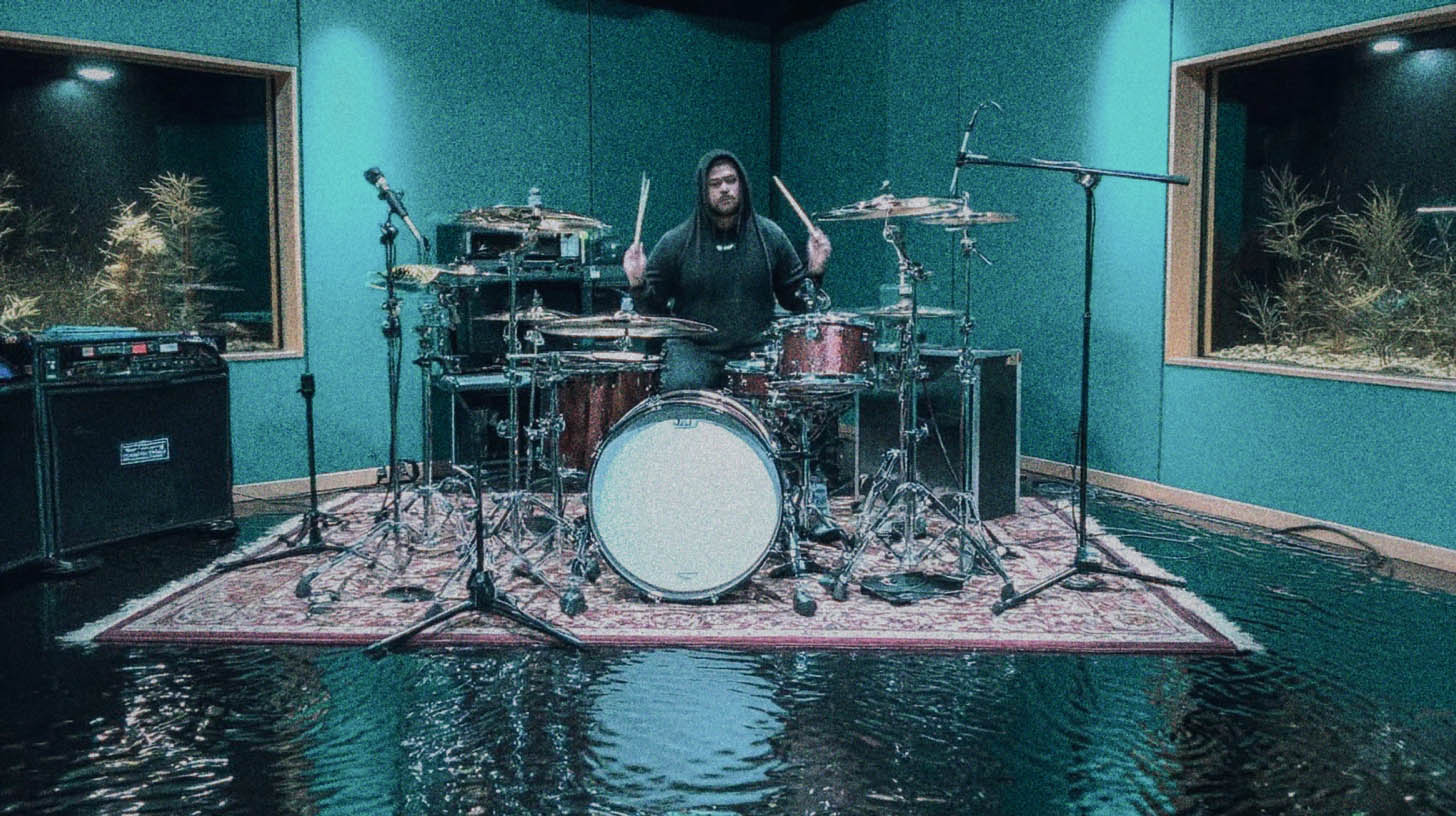
Humanize Your Metal Drums with the Patrick Carney SSD Expansion
Nail The Mix Staff
Modern metal drums get a lot of hate. We’ve all heard it: they sound fake, programmed, like plastic toys in a vacuum. And nowhere is this more obvious than with gridded-to-death blast beats where a single snare sample fires off like a machine gun. It’s sterile, lifeless, and frankly, boring.
The problem isn't the samples themselves; it's how they're used. The best-sounding modern metal records are covered in samples, but they feel real. They have impact, groove, and that intangible human element.
So, how do you bridge that gap? It starts with breaking out of the "perfectly polished" sample mindset. And weirdly enough, a fantastic tool for this comes from an entirely different genre: the Steven Slate Drums Patrick Carney Expansion.
Yeah, Patrick Carney from The Black Keys. Garage rock, blues, lo-fi grit. It might seem like a strange choice for metal, but that’s exactly why it’s such a powerful secret weapon. Let’s break down what this kit is and how you can use it to inject some much-needed life into your metal drum productions.
What's in the Patrick Carney Expansion?
First off, this isn't your typical, pristine, punchy metal drum library. It was designed to capture Carney’s signature sound, which is all about vibe and character.
- The Kits: You get three main kits, including a fat-sounding 1960s Ludwig and a punchy 70s Vistalite. These aren’t hyper-processed shells; they sound like real drums in a real room.
- The Processing: The samples were tracked by Carney himself at his studio in Nashville, running through a 1968 Neve 8028 console and straight to a 16-track tape machine. This means the saturation, compression, and analog color are baked right into the samples.
- The Vibe: Besides the multi-velocity kits, you get a collection of one-shot samples that are even more heavily processed. Think snares crunched through an EMT plate reverb or a kick slammed through a vintage compressor. This is instant character.
Why a Garage Rock Kit is a Secret Weapon for Metal Producers
Okay, so it sounds cool, but how does a gritty, lo-fi drum kit help you mix a modern deathcore track? The key is to stop thinking about replacing your sounds and start thinking about enhancing them.
Escaping the "Plastic Drums in Space" Syndrome
The biggest trap in programmed drums is relying on a single, perfect snare sample for every hit. Real drummers are inconsistent. Every hit varies slightly in velocity, timing, and where the stick lands on the head. This subtle variation is what our brains perceive as "human."
The Carney library is built on this principle. The samples have grit, noticeable room sound, and a less-polished attack. By blending these sounds with your go-to metal samples, you can introduce that imperfection back into a performance that’s been edited tightly to the grid.
The Power of Layering with Character
This is the most crucial takeaway. Don’t swap out your favorite punchy metal snare from the SSD 5.5 library or a GetGood Drums kit. Instead, use a Carney snare as a parallel layer underneath it.
You can take a snappy, modern metal snare that provides the transient and crack, then blend in a grimy, saturated Carney snare underneath to add body, texture, and a sense of space. Suddenly, your snare doesn’t just smack; it has a personality and blooms in a way that a single sample never could.
Humanizing Your MIDI and Velocities
Working with a library that’s inherently "vibey" encourages better programming habits. When your sound source has a wide dynamic and tonal range, you're more inclined to manually adjust velocities in your MIDI editor.
Remember, velocity in a multi-layered sampler isn't just a volume knob. Hitting a MIDI note at a velocity of 90 should trigger a completely different sample than a note at 127. By programming these variations, especially in fills, ghost notes, and even within blast beats, you mimic a real drummer’s performance and make the entire kit feel more alive.
Actionable Techniques: Blending Carney's Vibe into Your Metal Mix
Let's get practical. Here are a few ways to integrate the Patrick Carney expansion into a heavy mix right now.
The Parallel "Dirt" Snare
This is a classic trick used by tons of top-tier mixers.
- Set Up Your Tracks: Keep your main snare track as-is. Create a new instrument track and load a snare from the Carney library—one of the processed one-shots is perfect for this. Copy the MIDI from your main snare to this new track.
- Process It to Hell: This isn't supposed to be subtle. Slam it with heavy-handed processing.
- Saturation: Use something like Soundtoys' Decapitator or FabFilter Saturn 2 to add aggressive harmonic distortion.
- Compression: Crush it with a fast, aggressive FET compressor like a digital emulation of a UAL 1176. Don't be afraid of 10-20 dB of gain reduction. This will bring up the tail and room sound of the sample. For even more control, our guide to the basics of compression for mixing rock and metal covers how to dial in this kind of aggressive processing.
- Transient Shaping: If the Carney snare's attack is fighting your main snare, use a transient shaper like the SPL Transient Designer to pull the attack back, emphasizing the sustain and body.
- Blend to Taste: Pull the fader on your "dirt" snare all the way down. With the full mix playing, slowly bring it up until you can just feel it adding weight and texture underneath the main snare. It should be more felt than heard.
Adding Realistic Room and Cymbal Wash
Modern metal sample libraries often have very clean, controlled room and overhead mics to give you maximum flexibility. But sometimes, you want a bit of chaos.
The room mics and overheads in the Carney expansion are full of character. Try blending them in quietly behind your main drum bus. You can even sidechain compress the Carney rooms to your main kick and snare, making them "pump" and "breathe" in time with the groove, adding an explosive energy and helping make small drum rooms sound massive.
EQing for Cohesion, Not Replacement
When you layer a raw, organic sample with a highly processed metal one, you’ll need some EQ to make them play nice. Don’t try to make the Carney snare sound like your metal snare; just carve out space for them to coexist.
- High-Pass Everything: The Carney samples have a lot of low-end warmth from the tape and console. Use a high-pass filter on your layered snare or room tracks to cut out any subby mud below 100-150Hz that might clash with your kick and bass.
- Surgical Scooping: Use a precise EQ like the FabFilter Pro-Q 3 on the Carney snare. Find the fundamental frequency of your main snare (often around 150-250Hz) and cut that frequency on the Carney sample with a narrow Q. This prevents the two sounds from fighting for the same sonic space. Learning how to transparently tame problem frequencies is a core skill for this kind of work.
- Embrace the Mids: The "trashy" character of a snare often lives in the 1-3kHz range. If your main snare is scooped there, you can let the Carney layer fill that area in, adding bite and aggression.
Taking Humanization to the Next Level
Choosing the right samples and layering them creatively is a massive step forward. But it's only part of the puzzle. Truly realistic drums come from the combination of great sounds, nuanced programming, and a mix that lets them breathe.
This means understanding how to edit MIDI without making it robotic, how to use bus compression to glue the layers together, and how to automate different elements to create dynamics throughout a song. It’s about knowing when to quantize to 90% instead of 100% to keep some of that human swing, just like the top-tier Nail The Mix instructors do.
Watching a pro mixer like Dave Otero or Will Putney build a drum sound from the ground up is the fastest way to learn these advanced techniques. They aren’t just picking samples; they’re making dozens of micro-decisions with editing, velocity, and processing that all add up to a huge, impactful, and human drum sound.
At Nail The Mix, you get to be a fly on the wall for exactly that. Each month, you get the raw multi-tracks from a real metal record and watch the original producer mix it from scratch, explaining every single move. If you’re ready to move beyond just programming notes and start crafting truly professional drum sounds, check out the full catalog of Nail The Mix sessions.