How To Preserve Pick Attack In Brutal Metal Guitars
Nail The Mix Staff
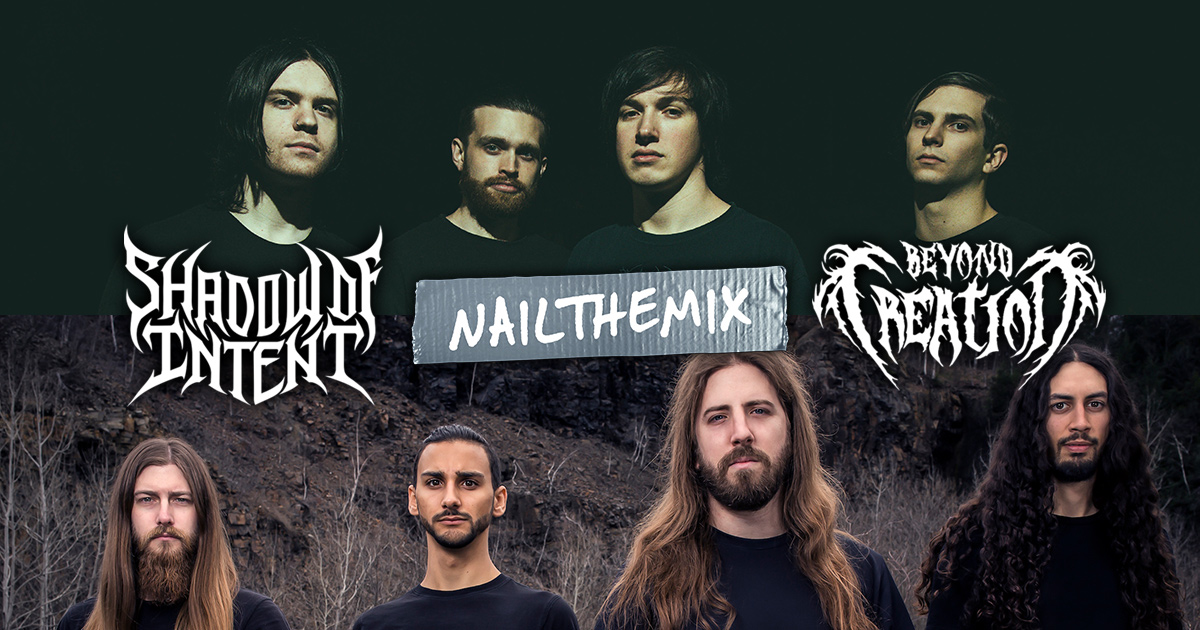
Let’s be honest, modern heavy metal guitar tones are a beast to mix. You need them to sound massive, aggressive, and full of weight, but you also need them to have a razor-sharp clarity that lets every lightning-fast riff cut through. Lose the pick attack, and the whole thing turns to mud. Get it too bright, and it’s thin and lifeless. The guitars on a Shadow of Intent track are a masterclass in this balancing act.
So how do the pros pull it off? We got a front-row seat watching Christian Donaldson (Cryptopsy, The Agonist) mix the track “Barren and Breathless Macrocosm” during a Nail The Mix session. He walked through his entire process for getting those guitars to be both monstrously heavy and surgically precise. Forget presets—this is about a series of smart, deliberate moves that you can apply to your own mixes.
Foundational EQ: Carving Space & Taming Harshness
Before you start boosting for more aggression, you have to clean up the raw tone and make it sit with the other instruments. Christian’s approach is methodical, focusing on problem-solving first.
The Surgical Cut for Ear Fatigue
Ever notice how some distorted guitar tones have a piercing, almost painful frequency that just drills into your ears? Christian identified this exact issue in the initial tones, finding a specific “poke” right around 6kHz.
Instead of a broad treble cut that would dull the tone, he went in with a very narrow EQ band and surgically removed just that annoying frequency. This is a core concept in modern metal mixing: don’t just kill the highs; find the exact offensive frequency and get rid of it. This move alone makes the guitars instantly more listenable without sacrificing their edge.
Smart Sidechaining with Track Spacer
With the bass and guitars fighting for space in the low-mids, you need a way to create separation. This is where Christian uses a clever trick with the Wavesfactory Track Spacer plugin. He inserts it on the main guitar bus and sidechains the bass guitar to it. Now, whenever the bass hits, Track Spacer automatically carves out the clashing frequencies from the guitars in real-time.
Here’s the pro move: Christian places the Track Spacer after an initial EQ boost to the guitar’s “oomph” (the low-mid power). This way, the plugin is reacting to the boosted, more powerful signal, creating a more defined and noticeable pocket for the bass to sit in. Be careful with the settings, though—too much can completely gut your guitar tone. It’s a delicate balance. You can learn more about managing these conflicts in our guide on how to mix low-end.
Adding Weight & Character with Saturation
Once the corrective work is done, it’s time to build the tone’s character. This isn’t just about EQ; it’s about adding harmonic complexity and vibe with saturation.
The “Lo-Fi” Mid-Range Boost
To get some extra harmonic content and mid-range push, Christian employs a “Lo-Fi” plugin. While you might think of Lo-Fi effects as degrading the signal, here it’s used as a creative tone-shaper. He dials it in to a point where it adds rich mid-range character and harmonics without becoming overly distorted or fizzy. It’s a great way to add density to the core of the guitar tone.
API on the Guitar Bus
On his main guitar bus, Christian often uses an API-style EQ for broad, musical shaping. For this mix, he adds a subtle bump around 700Hz to push the high-mids forward, adding to the overall aggression and clarity. This kind of bus processing helps glue all the guitar tracks together and gives them a cohesive, console-like character.
Dynamics: Control and In-Your-Face Aggression
Static tone is boring. Christian uses a combination of compression techniques to manage the dynamics and add an aggressive, forward-moving energy to the performance.
Dual Mono Compression for Independent Control
Since the rhythm parts consist of two unique left and right guitar performances, you don’t want a standard stereo compressor reacting to both at once. A loud chug on the left could trigger the compressor and unnaturally duck the right guitar.
To fix this, Christian uses an LA-3A-style compressor in dual mono mode. This lets him compress the left and right channels completely independently, maintaining the integrity and power of each performance. The effect is a more forward mid-range and a controlled, punchy response that feels powerful without being squashed. He follows this up with another dual-mono plugin, the Waves Renaissance Axx, for final leveling.
The Power of Parallel Processing
Even after all this, Christian felt the guitars needed more “in-your-face” energy. The solution? Aggressive parallel processing. He creates a separate bus and sends a copy of the guitars to it for some heavy-handed treatment.
Here’s his parallel chain:
- Tape Saturation: He uses the Shattered Glass Audio SGA1566 plugin, which he praises for the “beefy” character it adds to the low-mids. This isn’t for subtle warmth; it’s for adding serious girth.
- Heavy Compression: Next, he slams the signal with a compressor. The goal here is to create movement. Now, every time a pick attack hits the main guitar track, it pushes the heavily compressed parallel signal forward for a split second. This creates an explosive, dynamic feel that makes the guitars jump out of the speakers.
- Filtering & Widening: Finally, he high-passes the parallel channel to keep it from muddying up the low end and uses a stereo widener to spread out just the low-mids of this parallel signal, adding width and power without making the whole mix washy.
Putting It All Together for a Brutal Mix
The final Shadow of Intent guitar sound isn’t the result of one magic plugin. It’s a chain of deliberate decisions:
- Surgical EQ to remove harshness.
- Creative sidechaining to make space for the bass.
- Saturation to add mid-range harmonics and character.
- Dual-mono compression for independent control.
- Aggressive parallel processing for movement and heaviness.
These are the kinds of advanced, real-world techniques that separate pro mixes from amateur ones. They go way beyond just dialing in a preset on an amp sim.
Shadow Of Intent on Nail The Mix
Christian Donaldson mixes "Barren And Breathless Macrocosm"
Get the Session
If you’re ready to see exactly how these moves fit into a full production, check out Nail The Mix. You can watch Christian Donaldson mix this entire Shadow of Intent song from scratch and get the multi-tracks to practice on yourself. It’s your chance to learn these techniques in our in-depth music production courses and see how world-class producers apply their philosophy to every single track in the session.