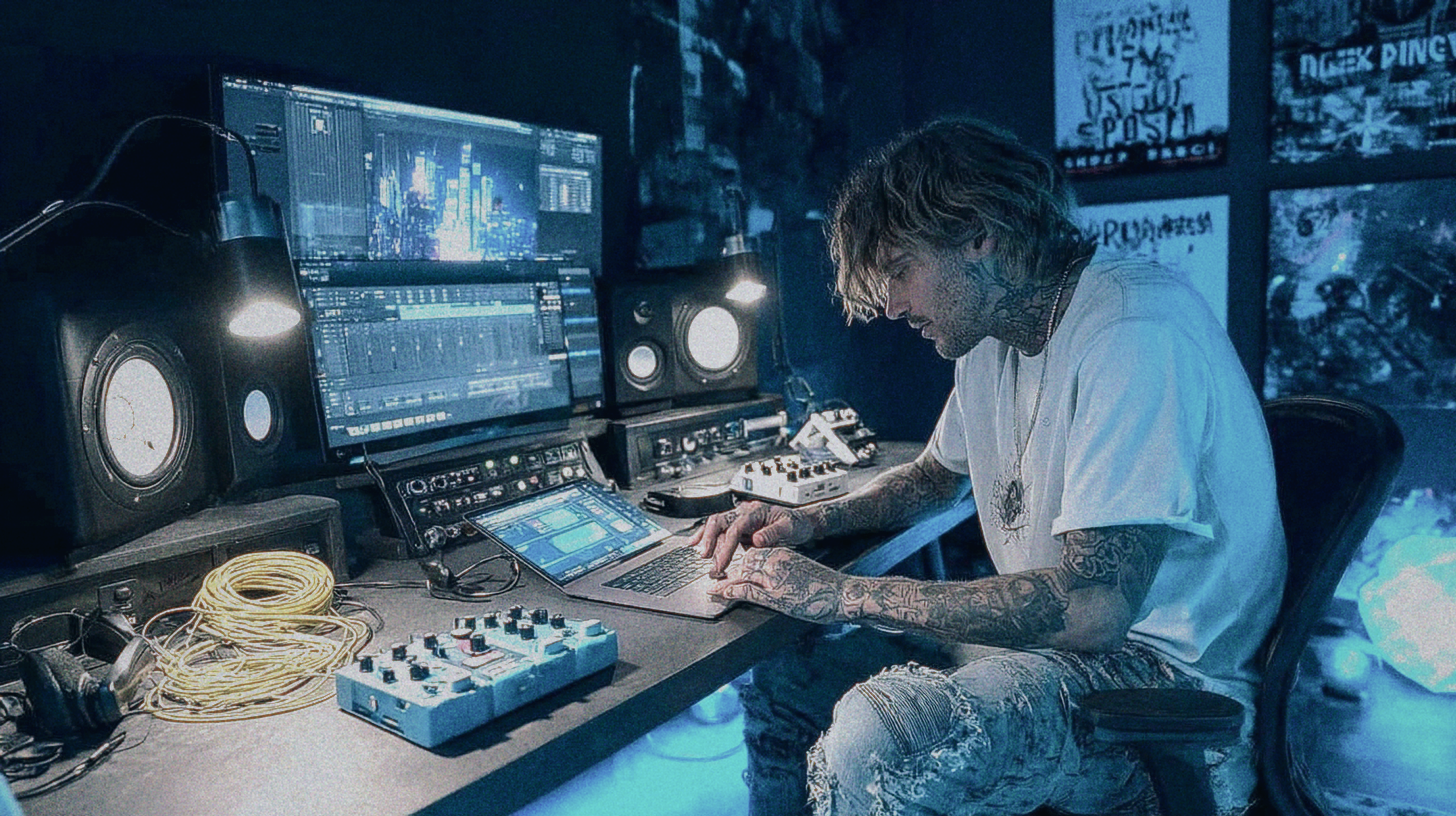
Logic Pro vs Ableton: The Metal Producer’s Guide
Nail The Mix Staff
The great DAW debate. It’s the modern-day equivalent of the Mesa/Boogie vs. Peavey 5150 argument—a battle fought endlessly in forums and comment sections. So, when it comes to Logic Pro vs Ableton, which one should you, a metal producer, actually be using?
Here’s the real talk: any modern Digital Audio Workstation is powerful enough to make a killer record. You can make a metal album in any of them. However, each DAW is built with a specific workflow in mind, and picking one that fights against your process is a fast track to creative frustration.
You can always switch, but let’s be honest, once you’re deep into a system, learning its shortcuts and quirks, you’re probably not going to. It pays to choose deliberately from the start.
So let’s break down the two big contenders in this matchup and then look at what the top dogs in the metal world are really using.
Ableton Live: The Composer’s Powerhouse
Ableton Live is an absolute beast, but not necessarily for the reasons a metal producer might need. Its reputation in the electronic and hip-hop worlds is legendary, and for good reason.
Where It Shines: MIDI, Loops, and Warping
Ableton’s strength is its non-linear, creative workflow. The iconic “Session View” lets you launch clips and loops on the fly, making it an incredible tool for writing and experimentation. If you’re building a song from samples or programming intricate synth lines, Ableton feels less like a tape machine and more like a playable instrument.
Its features are purpose-built for this:
- Warping: Ableton’s time-stretching and audio manipulation algorithms are second to none. Grab any audio sample, and you can stretch it, pitch it, and twist it into new shapes without it sounding like a garbled mess.
- Drum Rack: This is a game-changer for working with samples. It combines a sampler and a step sequencer into an intuitive grid, making it incredibly fast to build complex drum patterns from one-shots or chopped-up breaks. Pro Tools has nothing that even comes close.
The Downside for Metal: The Audio Workflow
Here’s the catch. When it’s time to record a full drum kit with 16 mics or quad-track a wall of guitars, Ableton’s workflow can feel clunky. It absolutely can record and edit multi-track audio, but it’s not what the DAW is optimized for. The process of comping multiple vocal takes or performing the kind of surgical, sample-accurate drum editing required for modern metal is far more streamlined in other DAWs.
Tellingly, out of the dozens and dozens of world-class producers who have mixed on Nail The Mix, only one has used Ableton Live for a full mix (the Real Friends session). It’s an amazing creative tool, but if your day-to-day involves heavy audio recording and editing, you might feel like you’re trying to fit a square peg in a round hole.
Logic Pro X: The Mac-Based All-Rounder
On the other side, we have Apple’s Logic Pro X. It’s a more traditional, linear DAW that handles both MIDI and audio with solid capability. For many, it strikes a great balance between a recording studio and a composition tool.
The Good Stuff: Stock Plugins and a Solid Workflow
One of Logic’s biggest selling points is the sheer value. For a one-time purchase, you get a massive library of excellent stock plugins, virtual instruments (like the powerful Alchemy synth), and loops. The stock compressors, EQs, and effects are more than capable of producing a professional mix, meaning you don’t have to spend a fortune on third-party tools right away. If you’re looking for tips on using them, our metal compression secrets hub page has fundamentals that apply to any plugin, stock or otherwise.
For writing, recording, and mixing, its workflow is intuitive and powerful. It feels like a proper studio environment and is a definite step up from Ableton for traditional tracking sessions.
The Big Hurdles: Mac-Only and Clunky Editing
Logic has two significant drawbacks for metal producers.
- It’s Mac-Only: This is the most obvious deal-breaker. If you’re on Windows or collaborate with anyone who is, Logic is off the table.
- The Editing Isn’t a Strong Suit: This is the big one. Modern metal production demands incredibly precise editing, especially for drums and rhythm guitars. While it’s possible in Logic, it lacks the specialized, efficient tools of its competitors. You won’t find anything as powerful as Pro Tools’ Beat Detective for tightening up multi-track drums. Many producers find Logic’s system for creating clean crossfades and aligning transients across dozens of tracks to be slow and cumbersome.
It’s not uncommon for producers to write and even mix in Logic, but export the tracks to Pro Tools just for the editing phase. That works, but running two DAWs is a clunky and expensive solution.
The Real Contenders: What DAWs Do Metal Pros Use?
So if both Logic and Ableton have notable drawbacks for metal, what are the top choices? Looking at the Nail The Mix instructors—producers behind albums for bands like Gojira, Periphery, and Architects—a few clear favorites emerge.
Pro Tools: The Studio Standard
Pro Tools is, for better or worse, the industry standard, especially in North America. Its strength is its DNA: it was designed from the ground up to replace an analog tape machine and console. Its audio recording and editing capabilities are rock-solid and ridiculously fast for those who know the key commands. For surgically EQing modern metal guitars and locking them into a grid, Pro Tools excels. Its weakness? It’s notoriously poor for MIDI and loop-based writing.
Cubase: The European Powerhouse
Cubase has been a staple for decades, especially in Europe. Created by Steinberg (the inventors of the VST plugin format), it’s a true jack-of-all-trades that does everything well. It has powerful audio editing features that rival Pro Tools and robust MIDI tools that are miles ahead. You really can’t go wrong with Cubase as an all-in-one solution for writing, recording, editing, and mixing metal.
Reaper: The Underdog Champion
Don’t sleep on Reaper. This newer DAW has become incredibly popular in the metal community for a few key reasons. It offers deep, robust digital audio functionality on par with Pro Tools and Cubase, has a highly customizable workflow, and comes with an extremely generous free trial. Its user community is massive and highly engaged, so support is always available.
Final Things to Consider When Choosing Your DAW
Before you pull the trigger, keep these last few things in mind:
- Pricing & Tiers: Pro Tools and Cubase have multiple versions at different price points. Make sure the tier you choose has what you need (track count, surround sound, etc.) without making you pay for features you’ll never touch.
- Plugin Formats: Most major plugins from companies like Slate Digital or Waves come in all formats (AAX for Pro Tools, VST for Cubase/Reaper, AU for Logic). However, a lot of incredible freeware plugins—especially things like impulse response loaders—are often only available as a Windows VST. If you want access to that entire ecosystem, a VST-supporting DAW on Windows is your best bet.
- Collaboration: If you plan on sending sessions to other producers or mixing engineers, using the same DAW makes life infinitely easier. Sending stems is an option, but it’s never as flexible as having the full session.
Verdict: Stop Arguing, Start Mixing
At the end of the day, Pro Tools, Cubase, and Reaper are the most common choices in metal for a reason: they are built for heavy-duty audio production. Between Logic and Ableton, Logic is the more viable choice for a traditional metal workflow, provided you can live with its editing limitations and the Mac-only ecosystem.
But here’s the most important takeaway: the DAW is just the tool. A great producer can make a killer mix in any of them. The best way to learn isn’t to argue about software—it’s to watch the pros work and see how they solve real-world mixing problems.
On Nail The Mix, you can see exactly that. Check out our full catalog of sessions and you’ll see producers use a variety of DAWs to mix tracks from some of the biggest bands in metal. You get the raw multi-tracks and get to watch the original producer mix the song from scratch, explaining every single move they make. It’s the ultimate look behind the curtain.