How to get Gojira drum sounds w/ Logan Mader (EQ and transient shaping)
Nail The Mix Staff
Let’s be real, Gojira’s drum sound is a force of nature. It’s powerful, organic, and sits perfectly in their dense, heavy mixes. The snare, in particular, has a unique character—a blend of raw crack and deep body. Ever wondered how a sound like that comes together in a mix?
We got a front-row seat as legendary producer/mixer Logan Mader (Machine Head, Fear Factory) broke down his exact approach to mixing a Gojira snare drum, live on Nail The Mix. Forget guesswork and random plugin chains; this is about a methodical process that enhances the natural drum, one step at a time. Here’s a look at his key techniques you can apply to your own mixes.
Sharpening the Attack: The First Step
Before even touching an EQ, Logan’s first move was to reach for a transient designer on the top snare mic. The goal wasn’t to completely reshape the snare but to subtly enhance its initial impact.
Using a Transient Designer for Aggression
He loaded up the Metric Halo Transient, though he noted his usual go-to is the classic SPL Transient Designer. The principle is the same: to make the very initial attack of the waveform more present and aggressive, creating a sharper, more defined “spike.” This helps the snare cut through the wall of guitars without having to crank the fader. He listens to this change with the overheads in, ensuring the new, sharper attack works in the context of the overall kit sound, not just in solo.
Sculpting the Core Tone with EQ and Gating
With the attack sharpened, the next job was to tackle the fundamental tone of the snare itself using a classic combination of gating and equalization.
Taming Boxiness on the Top Snare
Logan felt the raw top snare mic was a little “boxy” and had too much of a mid-range honk. To fix this, he reached for a true studio classic: an SSL-style channel strip plugin. He mentioned that mixing legend Andy Sneap turned him onto this particular plugin, and it’s become a staple for his snare and tom sounds.
The fix was straightforward but effective. He used the channel strip’s EQ section to dial back some of those offending mids while boosting the top end to make the snare sound “brighter” and “pop” more in the mix. The result is a cleaner, more focused sound that retains its power.
The Power of a Great Natural Sound
It’s worth pointing out that even at this early stage—with just the top mic processed and blended with the overheads—the snare already sounded killer. This highlights a crucial point: a massive drum sound starts at the source. With a great drummer, a well-tuned kit, and a good room, you can achieve a professional, natural snare sound without ever needing to touch a sample. Logan’s work on these Gojira multi-tracks is a perfect testament to that.
Bringing in the Bottom Mic for Weight and Sizzle
The snare bottom mic is often overlooked, but it’s essential for adding the “sizzle” of the snares and a surprising amount of body. Logan treated it with just as much care as the top mic.
Gating and Phase
First, he applied the same SSL channel strip plugin to the bottom mic. He used the gate to tighten up the sound and reduce bleed from the rest of the kit, but he set it less aggressively than the top mic to let the track “breathe” a little more. This kind of dynamics control is key to a clean but powerful drum mix. You can learn more about how the pros use gates and compressors on drums here.
He also made sure to double-check the phase relationship between the top and bottom mics. An out-of-phase snare bottom can thin out your sound, so a quick flip of the phase button is a critical check.
EQing the Bottom Mic for “Fatness”
This is where Logan added some serious magic. While EQing the snare bottom, he experimented with a boost in the “lower mids.” The effect was immediate and dramatic, adding a ton of “fatness,” “punch,” and “low-end pressure” to the combined snare sound. It was a huge difference-maker, transforming the snare from good to great by giving it a solid foundation and weight.
Making It All Work Together: The Room Mics
Once the close mics were dialed in, it was time to bring the room mics back into the mix. This is a common point where things can go wrong, as the added ambience can introduce new tonal problems.
The Problem: Mid-Range Buildup
As soon as the room mics were unmuted, Logan identified a familiar issue: the snare suddenly became too “mid-rangey” again. This is a classic case of frequency buildup, where the same frequency ranges from multiple microphones combine to create a muddy or boxy sound.
The Solution: Surgical EQ on the Rooms
Instead of going back and changing his perfectly dialed-in close mic EQs, Logan addressed the problem at its source: the room mics. He applied a fairly aggressive low-mid cut on the room mic tracks themselves, specifically around 510Hz. This was on top of a previous cut he’d already made at 666Hz.
This move might seem extreme, but it brilliantly cleaned up the buildup without thinning out the ambience. It allowed the focused punch of the close mics to cut through, while the rooms provided space and power, resulting in a cohesive and crushing final snare sound.
The Final Gojira Snare Sound (And How to Learn More)
By following this methodical process, Logan Mader built a massive, mix-ready Gojira snare sound from the ground up. The key takeaways are:
- Enhance the attack with a transient designer on the top mic.
- Carve out boxiness and add pop with an SSL-style EQ on the top mic.
- Add weight and fatness by boosting the low-mids on the bottom mic.
- Control frequency buildup by surgically EQing your room mics.
These are pro-level techniques you can start using right now. But seeing these moves explained is one thing; watching them happen in real-time on a real session is on another level entirely.
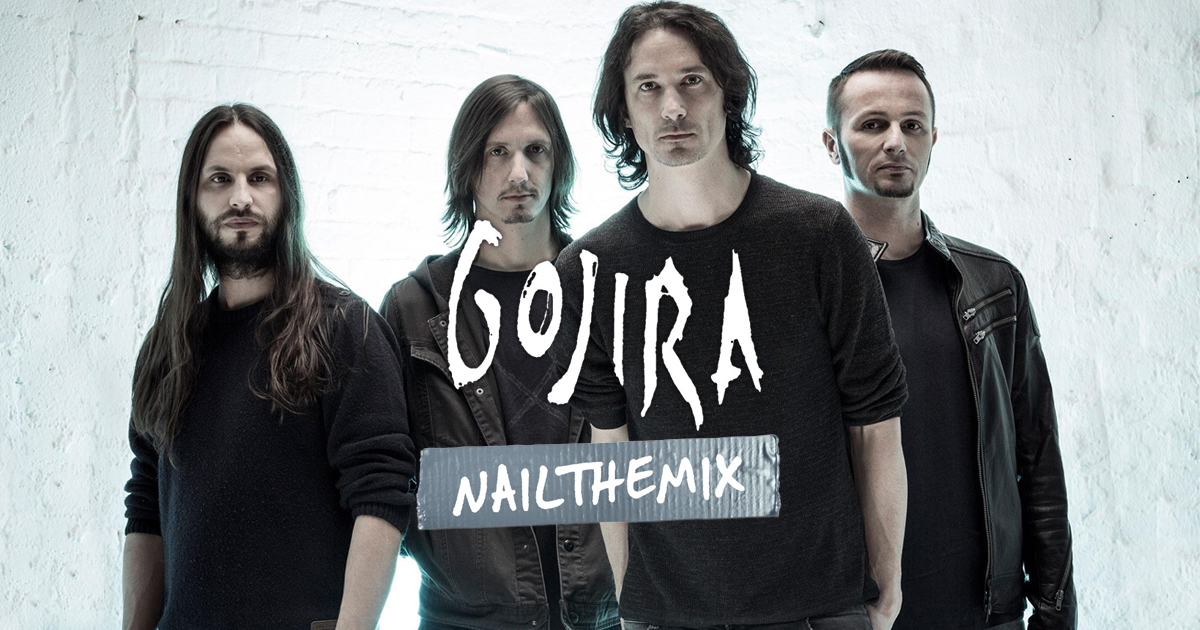
Gojira on Nail The Mix
Logan Mader mixes "Toxic Garbage Island"
Get the Session
On Nail The Mix, you can watch the entire
8-hour session where Logan Mader mixes this Gojira track from start to finish, explaining every plugin, setting, and decision along the way. Members get access to the actual multi-tracks to practice on, plus a huge library of courses to help you move beyond presets and truly unlock your sound. If you’re serious about metal production, seeing how the pros build these tones is the ultimate cheat code.
Check out the full Gojira mixing session with Logan Mader and see for yourself how it’s done.